

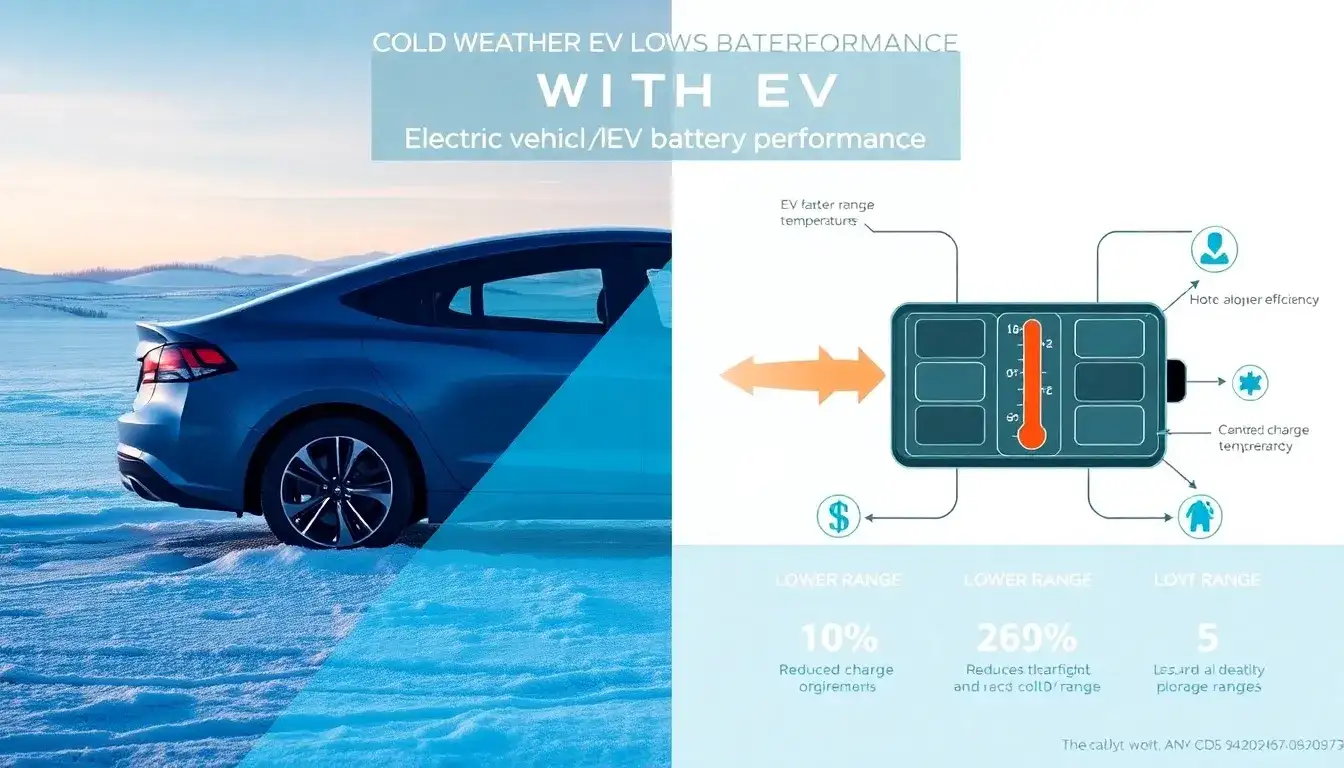
Cold weather impacts electric vehicle (EV) battery performance primarily by slowing down the chemical and physical processes inside the battery, which reduces its power output and driving range.
How Cold Weather Affects EV Batteries
- Slower Lithium-Ion Movement: Inside EV batteries, lithium ions flow through a liquid electrolyte to produce electricity. Cold temperatures cause these ions to move more slowly, which decreases the battery’s ability to release energy efficiently. This leads to reduced power output and shorter driving range.
- Reduced Battery Capacity and Energy Availability: Because the chemical reactions slow down in cold weather, the battery can’t generate as much electricity. This results in less energy being available for driving, typically causing a reduction in range by about 10 to 25 percent, depending on how cold it is and the specific EV model.
- Slower Charging Rates: Cold batteries also accept electricity more slowly, making charging significantly longer at low temperatures. For example, a Tesla battery might need to heat up before it can fast charge, delaying the charging process.
- Increased Energy Use for Cabin Heating and Battery Warmth: In cold weather, additional energy is drawn from the battery to heat the vehicle cabin and maintain the battery’s operating temperature. This further reduces the available range for driving.
Practical Implications for EV Owners
- Reduced Driving Range: EV owners can expect noticeable range reductions in winter. Tests have shown range drops around 10-20%, and in extreme cold (e.g., 12°F), range loss can approach 24% or more.
- Need for Preconditioning: To mitigate cold weather effects, it is advisable to precondition the vehicle — warming both the cabin and the battery while the car is still plugged in. This uses grid electricity rather than battery power, maximizing the available range once driving starts.
- Charging Delays: At charging stations, particularly fast chargers, cold batteries may require warm-up time before charging can proceed efficiently.
In summary, cold weather reduces EV battery performance by slowing internal chemical reactions and ion flow, decreasing energy availability and charging speed, and increasing energy consumption for heating. However, strategic measures such as preconditioning can help mitigate these impacts and maintain more normal driving and charging experiences in cold climates.
Original article by NenPower, If reposted, please credit the source: https://nenpower.com/blog/how-does-cold-weather-specifically-impact-ev-battery-performance/

