

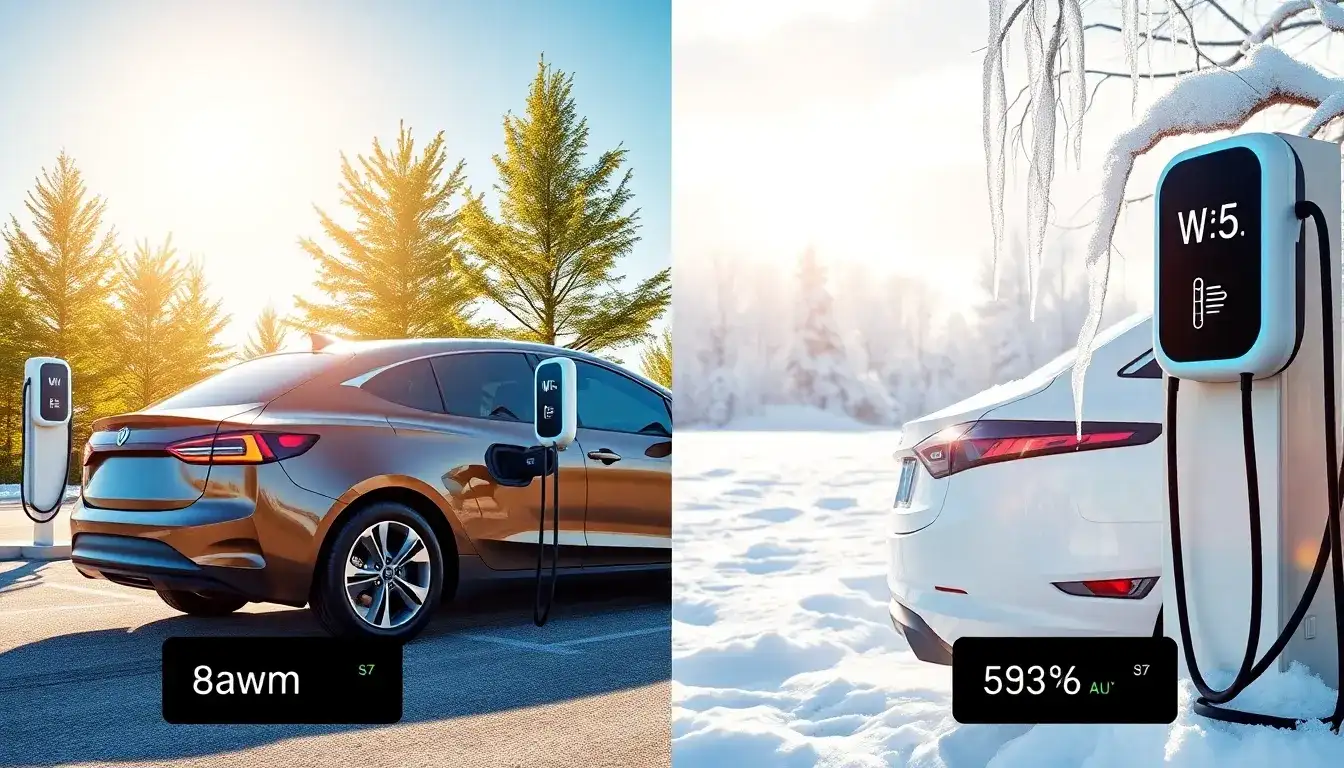
Cold weather significantly impacts the charging times of electric vehicles (EVs). Here are some key points to consider:
Effects on Charging Time
- Extended Charging Times: Cold temperatures cause lithium-ion batteries to charge more slowly. A study found that at 32°F, an EV battery took in 36% less energy during the same charging time compared to warmer temperatures around 77°F. This means charging may take longer, with some reports indicating it could take twice as long in extreme cold.
- Charger Efficiency: The type of charger used affects charging speed in cold weather. Level 1 chargers are not recommended as most energy goes into keeping the battery warm rather than charging. Level 2 chargers may start slowly but improve as the battery warms. DC Fast Chargers (Level 3) remain the quickest option but still may take longer than usual.
Factors Influencing Charging Speed
- Battery Temperature: Lithium-ion batteries perform best between 60°F and 80°F. Cold temperatures slow down the chemical reactions within the battery, increasing charging time.
- External Temperature: The colder the environment, the more energy is needed to maintain the battery’s temperature, further extending charging times.
- Vehicle Usage: If the vehicle has been driven recently, the battery is warmer, which can improve charging efficiency even in cold conditions.
General Recommendations
- Pre-heating the Battery: Actively driving the vehicle or pre-heating the battery can help improve charging efficiency in cold weather.
- Using Efficient Chargers: Level 2 chargers are generally efficient and recommended for routine charging.
- Monitoring Vehicle Performance: Use mobile apps provided by manufacturers to monitor changes in charging times and adjust usage accordingly.
Original article by NenPower, If reposted, please credit the source: https://nenpower.com/blog/how-does-cold-weather-impact-ev-charging-times/

