

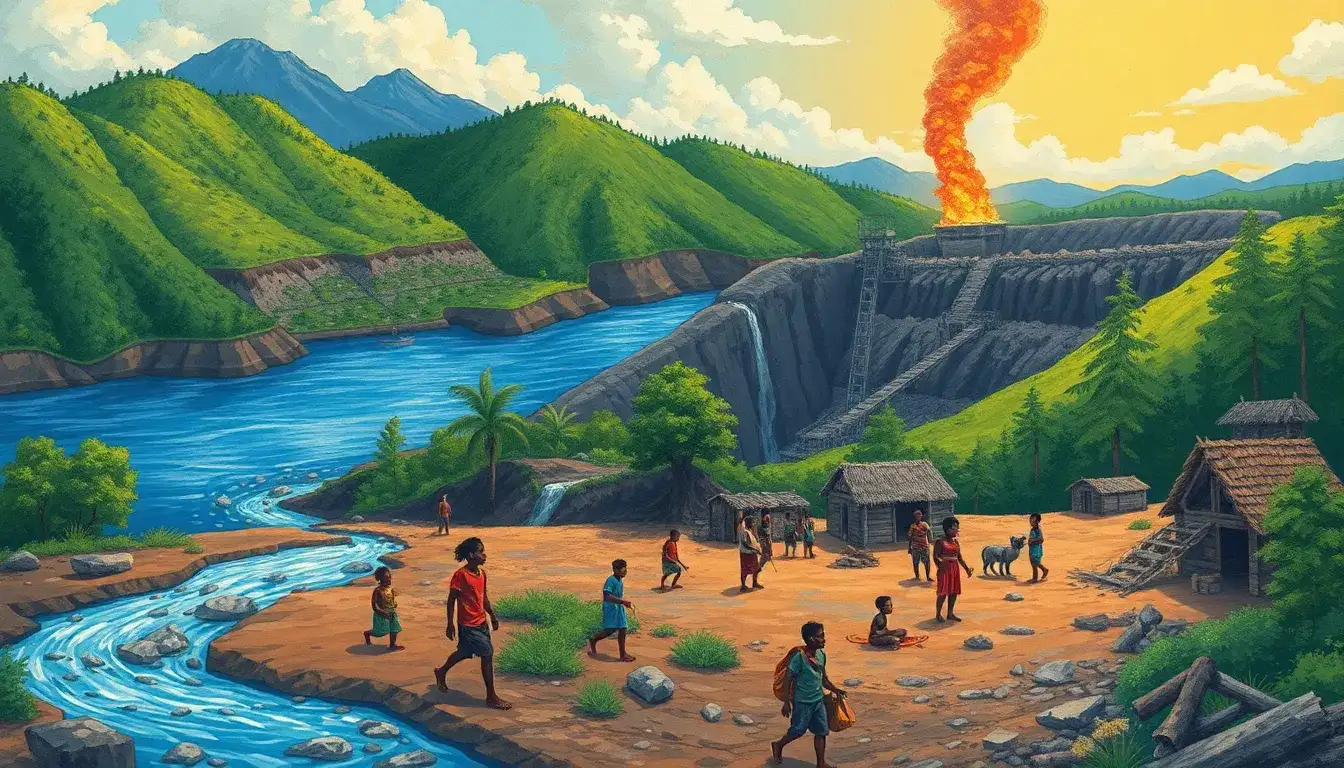
Cobalt mining significantly impacts local communities in multiple severe and interconnected ways, particularly in the Democratic Republic of the Congo (DRC), the world’s largest cobalt producer.
Social and Human Rights Impacts
- Forced Evictions and Loss of Land: Industrial-scale cobalt mining expansion often involves forcibly evicting entire communities from their homes and farmland. This causes displacement and loss of livelihood, with people losing crucial agricultural land necessary for food production.
- Community Disruption: Mining operations dig up not just minerals but also homelands and living spaces, disrupting the social fabric and daily lives of local residents. Communities suffer from violence, substance abuse, and food and water insecurity linked to mining activities.
- Human Rights Abuses: Reports have documented grievous abuses including sexual assault, arson, and beatings connected to mining operations. Multinational mining companies expanding industrial cobalt and copper mines have been implicated in these abuses.
- Child Labor and Fatal Accidents: Artisanal cobalt mining involves widespread child labor and extremely hazardous conditions, with annual deaths exceeding a hundred from landslides, shaft collapses, and flooding in Congolese mines.
Health and Environmental Impacts
- Pollution and Health Problems: Waste from cobalt mining contaminates water, air, and soil, causing decreased crop yields and polluted food and water supplies. This leads to respiratory and reproductive health issues in local communities, along with chronic skin diseases.
- Degraded Living Standards: Those living near mines report drastic declines in income due to reduced agricultural productivity. Many have cut back on meals, removed children from school due to financial strain, and are unable to afford healthcare or medicine.
- Environmental Degradation: Mining has turned the region into a so-called “sacrifice zone,” heavily contaminated with toxic waste. Residents’ rights to clean water and a healthy environment are severely infringed by pollution and water depletion from mining operations.
Economic and Food Security Consequences
- Food Insecurity: Loss of farmland and polluted water sources force locals to sometimes cross borders to buy food. Reduced crop yields and contaminated soil threaten community food security and fatally undermine traditional livelihoods.
- Economic Marginalization: While mining companies profit, local people face worsening poverty and hardship. Many feel they are “big losers,” as wealth generated from cobalt mining fails to translate into improved living conditions for affected communities.
In summary, cobalt mining in the DRC profoundly disrupts local communities through forced evictions, human rights abuses, health and environmental damage, and economic hardship. The expansion of cobalt mining operations directly leads to displacement, unsafe working conditions, pollution, deteriorated public health, and severe food insecurity, creating a cycle of social and environmental injustice for residents near the mines.
Original article by NenPower, If reposted, please credit the source: https://nenpower.com/blog/how-does-cobalt-mining-specifically-impact-local-communities/

