

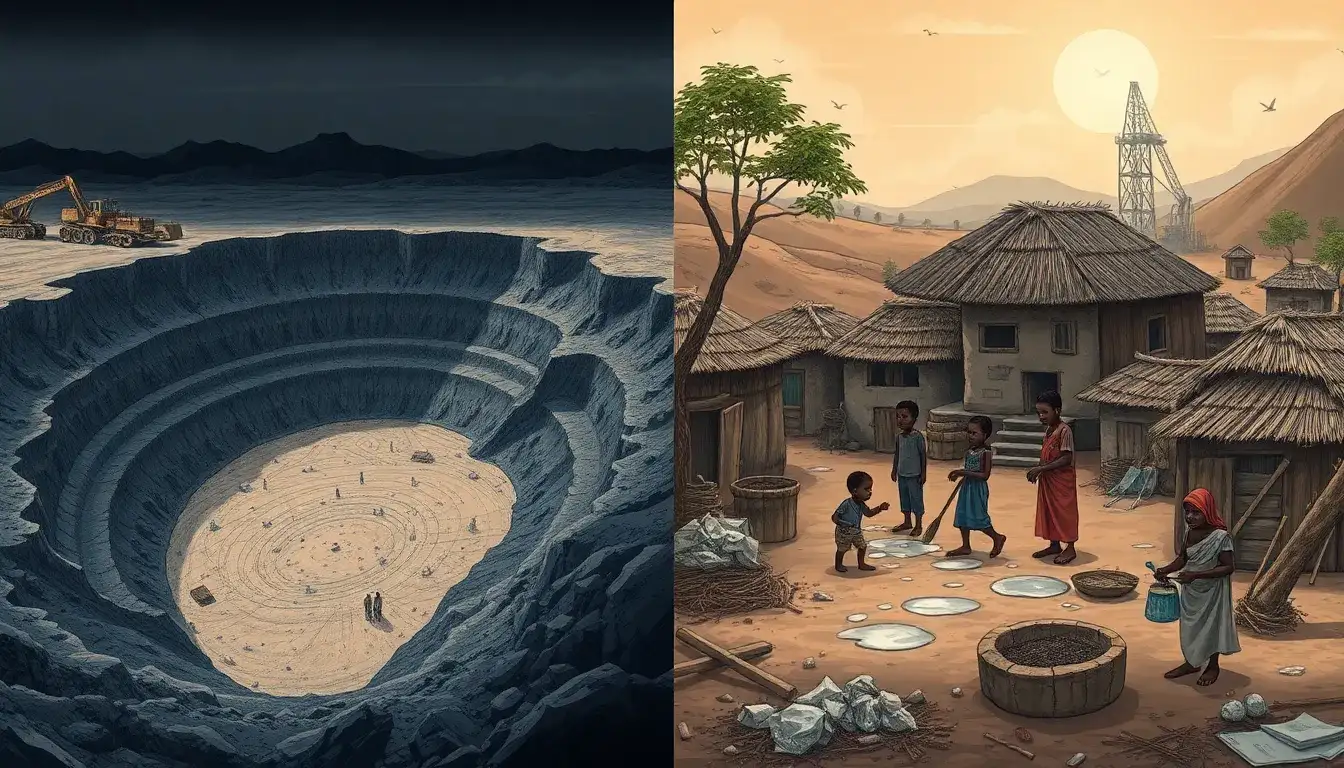
Cobalt mining, particularly in the Democratic Republic of Congo (DRC), has profound negative impacts on human health and rights, affecting miners, local communities, and even children working in the mines.
Health Impacts
- Occupational Health Risks: Exposure to cobalt dust and toxic fumes damages the eyes, skin, heart, and lungs of miners. Many miners suffer from chronic coughing, lung difficulties, and other respiratory problems due to unsafe working conditions and a lack of protective equipment like face masks, gloves, and proper work clothes.
- Physical Strain and Injuries: The mining work is physically demanding, with some workers, particularly women, reporting hauling heavy sacks of cobalt ore (up to 110 pounds). Additionally, unsupported and unstable mining tunnels often collapse, causing injuries and fatalities.
- Hazards for Children: Tens of thousands of children, some as young as four, are involved in cobalt mining in the DRC. These children grow up exposed to toxic dust and fumes, leading to severe health risks at an early age and depriving them of a normal childhood.
- Community Health Consequences: Mining waste pollutes air, water, and soil in surrounding areas, resulting in food and water contamination and subsequent health issues such as respiratory and reproductive problems in local populations. The environmental pollution undermines crop yields and water safety, exacerbating food and water insecurity in mining communities.
Human Rights Violations
- Forced Evictions: Expansion of industrial-scale cobalt mining has led to forced evictions of entire communities from their homes and farmlands. These evictions are often accompanied by abuses such as sexual assault, arson, and beatings, violating the rights and livelihoods of local people.
- Child Labor and Exploitation: Despite international awareness, child labor remains widespread in cobalt mines. Children are often forced to work in hazardous conditions without adequate protection, violating their fundamental rights and exposing them to exploitation.
- Loss of Land and Livelihoods: Mining activities displace communities and destroy farmland, forcing residents to lose their homes and traditional means of sustenance. The resulting food insecurity sometimes compels people to cross national borders just to obtain food.
- Lack of Basic Safety and Protections: Many miners work without basic safety gear or labor protections, enduring long hours and hazardous working conditions. Accidents and tunnel collapses are common, but miners have little recourse or compensation for these risks.
- Environmental Injustice: The affected mining regions are becoming “sacrifice zones” where residents suffer from severe health and environmental degradation. Mining companies sometimes market their cobalt as “clean” and “sustainable,” but local communities suffer from polluted water sources and environmental damage that infringe on their rights to a healthy environment.
In summary, cobalt mining in the DRC significantly harms human health through toxic exposure, physical dangers, and poor working conditions. It also breaches human rights by perpetuating child labor, forced evictions, community displacement, and environmental destruction, creating a cycle of poverty, illness, and social injustice.
Original article by NenPower, If reposted, please credit the source: https://nenpower.com/blog/how-does-cobalt-mining-impact-human-health-and-rights/

