

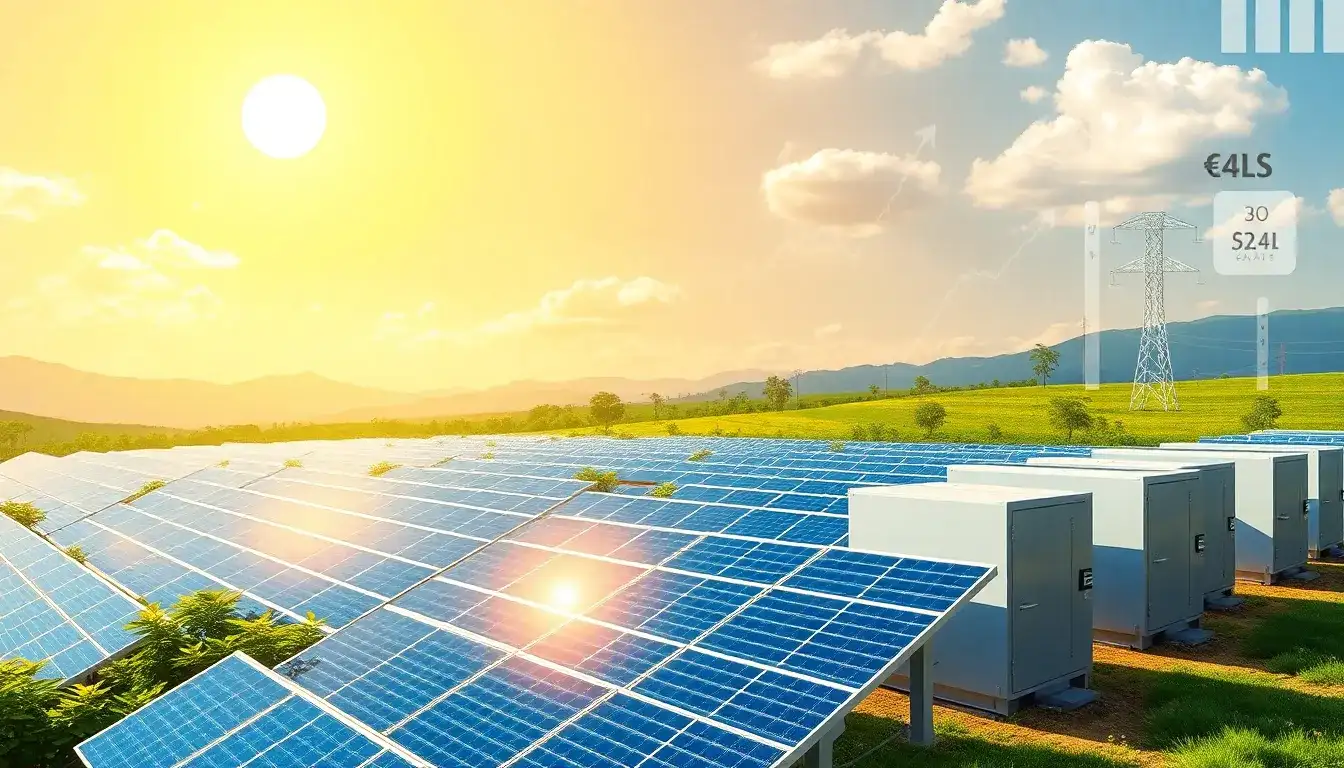
Co-location of Solar PV and Battery Energy Storage Systems (BESS)
Co-location of solar PV and battery energy storage systems (BESS) can significantly affect both the efficiency and revenue streams of projects. Here are some key points to consider:
Impact on Revenue Streams
- Efficiency and Cost Savings: Co-location reduces project development and construction costs by sharing infrastructure, grid connections, and operational systems. This can lead to increased economic viability for developers and investors.
- Wholesale Trading Revenues: For solar and storage projects, wholesale trading revenues see minimal impact from co-location. This is because peak hours for selling electricity often occur outside peak solar generation hours.
- Frequency Response Services: Co-location can significantly impact frequency response revenues due to the constraints imposed by shared grid connections. For example, co-located batteries may see a 25% reduction in frequency response revenues.
- Merchant Market Risks: Co-location can mitigate risks associated with merchant solar by providing more reliable and predictable power output. However, it also introduces constraints on trading strategies due to shared grid connections.
Co-location with Wind vs. Solar
- Co-location with Solar: While co-location with solar slightly constrains trading revenues, it generally allows batteries to discharge during peak demand periods when solar output is low, minimizing revenue impacts.
- Co-location with Wind: Wind farms have higher load factors and can more significantly constrain battery operation, leading to reduced revenues. High wind generation periods can limit the battery’s ability to export power at optimal times.
Strategies for Optimizing Revenue
- Reducing Battery Capacity: Reducing the size of the battery relative to the generator can minimize the impact on revenue, as it allows for more flexible operation within the constraints of the shared grid connection.
- Predictive Analytics and Market Data: Using predictive analytics and real-time market data can help optimize charging and discharging schedules to capture price arbitrage opportunities and maximize revenues.
- Contracted Revenue Streams: Power Purchase Agreements (PPAs) can provide long-term financial stability by securing fixed or predictable payments, enhancing the value proposition of co-located projects.
Conclusion
Co-location of solar PV and BESS can enhance economic viability by reducing costs and providing more predictable output. However, it introduces operational constraints that can impact certain revenue streams, particularly frequency response services. The impact varies based on the type of co-located generation (solar vs. wind) and the market dynamics involved. Careful planning and optimization strategies are crucial to maximizing the benefits of co-location.
Original article by NenPower, If reposted, please credit the source: https://nenpower.com/blog/how-does-co-location-affect-the-revenue-streams-of-solar-and-storage-projects/

