

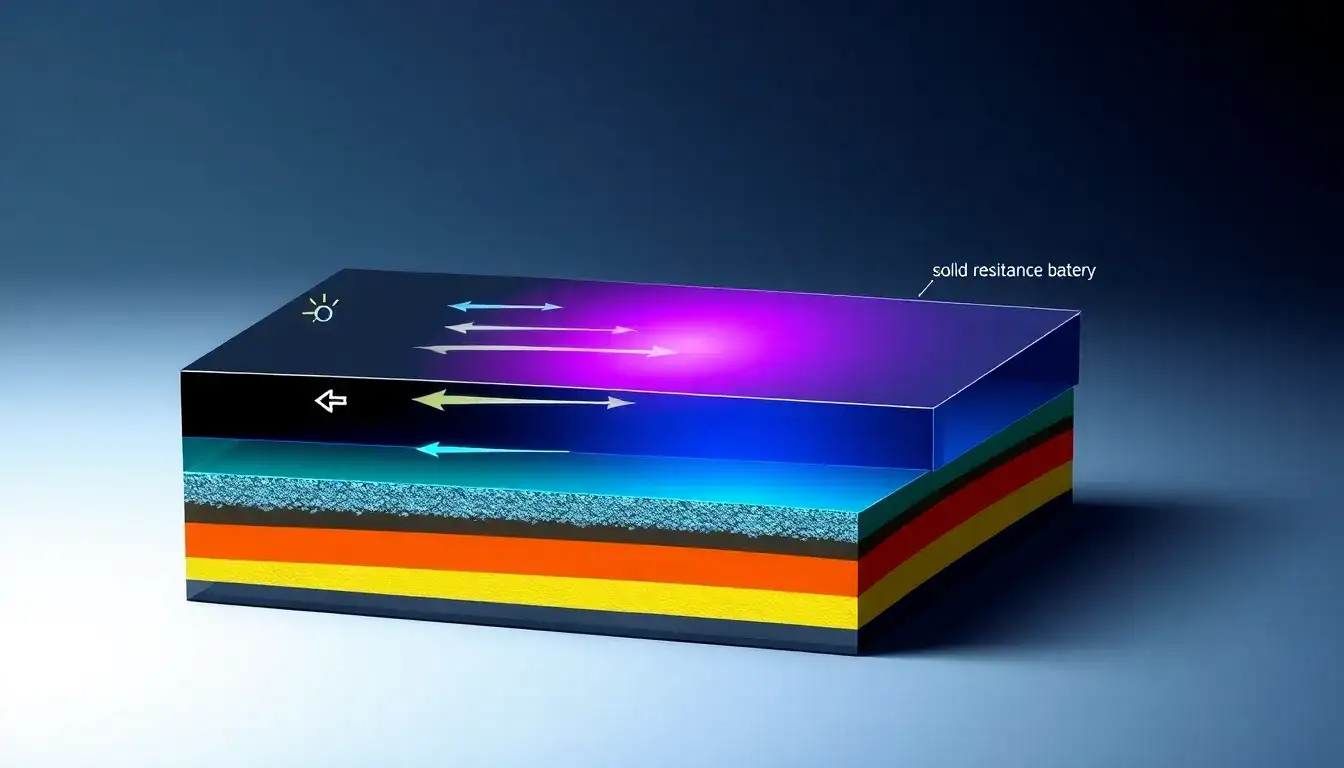
Solid-state battery performance is significantly influenced by cell resistance, which determines the battery’s ability to deliver current efficiently. Here’s how resistance impacts key operational factors:
1. Power Output and Energy Efficiency
Cell resistance arises primarily from solid-solid interfacial contacts between electrodes and the electrolyte. Unlike liquid electrolytes that form seamless interfaces, solid electrolytes create resistive boundaries that impede ion flow, limiting power density and causing energy losses during charge/discharge cycles. High resistance reduces practical energy delivery despite theoretical energy density advantages.
2. Thermal Management and Safety Risks
Resistive interfaces generate excessive heat during operation, exacerbating risks like lithium dendrite growth. Dendrites can penetrate brittle solid electrolytes, causing internal shorts that release stored energy as heat rapidly. While SSBs eliminate flammable liquid electrolytes, thermal runaway in high-energy-density designs could result in severe failure modes.
3. Longevity and Degradation
Although SSBs theoretically offer 10,000–100,000 cycles, interfacial resistance accelerates aging. Poor ion transport strains electrodes, potentially leading to mechanical stress, delamination, and capacity fade over time. Enhanced ionic conductors (e.g., halides, sulfides) aim to mitigate this but remain unproven at scale.
4. System Integration Challenges
High resistance complicates fast-charging capability and demands precise engineering of electrode-electrolyte interfaces. Current SSB prototypes often require elevated temperatures or pressure to maintain optimal ion conductivity, adding complexity to real-world applications.
In summary, cell resistance in SSBs directly undermines their theoretical advantages in energy density and safety, necessitating breakthroughs in material science and interfacial engineering to enable commercialization.
Original article by NenPower, If reposted, please credit the source: https://nenpower.com/blog/how-does-cell-resistance-affect-the-performance-of-solid-state-batteries/

