

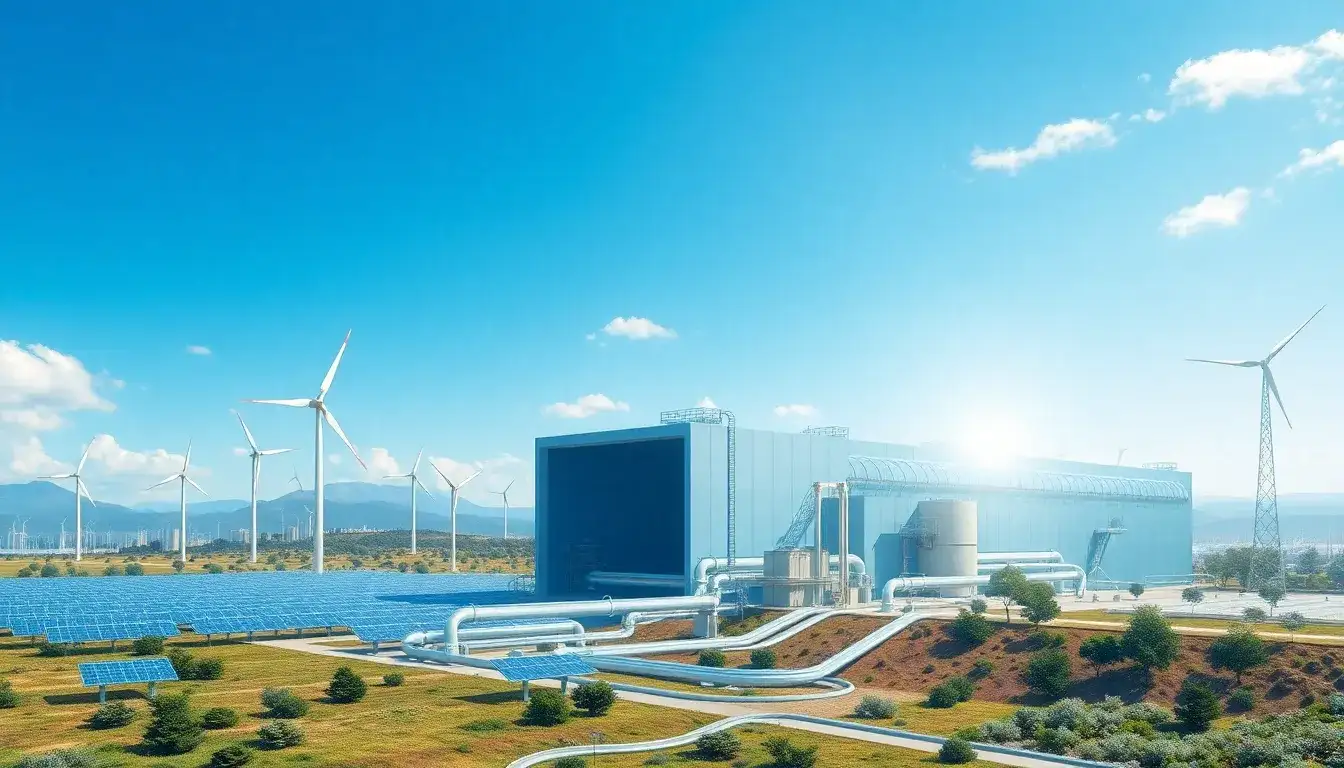
Advantages of CAES in Enhancing Renewable Energy Reliability
1. Long-Duration Energy Storage
- Storage Capability: CAES systems can store energy for extended periods, from hours to days, which is crucial for balancing out fluctuations in renewable energy output.
- Solving the Intermittency Problem: By storing excess energy generated during windy or sunny periods, CAES ensures a steady energy supply during periods of low renewable production.
2. Grid Stability
- Backup Power: CAES provides backup energy during peak demand or when renewables are not generating power, maintaining grid stability.
- Emergency Response: Systems like the McIntosh plant in Alabama can start generating power quickly, providing essential support during emergencies.
3. Scalability and Cost Efficiency
- Large-Scale Applications: CAES systems can be scaled up to accommodate large energy demands, making them suitable for utility-scale applications in combination with wind farms.
- Cost Effectiveness: The potential for CAES to offer competitive long-duration storage solutions at a lower cost than other technologies is essential for integrating renewables into the grid efficiently.
4. Reduced Reliance on Fossil Fuels
- Adiabatic CAES Systems: Advanced CAES technologies can capture heat generated during compression and reuse it, eliminating the need for external fuels like natural gas during the expansion phase.
- Environmental Benefits: This reduction in fossil fuel use enhances the environmental sustainability of CAES, aligning with broader renewable energy goals.
By incorporating CAES into renewable energy systems, the reliability and consistency of energy supply are significantly improved. This technology complements the growing share of wind and solar power by providing a robust and efficient means of managing energy storage and release, thereby enhancing grid stability and supporting a more sustainable energy future.
Original article by NenPower, If reposted, please credit the source: https://nenpower.com/blog/how-does-caes-improve-the-reliability-of-renewable-energy-sources/

