

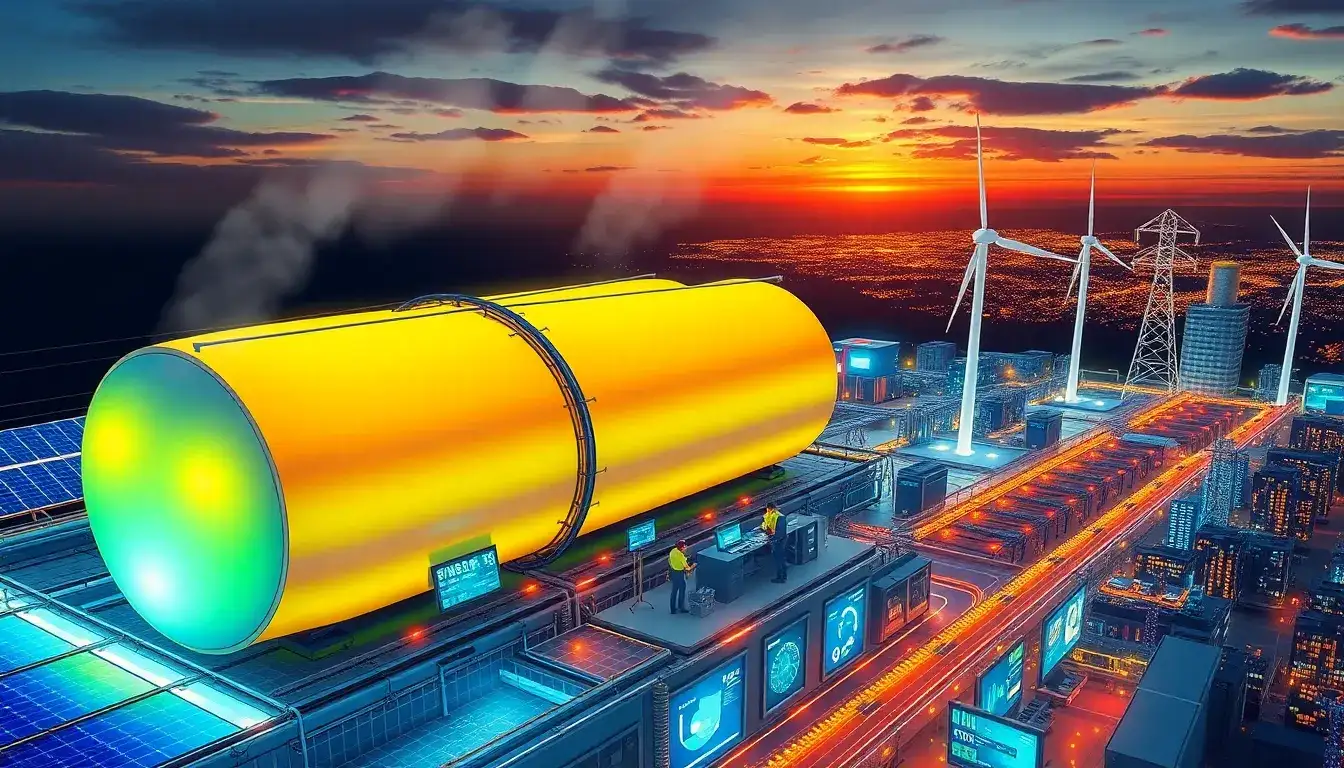
Compressed Air Energy Storage (CAES)
Compressed Air Energy Storage (CAES) enhances grid stability and reliability through several mechanisms:
Grid Balancing and Frequency Regulation
CAES systems provide rapid-response energy to stabilize grid frequency and maintain voltage levels during fluctuations. By releasing stored energy during peak demand, CAES reduces strain on electrical infrastructure and mitigates the risk of blackouts.
Integration with Renewable Energy
CAES stores excess wind, solar, or off-peak electricity, enabling time-shifted power delivery during high-demand periods. This smooths supply-demand mismatches caused by intermittent renewable generation.
Grid Connection Flexibility
Advanced CAES systems operate in both grid-connected and off-grid modes, participating in active grid regulation. Control strategies (e.g., adaptive PI control) ensure smooth synchronization with grids, minimizing connection-related disturbances.
Demand-Peak Management
By discharging during consumption peaks, CAES reduces reliance on fossil-fuel peaker plants, lowering emissions while maintaining reliability. The stored energy acts as a buffer against sudden load surges.
Infrastructure Longevity
Reduced compressor cycling and optimized operation decrease wear on electrical infrastructure, lowering maintenance costs and extending equipment lifetimes. This contributes to long-term grid resilience.
Original article by NenPower, If reposted, please credit the source: https://nenpower.com/blog/how-does-caes-contribute-to-grid-stability-and-reliability/

