

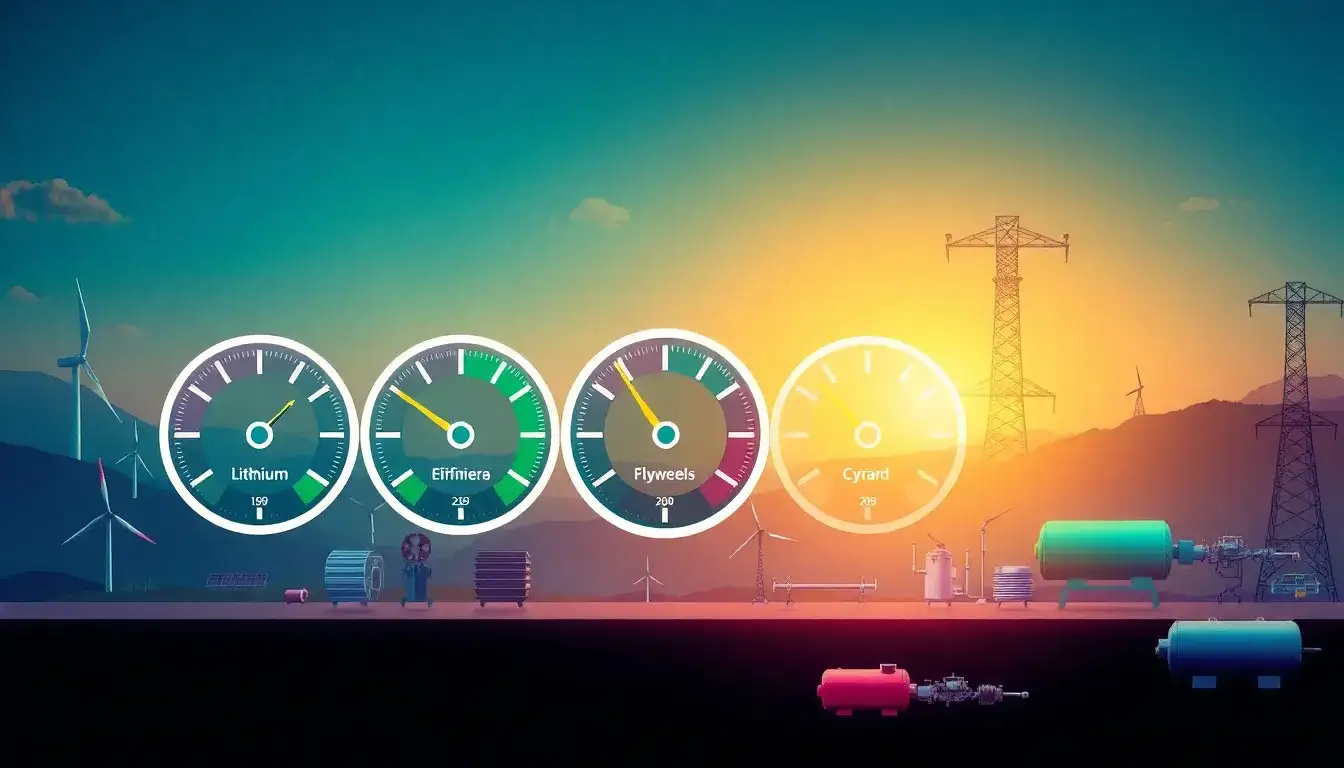
CAES Efficiency Compared to Other Energy Storage Solutions
Compressed Air Energy Storage (CAES) is a method used for storing energy by compressing air, typically in underground caverns, for later use. While CAES offers several advantages, such as cost-effectiveness and high capacity, it falls behind other energy storage solutions in terms of efficiency.
Efficiency Comparison
- CAES Efficiency: The efficiency of CAES systems typically ranges from 60% to 70% in advanced designs, with some studies suggesting efficiencies around 70.5% to 71% under specific conditions. The efficiency is limited by heat loss during compression and expansion.
- Lithium-ion Batteries: Lithium-ion batteries, commonly used for energy storage, have a significantly higher round-trip efficiency, typically ranging from 85% to 95%.
- Pumped Hydro Storage (PHS): PHS is another widely used method, which has an efficiency similar to that of lithium-ion batteries, generally around 85% to 90%. However, it requires specific geographic conditions, limiting its application.
Key Considerations
- CAES Advantages: Despite lower efficiency, CAES is more affordable and easier to implement than some other solutions like PHS. It offers long-term storage potential and does not require toxic materials.
- Challenges: The main challenge for CAES is managing thermal energy to improve efficiency. Heat generated during compression is often lost unless effectively stored and reused, which can be complex.
Overall, while CAES may not match the efficiency of lithium-ion batteries or PHS, its economic benefits, scalability, and environmental advantages make it a viable choice for certain applications.
Original article by NenPower, If reposted, please credit the source: https://nenpower.com/blog/how-does-caes-compare-to-other-energy-storage-solutions-in-terms-of-efficiency/

