

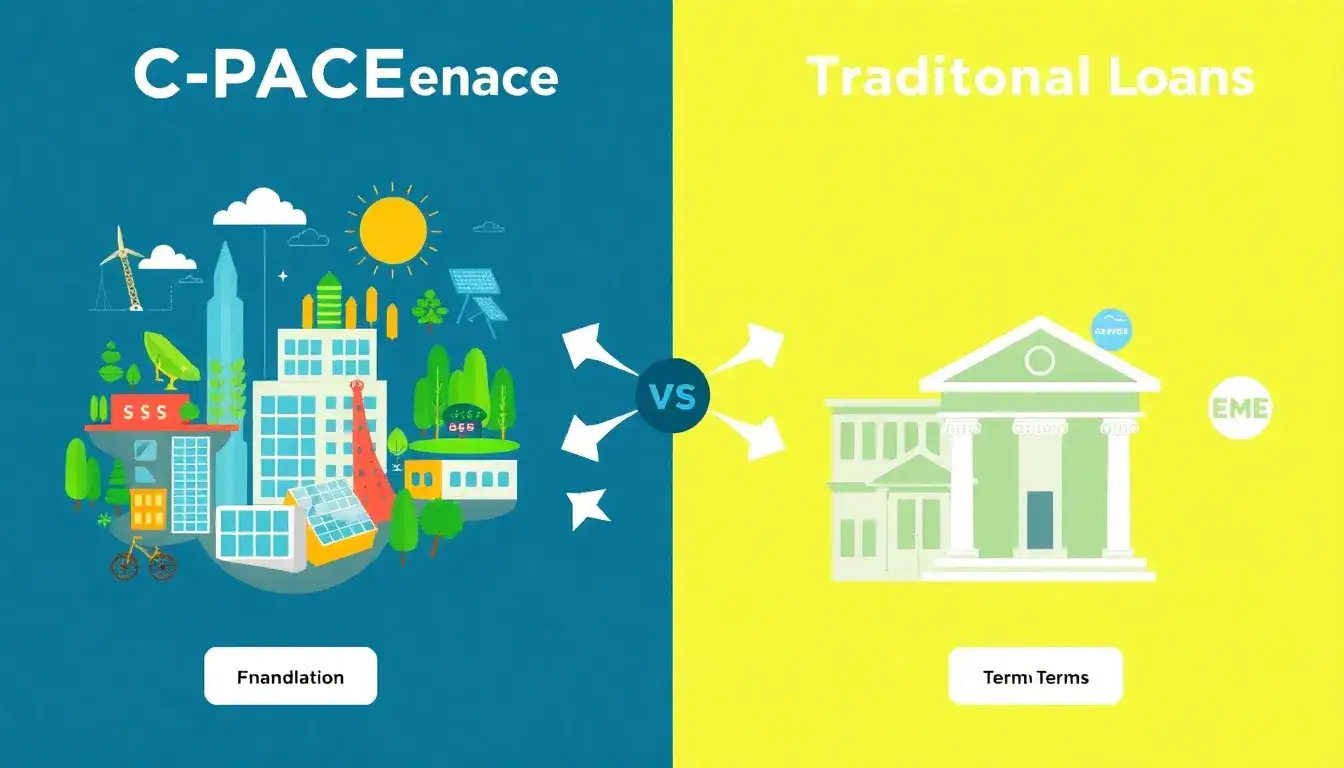
C-PACE financing differs significantly from traditional loans in several key aspects, making it a unique option for property owners looking to enhance their properties with energy-efficient and sustainable modifications. Here’s a comparison highlighting the main differences:
Key Differences Between C-PACE and Traditional Loans
1. Security Structure
- C-PACE: Secured by a voluntary assessment levied on the property tax bill, which does not rely on the borrower’s creditworthiness. This assessment remains with the property even if ownership changes.
- Traditional Loans: Typically secured by a mortgage lien or the borrower’s personal assets, where the borrower’s creditworthiness is crucial.
2. Repayment Terms
- C-PACE: Offers long-term financing (up to 30 years) with fixed rates, often around 7%. Repayment is made through property tax bills, and the assessment does not accelerate upon default.
- Traditional Loans: Generally shorter terms with variable rates. Payments accelerate if a borrower misses a payment.
3. Lien Priority
- C-PACE: The C-PACE assessment has senior priority over other liens (except tax liens) due to its integration with property taxes. However, it does not affect the seniority of existing senior commercial loans if current.
- Traditional Loans: Lien priority is determined by the timing of filing and the type of instrument (e.g., first or second mortgage).
4. Credit Risk
- C-PACE: Nonrecourse to the borrower, meaning personal liability is not a risk for borrowers.
- Traditional Loans: Often requires personal guarantees or is recourse to the borrower.
5. Cash Flow Impact
- C-PACE: Payment typically does not begin until 2-3 years after closing, allowing properties to stabilize before repayment starts. This improves project underwriting metrics.
- Traditional Loans: Payments start right away, impacting immediate cash flow.
6. Property Value
- C-PACE: Increases property value through energy-efficient improvements, potentially enhancing collateral for other loans.
- Traditional Loans: May not directly enhance property value unless used for renovations or expansions that increase value.
7. Flexibility
- C-PACE: Can be prepaid at any time and transferred upon property resale. It is often used to replace more expensive financing options like mezzanine debt or preferred equity.
- Traditional Loans: May have prepayment penalties and are not as flexible upon property transfer.
C-PACE financing offers a unique blend of benefits, making it an attractive option for developers and property owners seeking to incorporate sustainable improvements into their projects while managing financial risks.
Original article by NenPower, If reposted, please credit the source: https://nenpower.com/blog/how-does-c-pace-financing-compare-to-traditional-loans/

