

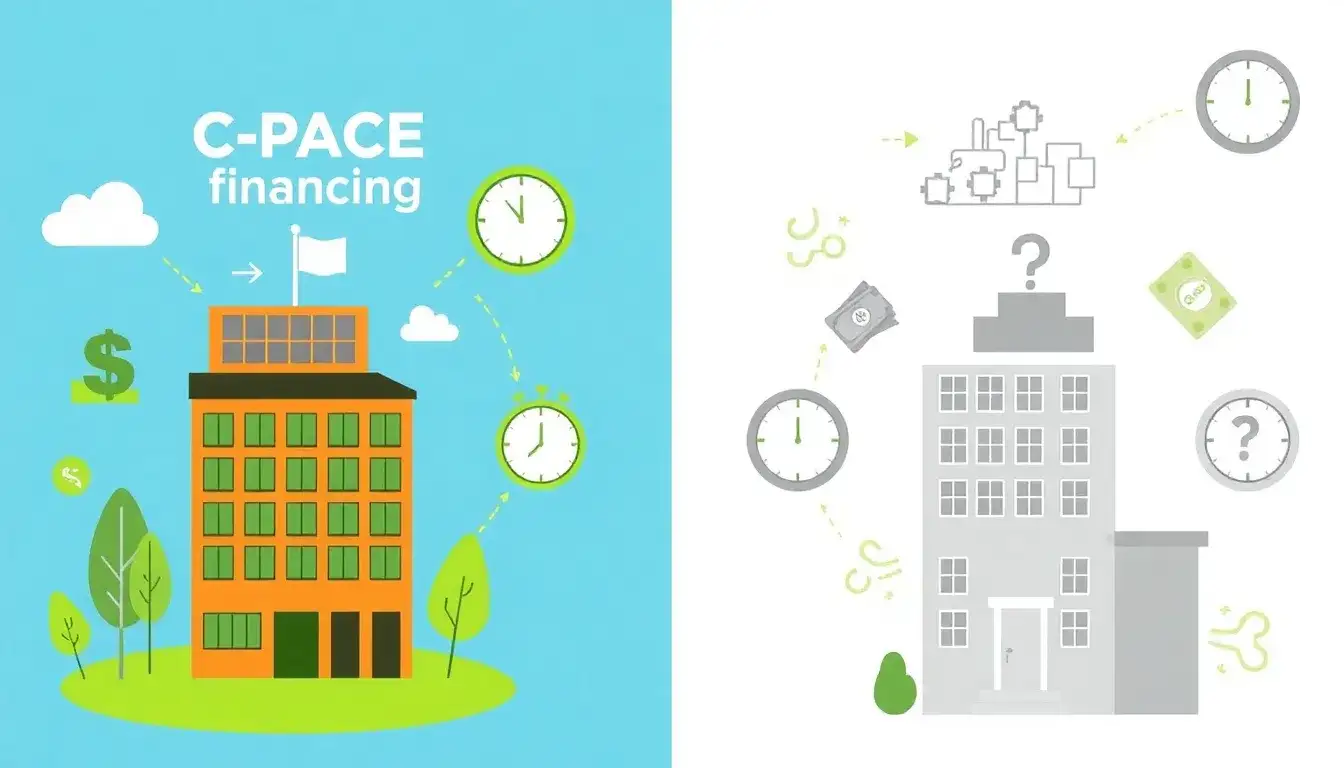
C-PACE Financing vs. Traditional Financing
C-PACE financing and traditional financing methods for building retrofits have distinct differences and benefits. Here is a comparison based on key aspects:
Key Features Comparison
1. Structure and Risks
- C-PACE Financing: It is non-recourse debt tied to the property rather than the owner. This means that if the property is sold, the repayment obligation transfers to the new owner. It is secured by a senior lien on the property, which typically offers lower interest rates due to its reduced risk profile.
- Traditional Financing: Often involves recourse debt, where the borrower personally guarantees the loan. This can increase personal financial risk if the borrower defaults.
2. Cost and Funding
- C-PACE Financing: Allows for up to 100% financing of eligible energy efficiency and renewable energy projects, often requiring no down payment. Repayments are made through property tax assessments over long terms (typically 10 to 30 years).
- Traditional Financing: Typically requires a significant down payment (e.g., 20-30%) and shorter repayment terms. The interest rates may be higher, and ongoing cash flow is essential to service the debt.
3. Environmental and Cost Savings
- C-PACE Financing: Encourages sustainable building practices by financing energy efficiency and renewable energy projects. The savings from these upgrades often exceed the annual debt service, enhancing cash flow.
- Traditional Financing: Does not inherently focus on environmental benefits or ensure cost savings from energy efficiency measures.
4. Flexibility and Accessibility
- C-PACE Financing: Provides long-term, stable financing that aligns with the useful life of the improvements, reducing financial strain on property owners. It’s particularly beneficial for projects that aim to improve energy efficiency or reduce environmental impact.
- Traditional Financing: Offers less flexibility in terms of repayment schedules and may not be as accessible for projects with a primary focus on sustainability or energy efficiency improvements.
5. Transferability
- C-PACE Financing: The assessment (and thus the repayment obligation) transfers automatically to new property owners upon sale, making it a desirable option for long-term property owners.
- Traditional Financing: Does not transfer easily and remains the personal responsibility of the original borrower unless explicitly negotiated otherwise.
6. Interest Rates and Terms
- C-PACE Financing: Generally offers fixed interest rates with long repayment terms. The rates are often competitive due to the security provided by the property lien.
- Traditional Financing: May have variable interest rates and shorter terms, which can increase financial risk and debt service costs.
In summary, C-PACE financing is particularly advantageous for property owners seeking to undertake energy efficiency or renewable energy projects with minimal upfront costs and long-term benefits. It offers unique benefits over traditional financing methods by tying repayment obligations to property taxes, providing access to low-cost capital for sustainable improvements, and ensuring transferability of the loan obligation. However, it requires specific state or local enabling legislation and may have varying requirements depending on the jurisdiction.
Original article by NenPower, If reposted, please credit the source: https://nenpower.com/blog/how-does-c-pace-financing-compare-to-traditional-financing-methods-for-retrofits/

