

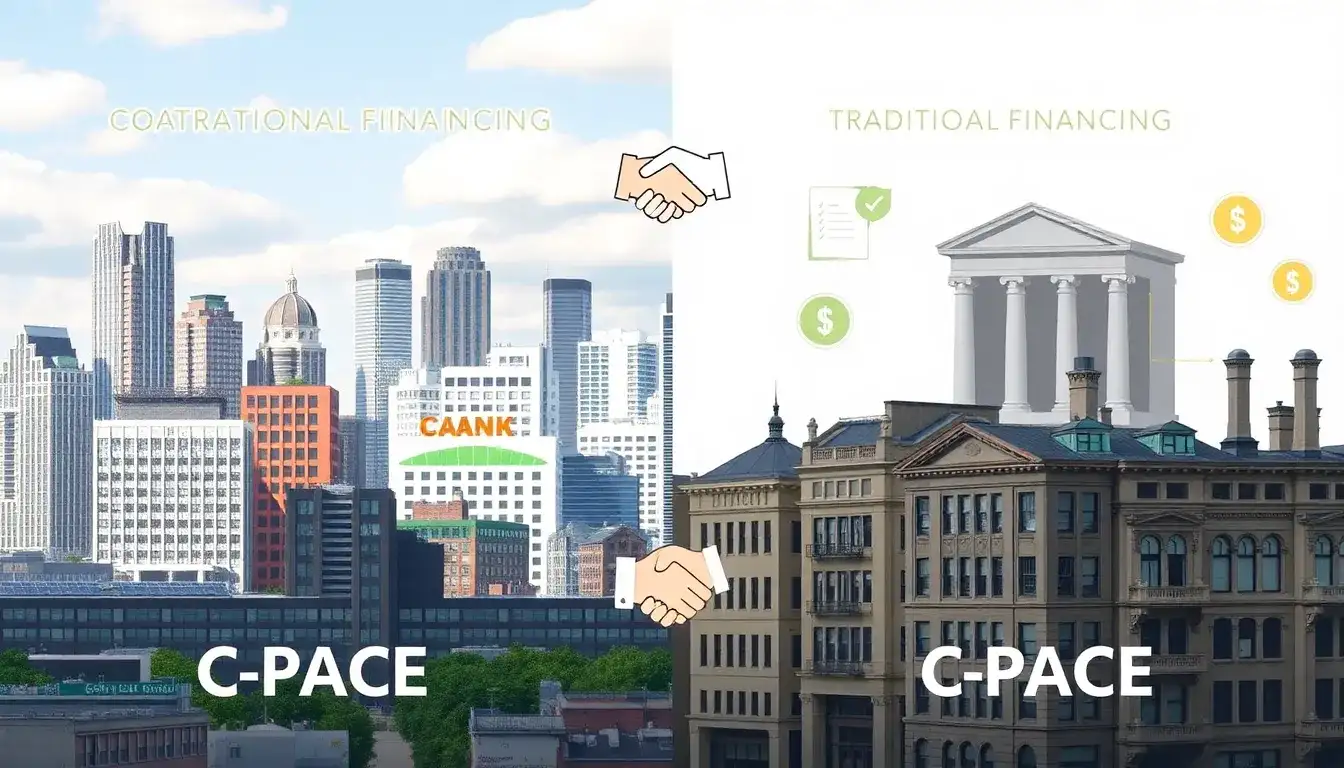
C-PACE (Commercial Property Assessed Clean Energy) financing and traditional financing options for building retrofits have distinct differences, which can significantly impact project costs, flexibility, and long-term benefits. Here’s a comparison:
Key Differences
- Financing Structure:
- C-PACE Financing: The repayment is tied to the property through a special tax assessment, allowing it to be transferred to new owners if the property is sold. It is non-recourse debt, meaning there are no personal guarantees required.
- Traditional Financing: Typically involves personal guarantees and recourse debt, where the borrower is directly responsible for repayment, regardless of property ownership.
- Cost and Repayment:
- C-PACE Financing: Offers low-interest rates, often around 7%, with repayment terms up to 25-30 years. This allows for spreading costs over a long period, which can result in positive cash flow almost immediately due to energy savings.
- Traditional Financing: Generally has higher interest rates and shorter repayment terms compared to C-PACE, which can strain cash flow.
- Eligibility and Coverage:
- C-PACE Financing: Covers 100% of upfront costs for qualifying energy-efficient or water conservation projects. Projects must demonstrate that energy savings will exceed the cost of financing over the useful life of the improvements.
- Traditional Financing: May require equity contributions and often includes less favorable terms for covering indirect costs associated with projects.
- Tax and Incentives:
- C-PACE Financing: Property owners retain tax credits and rebates associated with energy efficiency projects.
- Traditional Financing: Does not directly facilitate retention of tax credits or rebates in the same manner as C-PACE.
Advantages of C-PACE
- Long-term Financing: Allows building owners to spread out costs over a much longer period, which can align with the useful life of energy-efficient improvements.
- Cash Flow Positive: Projects can be cash flow positive from the start due to energy savings.
- Increased Property Value: Enhances building value by implementing sustainable upgrades.
Disadvantages
- Geographical Limitations: C-PACE is only available in jurisdictions with enabling legislation.
- Project Requirements: Requires an energy audit and feasibility study to ensure savings exceed costs.
Use Cases
C-PACE is ideal for large-scale energy efficiency or sustainable retrofits where long-term financing is needed to align with the benefits and lifespan of the improvements. Traditional financing may be more suitable for smaller projects or those not qualifying under C-PACE criteria.
Original article by NenPower, If reposted, please credit the source: https://nenpower.com/blog/how-does-c-pace-financing-compare-to-traditional-financing-for-building-retrofits/

