

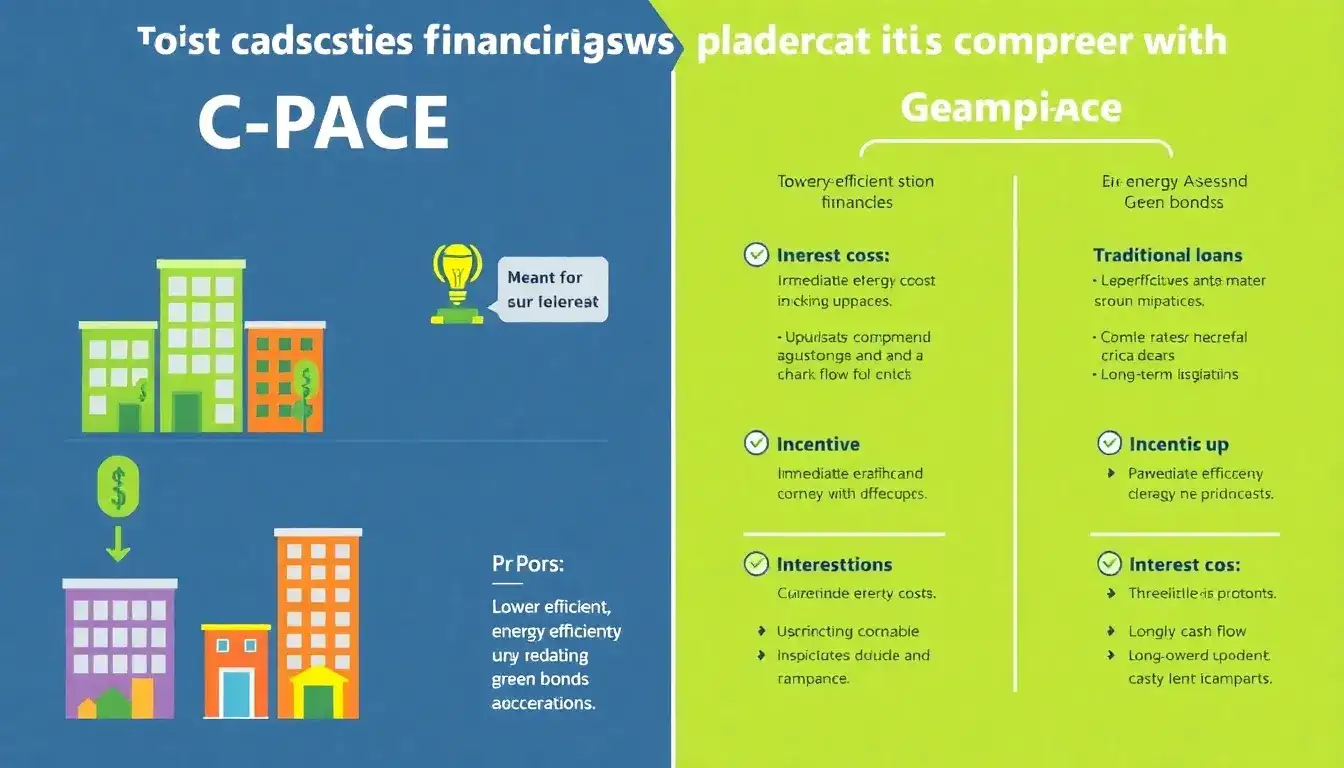
C-PACE (Commercial Property Assessed Clean Energy) Financing
C-PACE (Commercial Property Assessed Clean Energy) financing is a unique tool that allows commercial property owners to fund energy efficiency upgrades without upfront costs. Here’s how it compares to other energy efficiency financing options:
Key Features of C-PACE Financing
- Low-Cost, Long-Term: C-PACE offers fixed-rate, long-term financing typically repaid over 20-30 years via property tax assessments.
- No Upfront Costs: It finances up to 100% of improvement costs, requiring no down payment.
- Non-Recourse: The risk is tied to the property, not the owner, making it advantageous for cash flow management.
- Transferable: Assessments transfer with property sale, facilitating ownership changes.
Comparison to Other Financing Options
Traditional Bank Loans
- Shorter Terms: Typically shorter and more expensive than C-PACE.
- Higher Interest Rates: Often variable rates are higher and fixed for shorter periods.
- Upfront Costs: Often require down payments and personal guarantees.
Mezzanine Debt/Priority Equity
- Higher Costs: More expensive and riskier than C-PACE financing.
- Shorter Terms: Generally shorter repayment terms with higher interest rates.
Government Incentives and Rebates
- Limited Funding: Often have caps on funding amounts and eligibility criteria.
- Non-Loan: Not a loan, so no repayment obligations, but application processes can be complex.
ESCO Financing (Energy Services Companies)
- Contractual Obligations: Often involves long-term contracts with specific energy savings guarantees.
- Limited Flexibility: Trapped in long-term agreements if energy savings aren’t realized as projected.
Conclusion
C-PACE financing is attractive due to its low-cost, long-term nature and the ability to finance projects without upfront costs. However, availability and specifics can vary significantly by state. It’s often favored by commercial property owners seeking to improve energy efficiency and sustainability without significant financial strain upfront.
Pros and Cons
Pros:
- Long-term financing reduces annual cash flow burden.
- Improves property value and sustainability.
- Low risk to property owners.
- Facilitates transferability upon sale.
Cons:
- Complex approval processes.
- State-specific eligibility.
- Potential lien on property if delinquent.
Overall, C-PACE provides a unique financing solution that can be more viable than traditional loans or mezzanine debt for energy efficiency projects, especially when long-term benefits and sustainability are key priorities.
Original article by NenPower, If reposted, please credit the source: https://nenpower.com/blog/how-does-c-pace-financing-compare-to-other-energy-efficiency-financing-options/

