

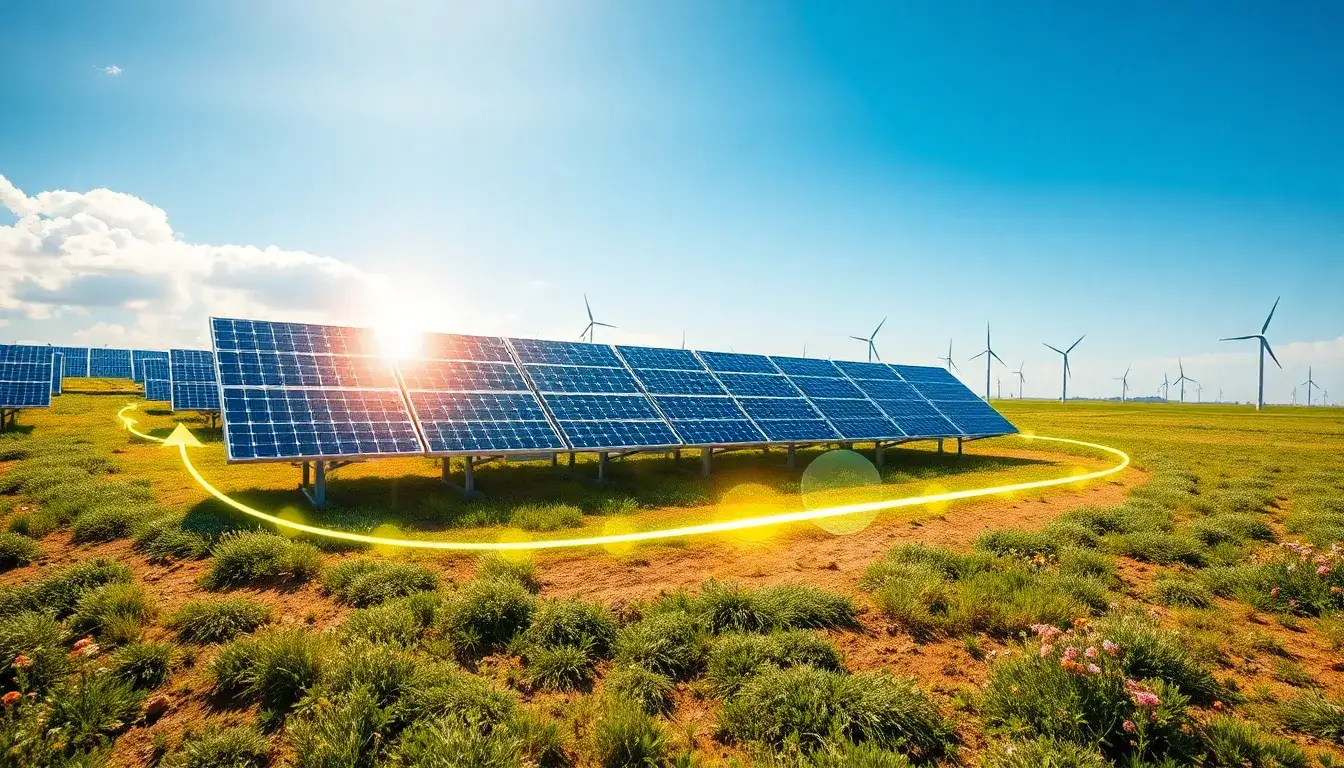
Bifacial solar panel technology enhances energy production primarily by capturing sunlight on both the front and back sides of the panel, unlike traditional monofacial panels which only absorb light on one side. This dual-sided capability allows bifacial panels to harness not only direct sunlight but also reflected light (known as albedo) from surrounding surfaces such as the ground, snow, or light-colored roofs, significantly increasing total energy output.
Key ways bifacial technology boosts energy production:
- Dual-sided light absorption: Bifacial panels have photovoltaic cells on both sides, often enclosed in transparent or glass materials that allow light to reach the rear cells. The front side collects direct sunlight, while the rear side captures reflected and diffused light, improving overall energy conversion.
- Increased energy yield: Studies show bifacial panels can generate approximately 10–30% more electricity than monofacial panels under optimal conditions. This gain can be even higher, up to 40%, when combined with solar trackers that adjust the angle of the panels to follow the sun’s path.
- Environmental factors enhancing output: The amount of additional energy depends on the reflectivity (albedo) of the surface beneath the panels; brighter surfaces like snow or white rooftops reflect more light, increasing rear-side absorption. Panel tilt angle, mounting height, orientation, and shading also significantly affect the rear-side gain.
- Versatile installation: Bifacial panels perform best in commercial, utility-scale, and ground-mounted systems where their backsides can receive ample reflected light. Vertical installations can capture sunlight at sunrise and sunset, further extending energy generation hours. However, rooftop residential installations often do not benefit as much due to limited rear-side light exposure.
- Durability and design: Bifacial panels typically use double-glass construction, making them more durable against environmental elements like hail and wind. Their slim profile and minimal framing also reduce shading and allow more light to reach both sides.
Summary comparison between bifacial and monofacial panels:
| Feature | Bifacial Solar Panels | Monofacial Solar Panels |
|---|---|---|
| Light absorption | Both front and rear sides | Front side only |
| Energy production gain | 10% to 30–40% more under ideal conditions | Baseline energy output |
| Installation suitability | Best for ground-mounted, commercial, utility-scale, or flat rooftops | Suitable for various rooftops, including typical residential |
| Cost | Higher upfront cost (10-20% more per watt) | Lower cost |
| Durability | Enhanced by double-glass design | Standard single-glass with opaque backing |
In essence, bifacial solar panel technology enhances energy production by leveraging reflected sunlight and diffused light to produce more electricity per panel area than conventional panels, making it a leading trend in the solar industry projected to dominate market share by 2030 due to its efficiency and versatility.
Original article by NenPower, If reposted, please credit the source: https://nenpower.com/blog/how-does-bifacial-solar-panel-technology-enhance-energy-production/

