

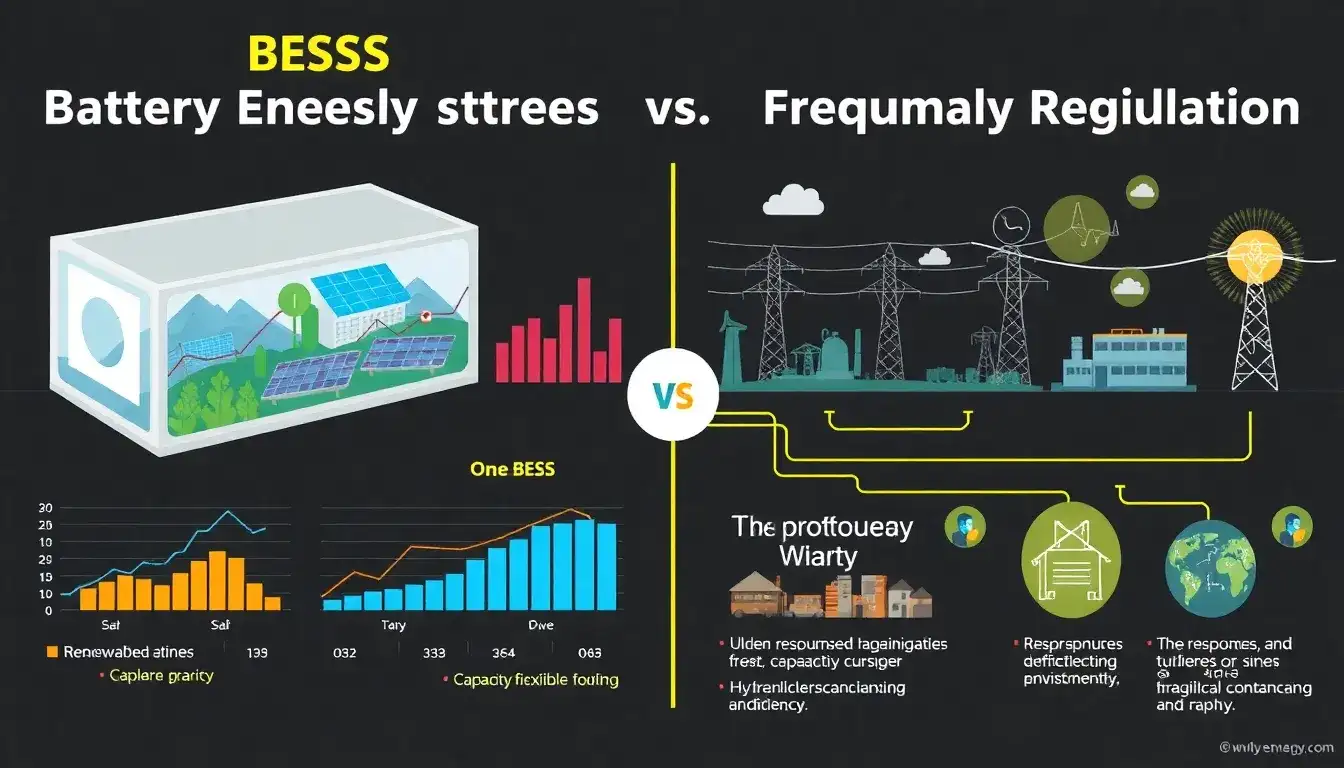
Comparison of Battery Energy Storage Systems (BESS) and Traditional Methods in Frequency Regulation
Battery Energy Storage Systems (BESS) have emerged as a viable alternative to traditional methods for frequency regulation in power grids. Here’s a comparison of BESS with traditional methods, highlighting their advantages and disadvantages:
Advantages of BESS Over Traditional Methods
- Fast Response Time: BESS can respond almost instantaneously to frequency changes, making them highly effective in mitigating fluctuations in grid frequency.
- Flexibility and Scalability: BESS can be easily scaled up or down depending on the grid requirements. They can be integrated with various renewable energy sources, enhancing their adaptability in modern power systems.
- Advanced Control Capabilities: BESS can utilize advanced control strategies, such as droop control, to optimize their performance in frequency regulation. These control systems can prevent over-discharging and optimize the state of charge (SoC) levels.
- Efficiency in Operation: Unlike traditional methods that might involve sudden startup and shutdown of generators, BESS can absorb surges without any startup time, improving efficiency in frequency support services.
Disadvantages Compared to Traditional Methods
- Higher Initial Costs: Although BESS systems have lower operational costs and can provide multiple revenue streams (e.g., arbitrage and load following), their initial investment costs are generally higher than traditional frequency regulation methods.
- Limited Energy Capacity: While BESS are excellent for short-term frequency support, they have limited energy capacity compared to traditional methods like pumped hydro storage. They are best suited for short duration power fluctuations.
Traditional Methods
- Fossil Fuel Generators: Traditional fossil fuel-based power plants can provide sustained frequency support. However, they have slower response times and higher environmental impacts compared to BESS.
- Hydroelectric Power: Hydroelectric power plants can offer effective long-term energy storage but are location-dependent and subject to geographical limitations.
Conclusion
BESS offers superior performance in terms of speed and flexibility, making them ideal for modern grids with significant renewable energy sources. However, they face challenges due to higher initial costs and limited capacity. Traditional methods provide long-term energy storage and sustained frequency support but are often less flexible and more environmentally impactful. The choice between BESS and traditional methods depends on the specific needs of the grid and the availability of resources.
Original article by NenPower, If reposted, please credit the source: https://nenpower.com/blog/how-does-bess-compare-to-traditional-methods-in-frequency-regulation/

