

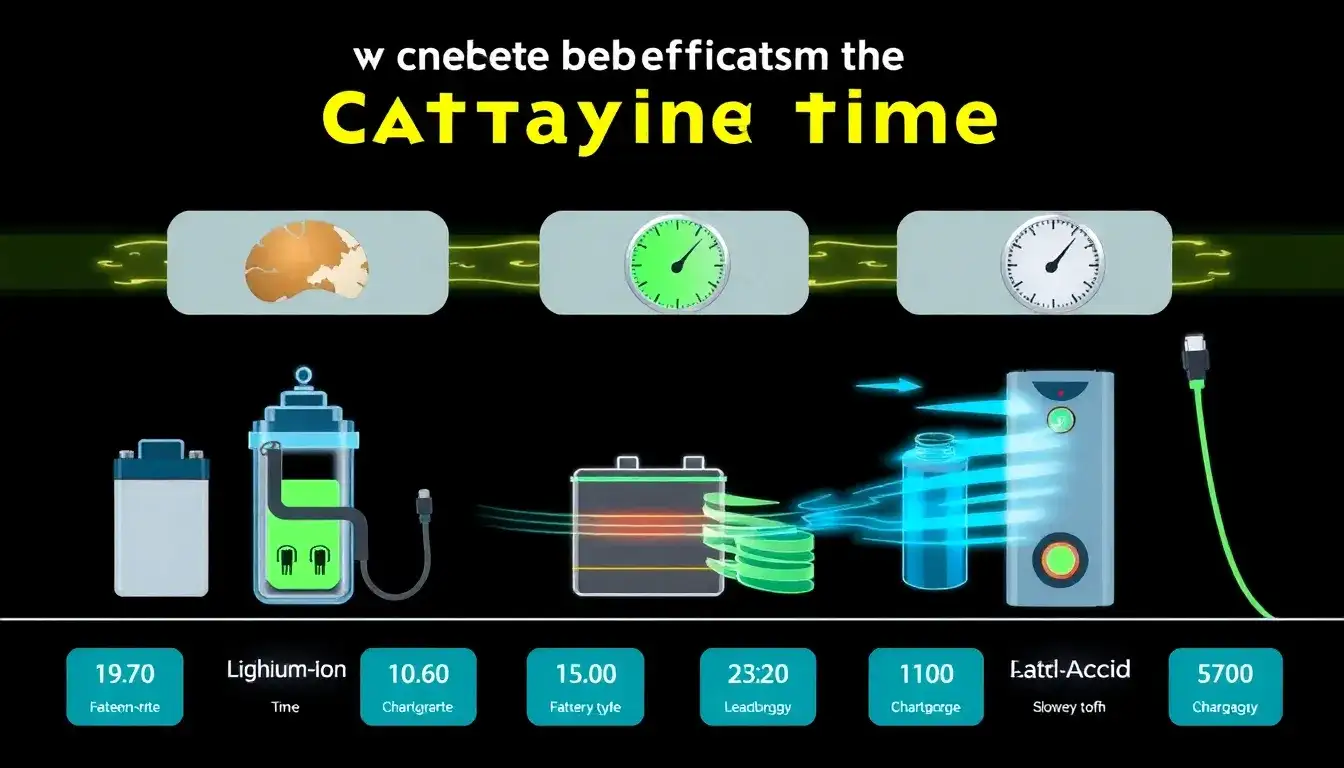
Impact of Battery Type on Charging Time
- Energy Density and Charge Speed: Different battery types have varying levels of energy density, which is the amount of energy stored per unit of mass or volume. Lithium-ion (Li-ion) batteries generally have a higher energy density and can charge faster than other types, such as nickel-metal hydride (NiMH) or lead-acid batteries.
- Chemical Composition: The chemical composition of a battery impacts its charging characteristics. For instance, Li-ion batteries are known for their fast charging capabilities due to their ability to accept higher currents without significant degradation.
- Charging Efficiency: The efficiency of how a battery absorbs charge also affects charging time. Some batteries might lose energy as heat during rapid charging, which can reduce their overall efficiency and increase charging times over time.
In summary, the choice of battery type is crucial for optimizing the charging efficiency and time of electric vehicles. Lithium-ion batteries, for their high energy density and fast charging capabilities, are the most common choice in modern EVs.
Original article by NenPower, If reposted, please credit the source: https://nenpower.com/blog/how-does-battery-type-affect-charging-time/

