

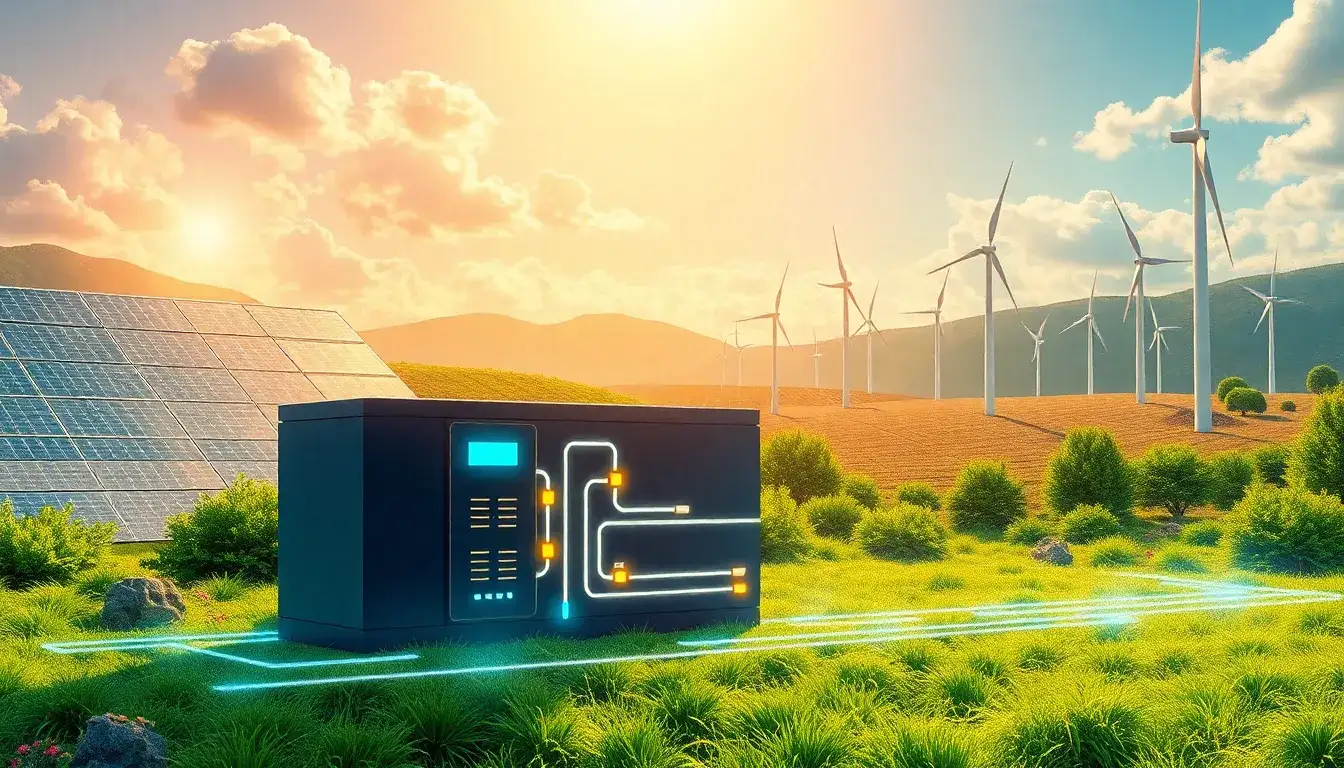
Role of Battery Storage in Renewable Energy Systems
Basic Function
- Energy Storage: Battery storage systems store excess energy generated by renewable sources during periods of low demand. This stored energy is then released during peak demand or when renewable energy production is low, ensuring a stable and consistent energy supply to the grid.
Challenges Addressed
- Intermittency of Renewables: Solar and wind power are intermittent, meaning their output varies with weather conditions. Battery storage helps mitigate this variability by storing energy when it is abundant and releasing it when needed, thus providing a reliable supply.
Advantages and Benefits
- Grid Flexibility: Energy storage allows the grid to respond flexibly to changing energy demands. It supports the grid during peak usage periods, reducing the need for additional fossil fuel-based power plants and increasing the efficiency of existing resources.
- Cost Savings: By reducing the strain on the grid and optimizing energy distribution, energy storage projects can lower overall costs. This is achieved through reduced peak demand charges and improved grid stability, which can delay or eliminate the need for new infrastructure investments.
Technologies Used
- Lithium-Ion Batteries: These are commonly used for large-scale renewable energy storage projects due to their high efficiency and scalability.
In summary, battery storage is essential for integrating renewable energy sources into the grid effectively, ensuring reliability and efficiency. It addresses the intermittency issues of renewables, enhances grid flexibility, and contributes to cost savings in the energy sector.
Original article by NenPower, If reposted, please credit the source: https://nenpower.com/blog/how-does-battery-storage-interact-with-renewable-energy-sources/

