

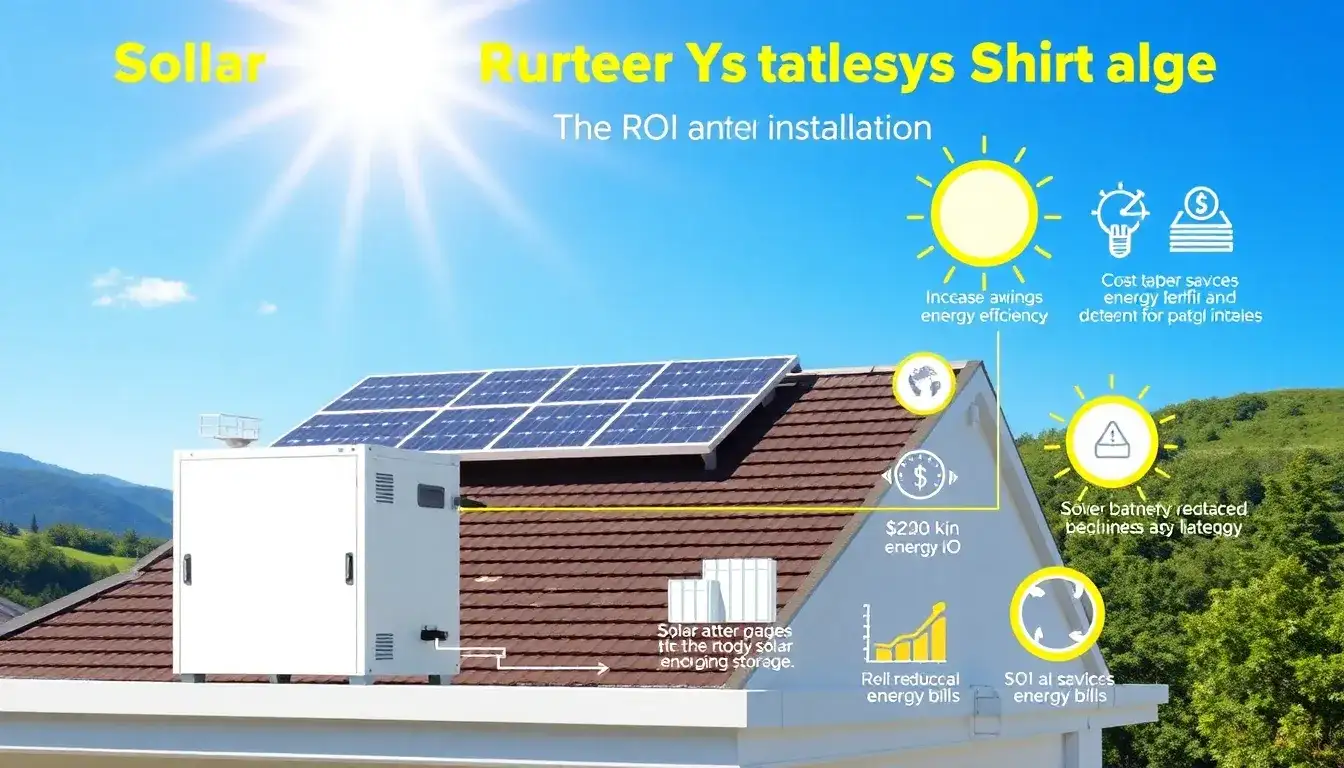
Battery storage significantly influences the overall return on investment (ROI) of a solar panel system by enhancing energy savings, increasing system efficiency, and providing financial and operational benefits.
How Battery Storage Impacts Solar ROI
1. Increased Energy Savings and Lower Bills
Solar batteries store excess electricity generated by solar panels during the day, which can then be used during peak electricity rate periods or at night when solar panels are not producing energy. This reduces the amount of electricity you need to buy from the grid, especially during expensive peak periods, directly decreasing your energy bills and improving your ROI.
2. Maximized Solar Efficiency
Without storage, excess solar energy that is not immediately used is often sent back to the grid and may be compensated at lower rates or wasted. Battery storage allows you to capture and store this surplus solar energy for later use, maximizing the utility and performance of your solar system and increasing overall energy efficiency by up to 30%.
3. Energy Independence and Protection Against Rate Fluctuations
By relying more on stored solar energy, homeowners and businesses reduce their dependence on grid electricity and are less vulnerable to fluctuating and rising energy prices. This financial stability enhances ROI over time.
4. Benefits Under Time-of-Use (TOU) Rates and Evolving Policies
In locations with TOU rates, where electricity prices vary by time of day, battery storage allows users to shift solar energy consumption to high-cost periods, maximizing savings. Additionally, changes in net metering regulations can make self-consumption through storage more valuable, further improving ROI.
5. Business Operational Savings and Resilience
For businesses, especially large facilities with variable energy demands, integrating battery storage with solar panels can significantly reduce operational energy expenses, with reported annual savings in the range of $20,000 to $50,000. It also supports stable operations by balancing supply and demand, thereby improving operational resilience.
6. Increased Property Value and Environmental Impact
Homes equipped with solar panels and battery storage often see increased property values due to enhanced energy capabilities. Furthermore, battery storage supports environmental benefits by reducing reliance on fossil-fuel-based power sources and lowering greenhouse gas emissions.
Summary Table of Battery Storage Impacts on Solar ROI
| Impact Area | Benefit | Effect on ROI |
|---|---|---|
| Energy Savings | Use stored energy during peak hours | Lower electricity bills |
| Solar Efficiency | Capture and use surplus solar energy | More energy utilized, less waste |
| Energy Independence | Reduced reliance on grid and rate protection | Stable, predictable energy costs |
| Time-of-Use Rate Optimization | Shift usage to expensive periods | Maximize cost savings |
| Business Operations | Lower costs, stable supply | Significant annual savings |
| Property Value | Higher home value with battery and solar system | Increased asset value |
| Environmental Impact | Reduced fossil fuel dependence | Supports sustainability goals |
In conclusion, adding battery storage to a solar panel system improves ROI by enabling greater self-consumption of solar energy, reducing energy costs, providing protection against fluctuating electricity prices, enhancing system efficiency, and delivering additional benefits such as increased property value and environmental sustainability. This makes solar-plus-storage a compelling investment, especially in areas with high energy costs or time-of-use pricing.
Original article by NenPower, If reposted, please credit the source: https://nenpower.com/blog/how-does-battery-storage-impact-the-overall-roi-of-a-solar-panel-system/

