

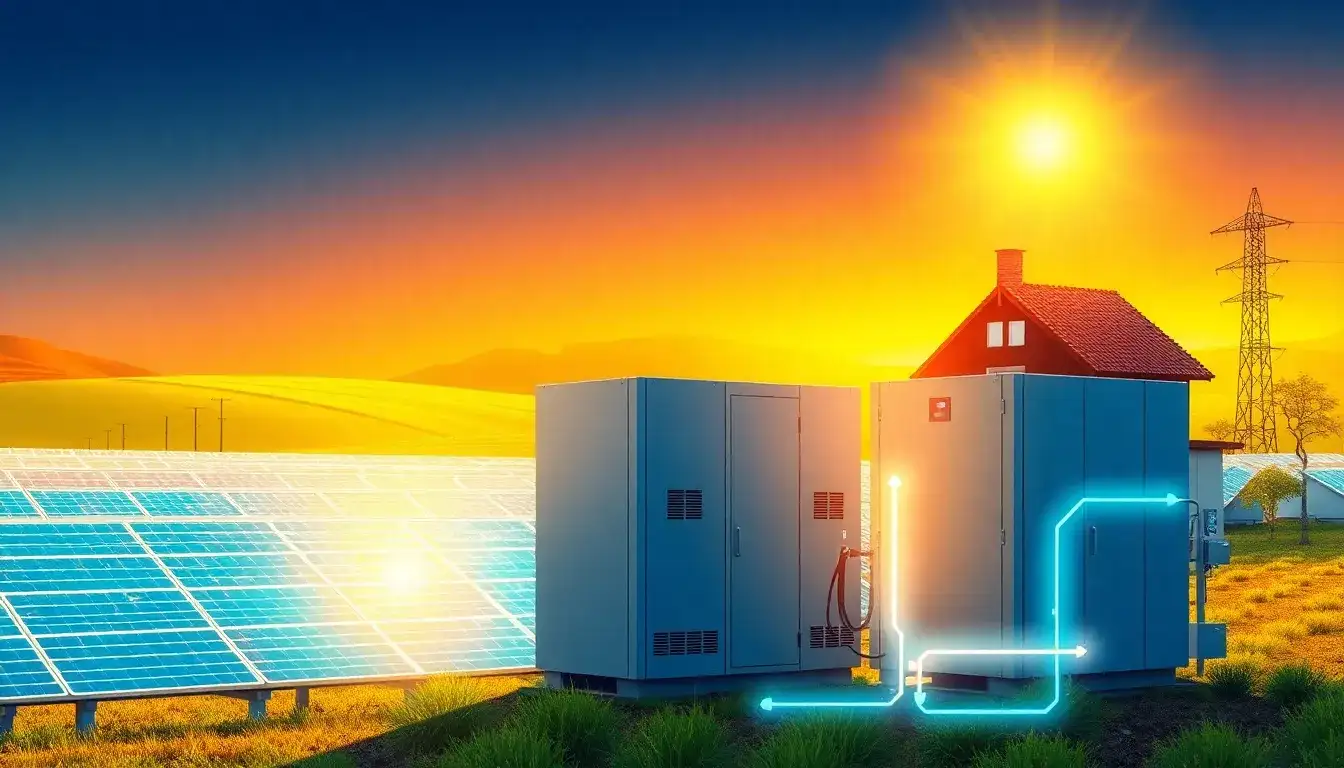
Battery storage helps reduce reliance on grid power during low sunlight periods by storing excess electricity generated when solar energy production is high (e.g., during sunny periods) and then discharging that stored energy when solar generation is low or unavailable. This allows users to draw on stored power instead of grid electricity, smoothing out the intermittency of solar power.
Key ways battery storage achieves this include:
- Energy Time-Shifting: Batteries charge during periods of abundant sunlight and discharge during low sunlight or nighttime, ensuring continuous power availability without needing to ramp up grid supply.
- Peak Demand Reduction: By supplying stored energy during peak demand periods or when solar output dips, batteries reduce the drawing of electricity from the grid, which also helps utilities manage overall grid load and avoid costly upgrades.
- Backup and Microgrid Capability: In some installations, battery systems paired with solar arrays can operate independently as microgrids, providing power to critical facilities when the main grid is down, enhancing resilience during low solar generation or outages.
- Cost Savings and Grid Relief: Using stored energy during times of low solar output and high grid prices can lead to significant cost savings for consumers and utilities alike, as batteries allow energy use when prices are lower and reduce the need for expensive peak-grid power.
Overall, battery storage acts as a buffer that stores renewable energy when available and releases it during low generation periods, reducing direct dependence on grid power and enhancing grid stability and economic efficiency.
Original article by NenPower, If reposted, please credit the source: https://nenpower.com/blog/how-does-battery-storage-help-in-reducing-the-reliance-on-grid-power-during-low-sunlight-periods/

