

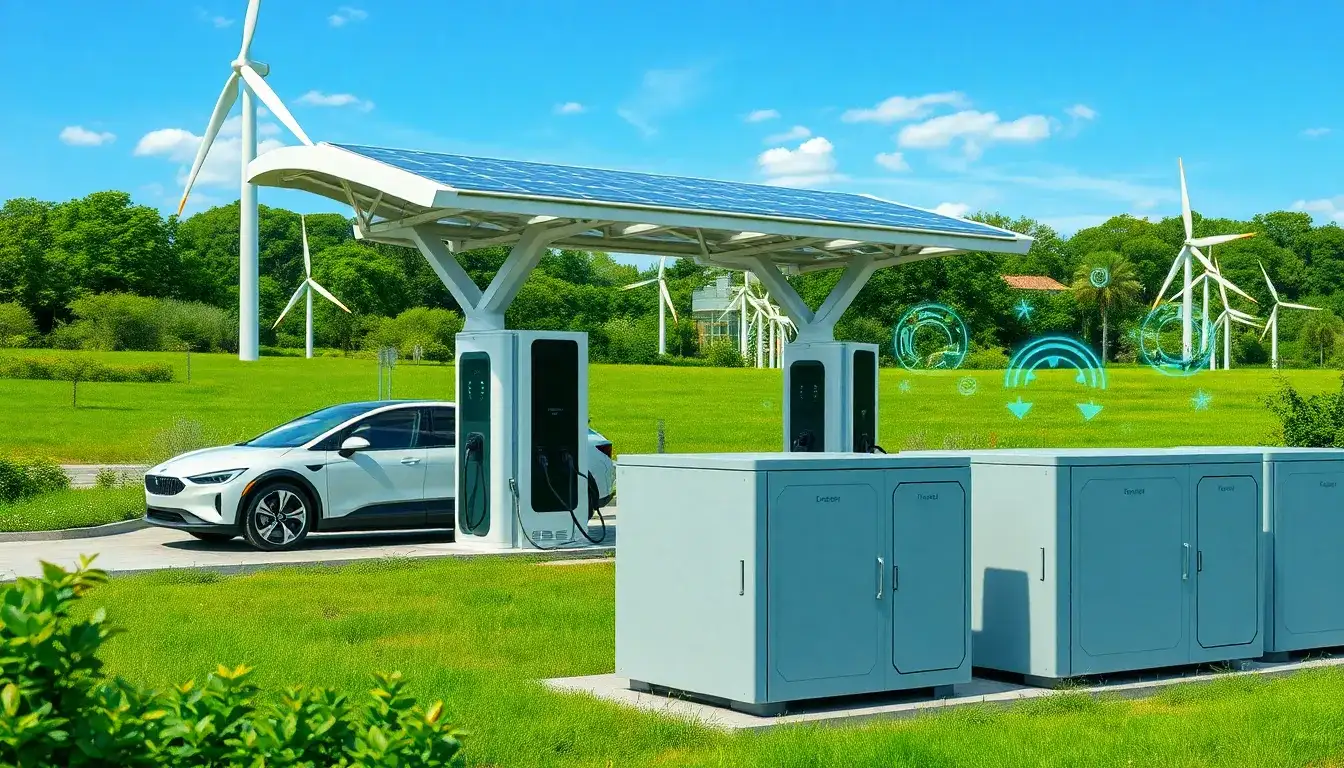
Battery storage enhances the sustainability of electric vehicle (EV) charging stations in multiple critical ways:
Supporting Renewable Energy Integration
Battery storage systems allow EV charging stations to store excess renewable energy generated from intermittent sources like solar and wind during periods of high production. This stored clean energy can then be used to charge vehicles when renewable generation is low or demand is high, thus ensuring a greater proportion of EV charging comes from clean energy sources rather than fossil fuels. This capability reduces the environmental impact of EV charging and advances the transition to a low-carbon economy.
Enhancing Grid Stability and Reliability
Battery energy storage systems (BESS) serve as buffers that help smooth out fluctuations in electricity demand and supply. By storing energy during off-peak times and releasing it during peak demand, BESS can reduce stress on the electrical grid, prevent power outages, and maintain a steady supply of electricity for EV charging. This stability is essential as EV adoption grows and more vehicles require simultaneous charging.
Power Boost and Load Balancing
Battery storage enables EV charging stations to provide a power boost, allowing multiple vehicles to charge simultaneously without requiring expensive grid infrastructure upgrades. Energy stored in batteries can be managed to distribute power evenly across all chargers, preventing peak loads and reducing demand charges, which optimizes energy use and enhances the charging network’s efficiency.
Peak Shaving and Energy Cost Optimization
By using stored energy during high-cost electricity periods and recharging batteries during off-peak, lower-cost hours, battery storage allows businesses and charging operators to perform peak shaving. This lowers operational costs while also reducing the demand spikes that can strain the grid, making the EV charging infrastructure more economically and environmentally sustainable.
Summary
In essence, battery storage enables EV charging stations to:
- Maximize use of renewable energy by storing and utilizing clean energy flexibly.
- Enhance grid stability by balancing supply and demand.
- Increase charging capacity and reliability without costly grid upgrades.
- Reduce electricity costs through strategic energy management.
All these factors contribute significantly to making EV charging infrastructure more sustainable, reliable, and cost-effective, which supports the broader adoption of electric vehicles and helps drive the transition to a cleaner transportation ecosystem.
Original article by NenPower, If reposted, please credit the source: https://nenpower.com/blog/how-does-battery-storage-enhance-the-sustainability-of-ev-charging-stations/

