

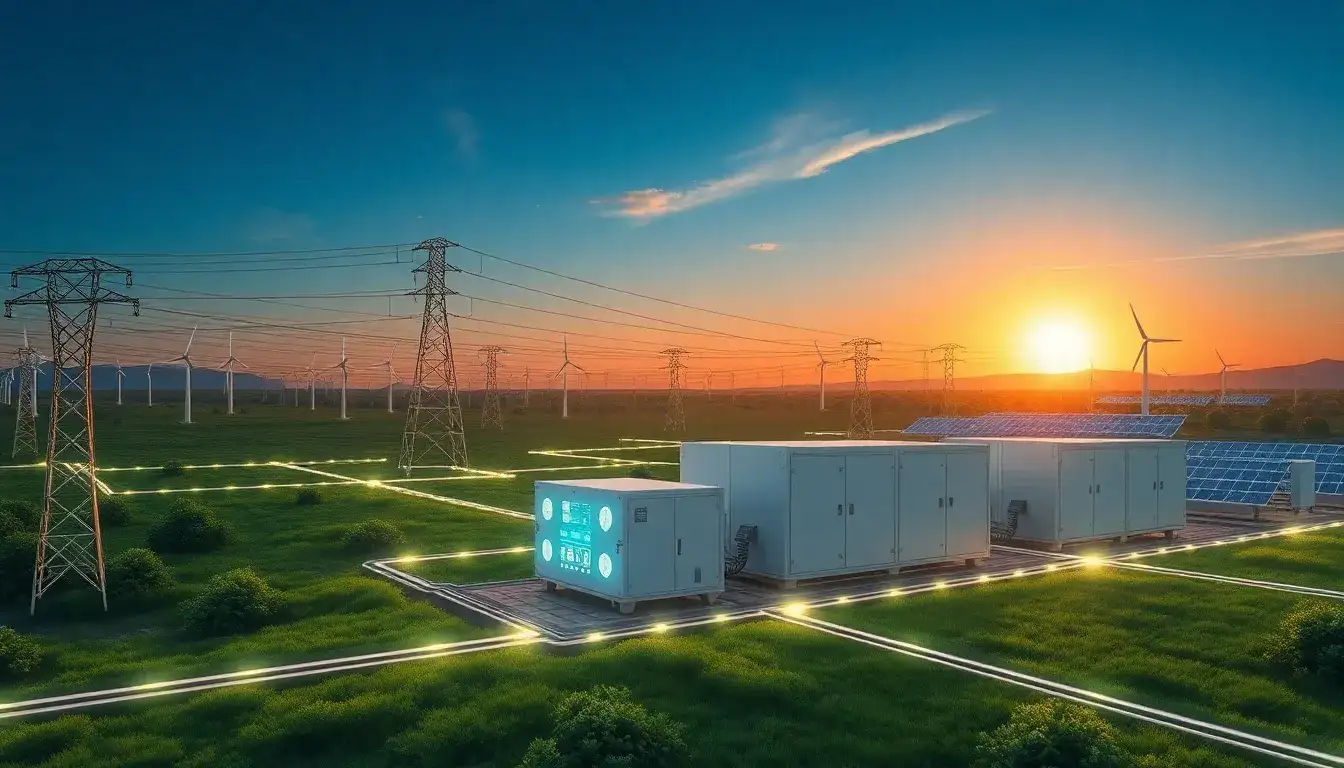
Battery storage enhances grid stability through several key mechanisms:
Key Mechanisms for Enhancing Grid Stability
- Frequency Regulation:
- Battery Energy Storage Systems (BESS) dynamically adjust power output to stabilize grid frequency within acceptable ranges. They rapidly respond to supply and demand fluctuations, helping prevent blackouts.
- Peak Load Management:
- BESS absorbs excess power during high demand periods and releases stored energy during peak hours. This reduces stress on the grid infrastructure and decreases the need for additional power generation capacity.
- Renewable Energy Integration:
- BESS stores excess renewable energy during high generation periods and releases it when demand exceeds supply. This smooths out fluctuations in energy supply from intermittent sources like solar and wind, making the grid more flexible and less reliant on fossil fuels.
- Grid Resiliency:
- BESS provides backup power during grid outages or equipment failures, ensuring continuous electricity supply and minimizing the impact on consumers.
- Voltage Control and Reactive Power Regulation:
- Batteries can also regulate voltage levels and provide reactive power support, which is crucial for maintaining grid stability.
In summary, battery storage systems significantly improve grid stability by offering flexible, rapid-response solutions that manage supply and demand imbalances, integrate renewable energy sources, and enhance overall grid resilience.
Original article by NenPower, If reposted, please credit the source: https://nenpower.com/blog/how-does-battery-storage-enhance-grid-stability/

