

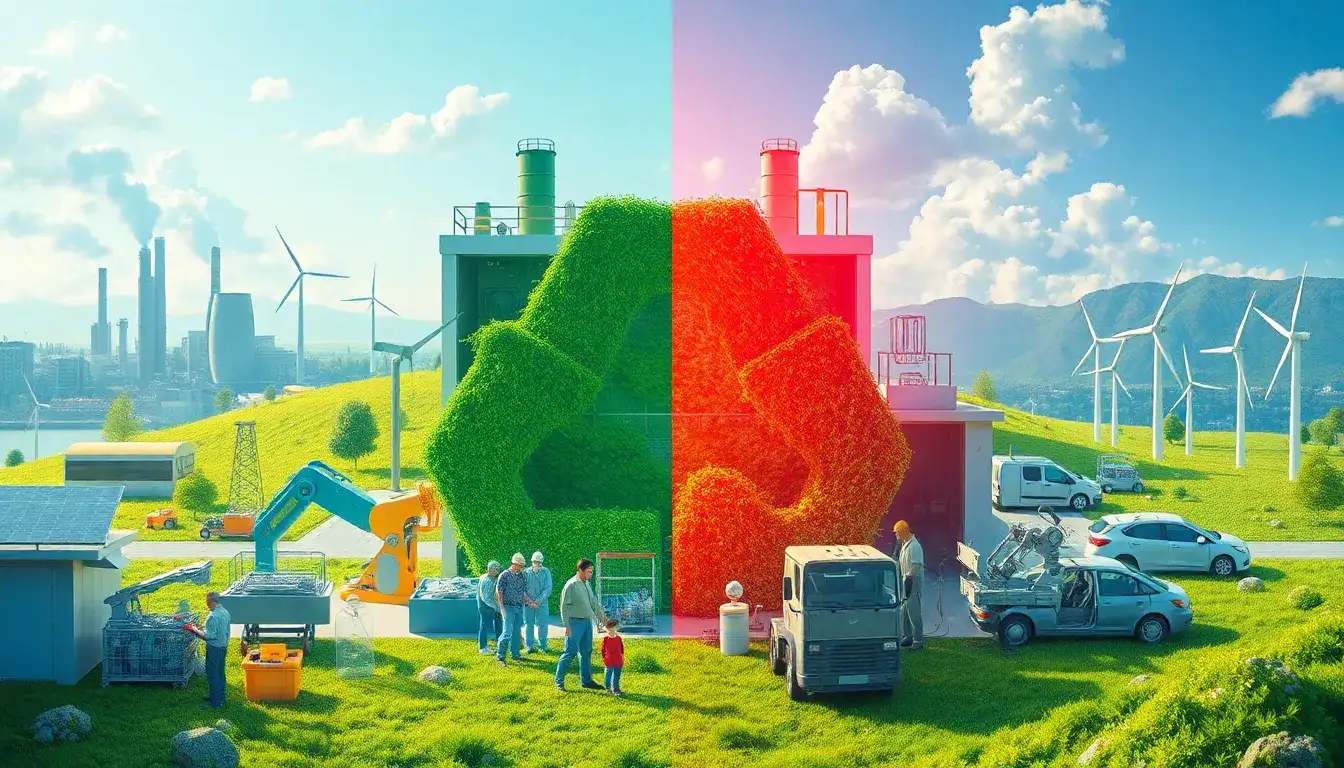
Battery recycling plays a crucial role in reducing emissions associated with electric vehicle (EV) production by several key mechanisms:
How Battery Recycling Lowers Emissions
- Reduced Need for Primary Materials Extraction:
- Conservation of Resources: Recycling helps recover materials such as lithium, nickel, and cobalt, which are essential for EV battery production. By doing so, it reduces the demand for extracting these materials from the earth, thereby lowering the environmental impact associated with mining, like deforestation, habitat destruction, and water pollution.
- Lower Energy Consumption and Emissions:
- Reduced Production Emissions: Producing batteries from recycled materials requires less energy compared to extracting and processing virgin materials. Since most energy used in production comes from fossil fuels, this reduction in energy demand leads to lower greenhouse gas emissions.
- Prevention of Hazardous Material Release:
- Environmental Protection: Recycling lithium-ion batteries prevents hazardous materials like lead and cadmium from entering the environment during waste disposal. Proper recycling ensures these toxins do not contaminate water and soil systems.
- Creation of a Circular Economy:
- Efficient Resource Use: By integrating recycled materials into new battery production, the industry moves closer to a circular economy model. This model promotes sustainability by reducing waste and the continuous extraction of finite resources.
Future Impact
- Effective scaling of battery recycling can reduce lithium and nickel demand by up to 25%, and cobalt demand by up to 40% by 2050, according to projections that align with meeting national climate targets.
- As the number of end-of-life EV batteries grows, recycling will become increasingly critical to sustainably manage resources and minimize environmental impacts.
Original article by NenPower, If reposted, please credit the source: https://nenpower.com/blog/how-does-battery-recycling-contribute-to-lowering-emissions-in-ev-production/

