

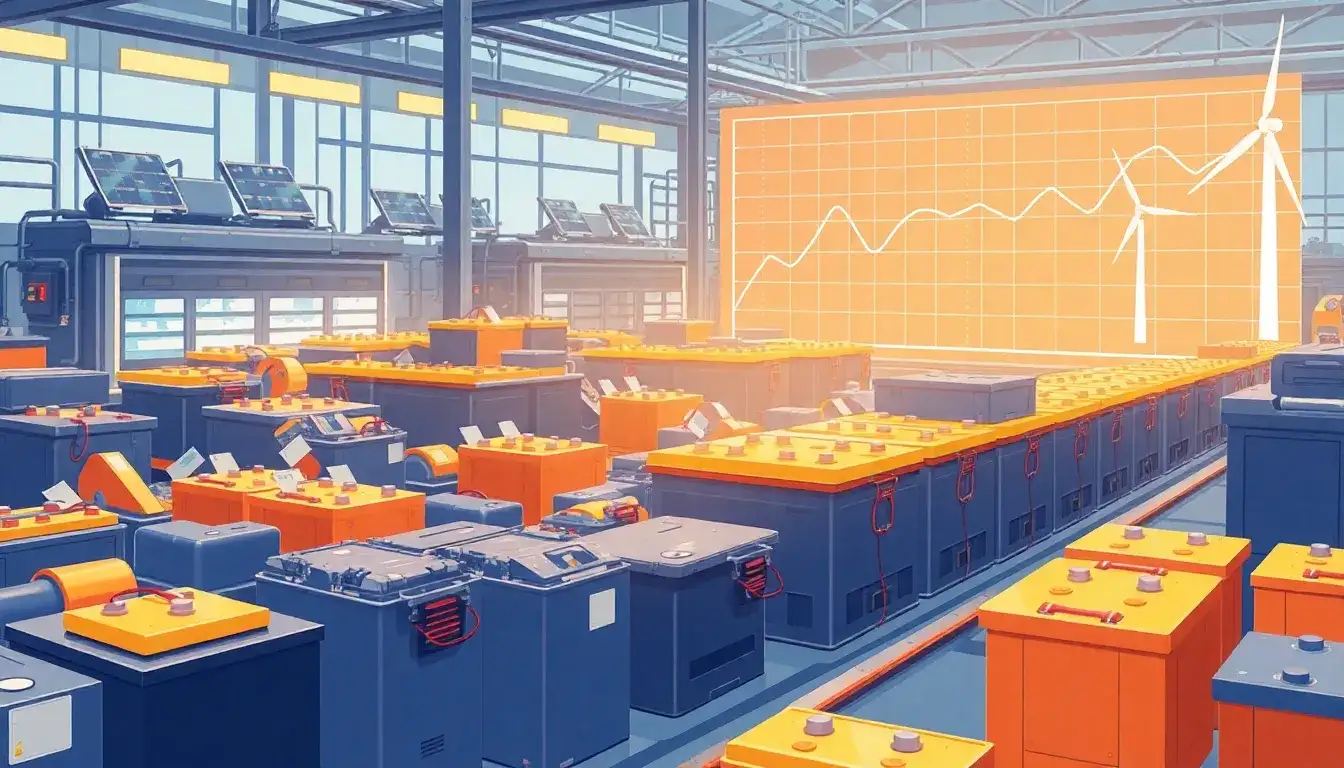
The lithium-ion battery oversupply is driving down energy storage system prices through intense market competition and manufacturing efficiencies, while creating margin pressures for producers. Here’s the breakdown:
Price Drivers
- Oversupply dynamics: Global battery-cell manufacturing capacity (3.1 TWh) now exceeds 2024 demand by 2.5x, forcing manufacturers to slash prices to clear inventory.
- Technology and scale: Increased adoption of cost-effective LFP (lithium iron phosphate) chemistries, improved manufacturing processes, and economies of scale are reducing production costs.
- Regional price gaps: Chinese battery packs cost $126/kWh (2024), undercutting U.S. ($140/kWh) and European ($151/kWh) prices due to localized supply chains and higher production volumes.
Market Impact
- Accelerating storage adoption: Lower battery prices (down 14% in late 2023 to $139/kWh for packs) enable larger-scale renewable energy projects and grid storage deployments.
- Manufacturer squeeze: Smaller producers face existential pressure as cell prices drop faster than raw material costs, eroding profit margins.
- Innovation push: Companies are investing in next-gen tech like sodium-ion and solid-state batteries to differentiate despite Li-ion’s continued cost advantage.
Future Trajectory
BNEF projects Li-ion pack prices to drop by $3/kWh in 2025, driven by R&D breakthroughs and expanding supply chains. While tariffs and geopolitical factors could distort pricing, the long-term trend favors cheaper storage, potentially pushing system costs below $100/kWh by 2025 for EVs and grid projects.
This overproduction cycle creates a buyer’s market for energy storage but risks unsustainable consolidation among battery manufacturers.
Original article by NenPower, If reposted, please credit the source: https://nenpower.com/blog/how-does-battery-overproduction-impact-the-pricing-of-energy-storage-systems/

