

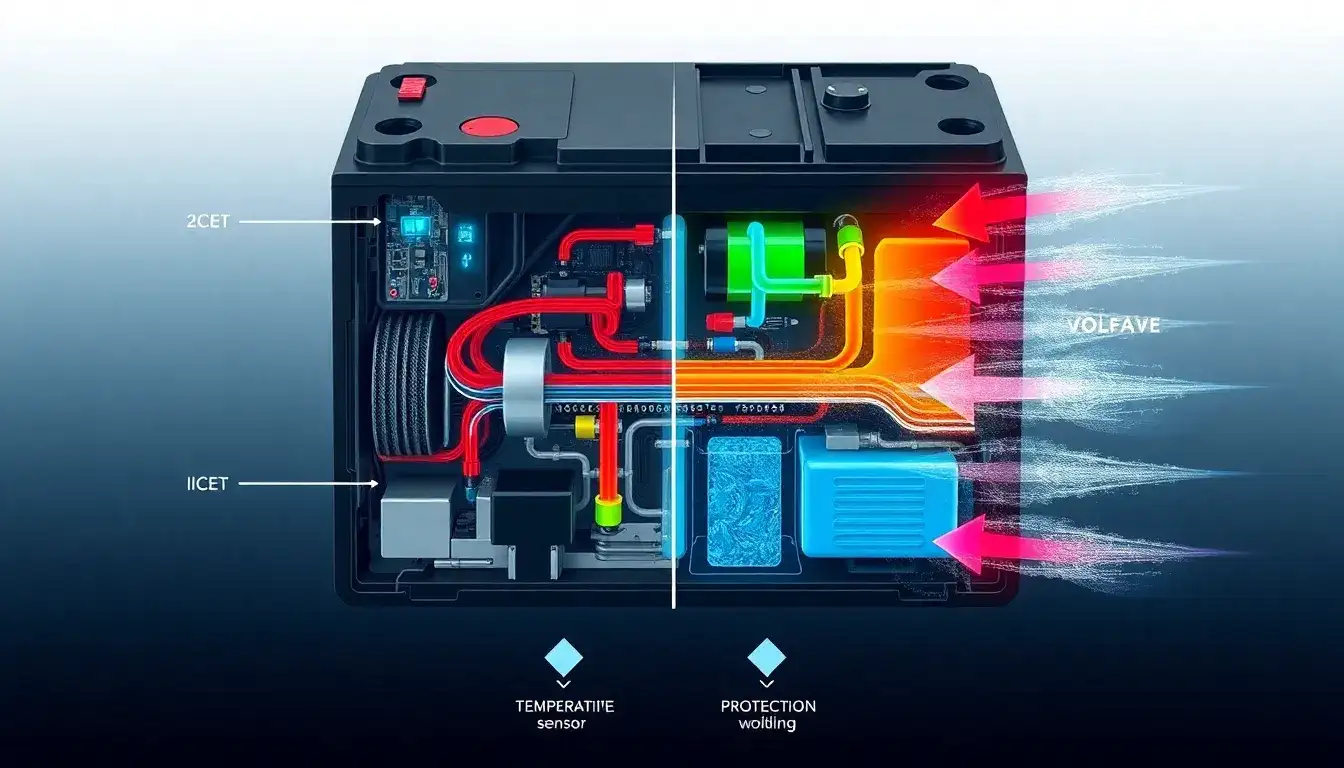
A Battery Management System (BMS) protects electric vehicle (EV) batteries in extreme temperatures through continuous monitoring and control of battery parameters, particularly temperature, in order to maintain safe operating conditions and prevent damage.
How BMS Protects EV Batteries in Extreme Temperatures
-
Temperature Monitoring
The BMS constantly measures the temperature of the battery cells via sensors distributed throughout the battery pack. This real-time temperature data is critical for assessing whether the battery is operating within a safe temperature range. If the battery temperature approaches extremes—either too high or too low—the BMS identifies this condition immediately. -
Thermal Management Control
Upon detecting that temperatures are outside the safe operating area (SOA), the BMS triggers the battery’s thermal management system to intervene. This system may be either active or passive, using air cooling, liquid cooling, or phase change materials to regulate battery temperature. For overheating, cooling mechanisms are activated to bring temperatures back to safe levels; in cold conditions, heating elements may be engaged to warm the battery to an optimal range for safe operation and charging. -
Maintaining Battery Safety and Longevity
By ensuring that the battery temperature remains within specified limits, the BMS protects the battery from thermal runaway, overheating, and degradation accelerated by cold. Operating outside these thermal limits can lead to permanent capacity loss or safety hazards like fire. The BMS’s role in temperature regulation thus directly contributes to the battery’s longevity and safe functioning. -
Controlling Charging and Discharging Based on Temperature
The BMS can restrict charging or discharging currents if the temperature is outside safe thresholds. For example, it prevents excessive current draw during high temperatures to avoid overheating, or it limits charging at low temperatures to prevent lithium plating and battery damage. This control protects battery health and optimizes performance under extreme thermal conditions. -
Cell Balancing and Monitoring
In addition to temperature, the BMS balances individual cells’ charge and monitors their voltage and current. This ensures uniform performance even when some cells experience different thermal conditions, preventing localized overheating and uneven degradation.
In summary, the BMS safeguards EV batteries from extreme temperatures by continuously monitoring cell temperatures, employing thermal management systems to maintain optimal battery temperatures, controlling charge/discharge rates accordingly, and balancing cells to prevent uneven stress. These functions together ensure battery safety, maximize lifespan, and maintain reliable EV operation in harsh thermal environments.
Original article by NenPower, If reposted, please credit the source: https://nenpower.com/blog/how-does-battery-management-system-bms-work-to-protect-ev-batteries-in-extreme-temperatures/

