

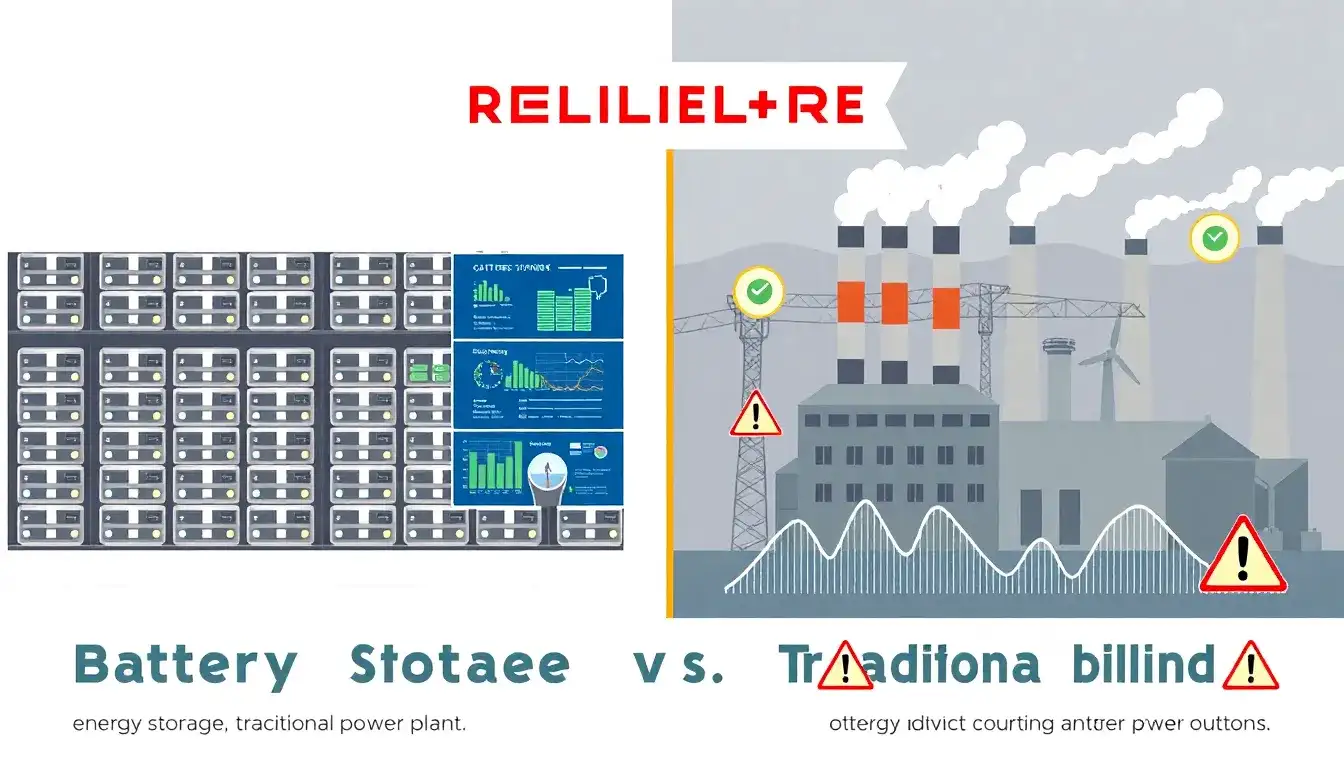
Comparing the reliability of battery energy storage systems (BESS) to traditional power plants involves examining their performance under various conditions and operational challenges. Here’s a breakdown of their reliability aspects:
Reliability Highlights
Battery Energy Storage Systems (BESS)
- Flexibility and Response Speed: BESS can quickly respond to grid needs, providing real-time balance between supply and demand, which is crucial with the integration of variable renewable energy sources like solar and wind.
- Grid Support Services: They offer multiple grid reliability services, including black start capabilities, peaking capacity, and operating reserves, enhancing grid resilience.
- Reliability Challenges: BESS may face systemic performance issues similar to solar photovoltaic resources, often attributed to poor commissioning practices and inverter faults. There is also a lack of long-term reliability data, as most systems have been operational for less than five years.
- Improving Trends: Despite challenges, BESS reliability is improving, with a decrease in failure rates over time due to advancements in design, operations, and risk mitigation strategies.
Traditional Power Plants
- Historical Data and Stability: Traditional power plants have extensive operational data spanning decades, providing a well-understood reliability profile. They offer stable, predictable power output and are less prone to sudden shutdowns compared to variable renewable sources.
- Component Failures: While traditional plants have fewer unexpected failures due to their maturity, they can still suffer from equipment malfunctions and require more maintenance than newer technologies like BESS.
- Grid Stability: Traditional plants, especially thermal units, contribute inherently to grid stability due to their rotating mass providing inertia, which is not naturally available in inverter-based resources like BESS.
Comparison Summary
| Aspect | BESS | Traditional Power Plants |
|---|---|---|
| Response Speed | Fast response capabilities suitable for balancing variable supply and demand. | Generally slower response than BESS, but consistent output. |
| Long-term Reliability | Limited long-term data available; improving over time. | Extensive historical data showing stable performance. |
| Grid Support Services | Provides multiple reliability services, including black start and peaking capacity. | Offers inherent stability through rotating mass and established operational reliability. |
| Operational Costs | Lower operational costs compared to many traditional power plants. | Higher operational and maintenance costs, especially for thermal units. |
In summary, while battery energy storage systems offer flexibility and fast response times, they face challenges regarding long-term reliability and systemic performance. Traditional power plants have a proven track record for stability but face different operational challenges. Both technologies play critical roles in supporting modern grid reliability, each with its strengths and weaknesses.
Original article by NenPower, If reposted, please credit the source: https://nenpower.com/blog/how-does-battery-energy-storage-compare-to-traditional-power-plants-in-terms-of-reliability/

