

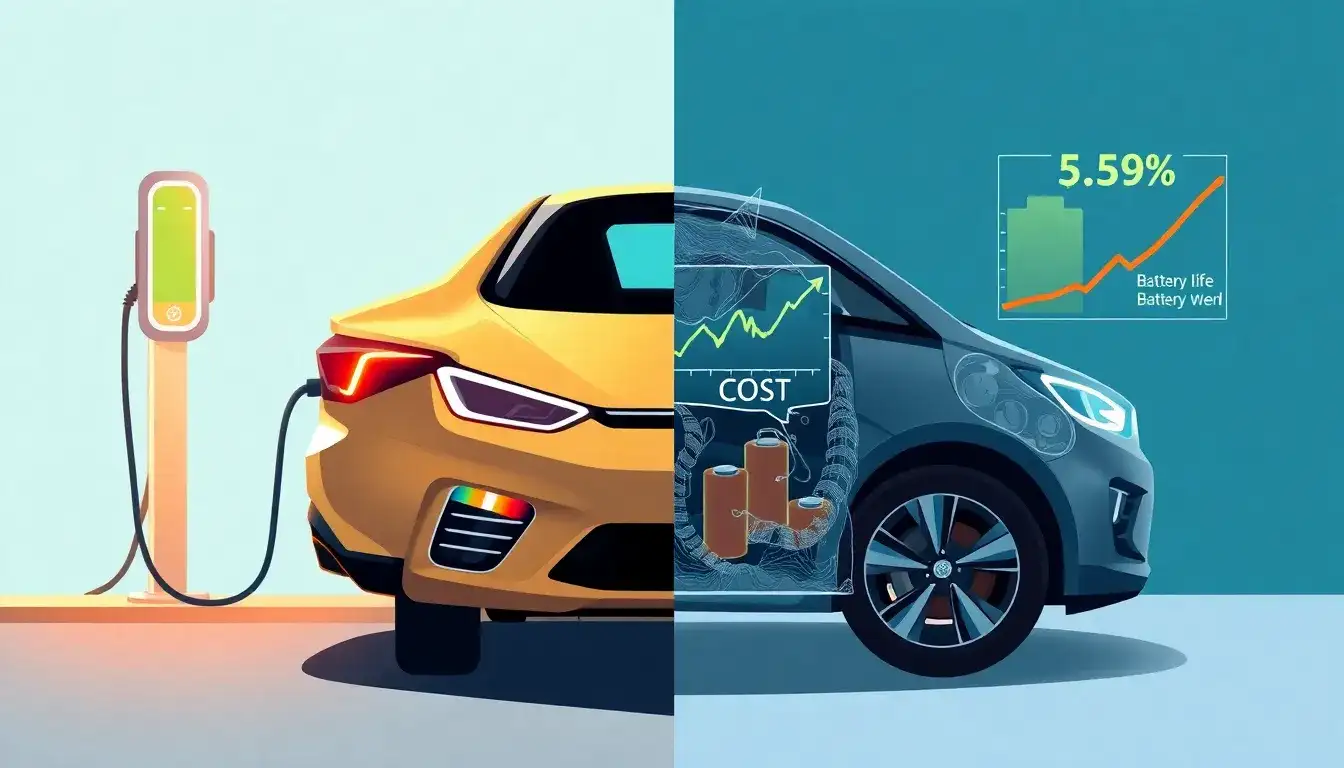
Battery degradation from fast charging impacts the overall cost of owning an electric vehicle (EV) primarily by reducing the battery’s capacity and lifespan, which can lead to earlier and potentially costly battery replacement or diminished vehicle resale value.
How Fast Charging Contributes to Battery Degradation
Fast charging—especially DC rapid charging—delivers a high voltage and current to the battery pack in a short time, which generates increased heat inside the battery cells. This heat accelerates chemical degradation processes such as electrolyte decomposition and breakdown of electrode materials, and causes mechanical stress through thermal expansion within the battery components. As a result, the battery’s ability to hold charge declines faster than with slower charging methods.
Quantitatively, studies indicate that exclusive use of DC rapid charging can increase battery degradation rates by about 16% compared to AC fast charging, which itself is gentler on batteries. The impact is cumulative over time, gradually reducing driving range and overall vehicle performance owing to the diminished energy storage capacity.
Economic Implications on EV Ownership Cost
- Battery Replacement Costs: Since the battery is one of the most expensive components of an EV, faster degradation from frequent fast charging accelerates the need for battery refurbishment or replacement, which can cost thousands of dollars, depending on the vehicle model and battery size.
- Reduced Resale Value: Degraded batteries imply less driving range and lower performance, which decreases the vehicle’s market value when reselling or trading in.
- Potential Increased Charging Costs: As battery efficiency falls, energy loss in the form of heat during charging means that more electricity is required to achieve the same range, subtly increasing operational costs over the vehicle’s lifetime.
Mitigation and Best Practices
The negative impact of fast charging on battery life can be mitigated by following good charging habits:
- Avoid frequent use of rapid charging; use it only occasionally when necessary.
- Maintain the battery charge within an optimal state of charge range (typically 20% to 80%) rather than charging to 100%.
- Avoid charging or operating the vehicle in extreme temperatures, which exacerbate degradation.
Adopting these practices can help preserve battery health, extend battery life, and therefore reduce the total cost of ownership related to battery degradation.
In summary, while fast charging provides convenience, it modestly accelerates battery degradation, leading to higher long-term ownership costs through earlier battery replacements and reduced resale value. Managing charging habits and environmental conditions can effectively mitigate these costs.
Original article by NenPower, If reposted, please credit the source: https://nenpower.com/blog/how-does-battery-degradation-from-fast-charging-impact-the-overall-cost-of-owning-an-electric-vehicle/

