

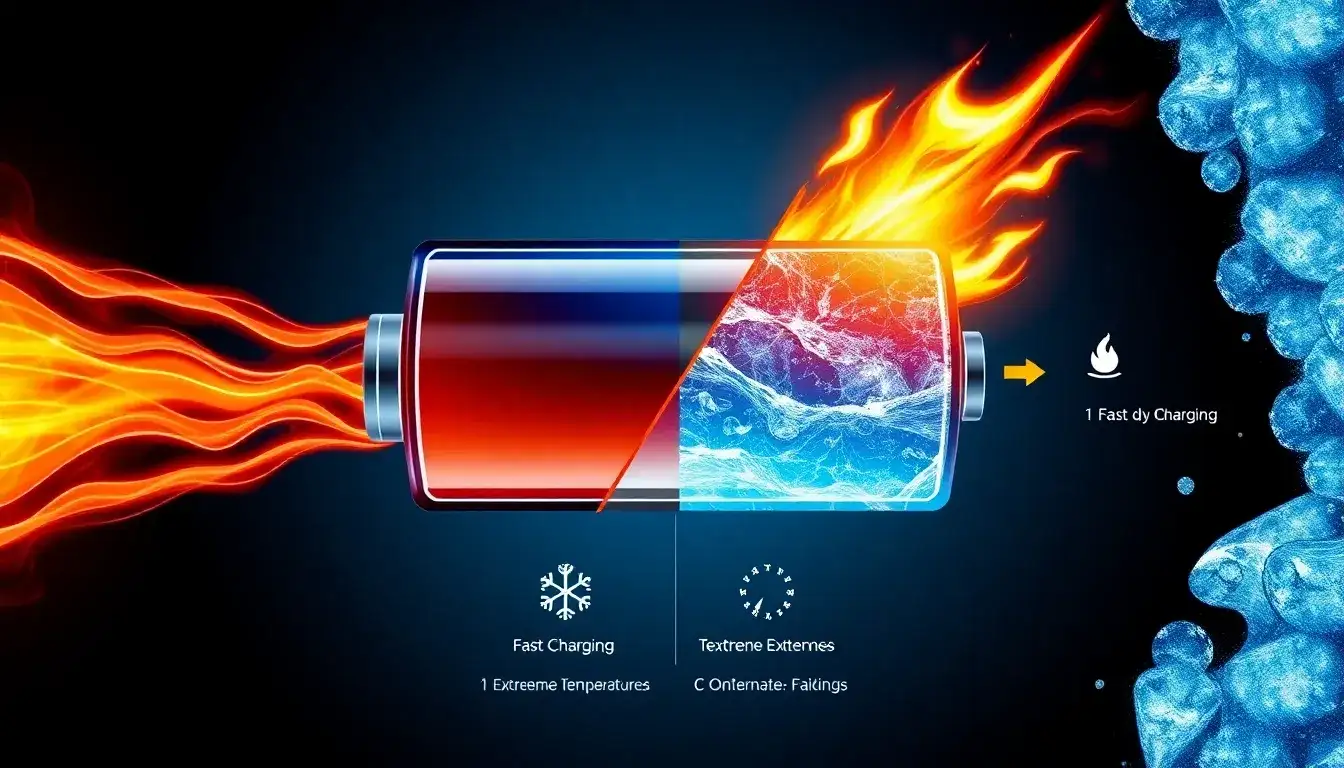
Battery degradation in electric vehicles (EVs)
Battery degradation in electric vehicles (EVs) is influenced by several factors, primarily fast charging practices and temperature extremes, each affecting battery health differently.
Fast Charging and Battery Degradation
- Frequent use of fast charging, especially DC rapid charging (high voltage and current), accelerates battery degradation more than typical AC charging. This happens because lithium ions are forced into the battery faster than they can diffuse properly inside graphite particles, leading to lithium plating and eventual structural damage to the battery.
- Studies have shown that EVs charged exclusively with fast chargers tend to retain about 70% of their original battery capacity after 50,000 miles, compared to 75% for those primarily slow charged. This represents roughly a 5% faster degradation in capacity attributable to fast charging frequency.
- However, moderate fast charging (7kW to 22kW) has minimal impact on battery life, with significant degradation occurring mainly with frequent rapid or ultra-fast charging.
- Modern EV battery management systems adjust charging rates and battery temperatures automatically to mitigate some negative effects of fast charging.
Temperature Effects on Battery Degradation
- Temperature plays a crucial role in battery longevity. Warmer battery temperatures (around 25°C) reduce the risk of lithium plating during charging because ions can diffuse more easily, supporting over 3,000 full charge cycles before notable capacity loss occurs.
- Conversely, batteries charged or operated in cold conditions suffer more from lithium plating, which accelerates degradation.
- However, excessively high temperatures can accelerate the formation of the Solid Electrolyte Interphase (SEI) layer, which thickens over time and causes long-term capacity loss and performance degradation.
Comparing Fast Charging Degradation to Temperature Effects
- Both fast charging and temperature extremes cause degradation, but their mechanisms and severity differ.
- Fast charging primarily causes degradation via lithium plating due to rapid ion insertion, leading to about a 5% greater capacity loss after extensive use compared to slow charging.
- Temperature effects can either mitigate or exacerbate degradation: moderate warmth aids battery health, while cold causes faster lithium plating and heat contributes to chemical degradation over time.
- Overall, extreme temperatures (both hot and cold) may have a greater and more complex impact on battery degradation than fast charging alone, because thermal stresses affect battery chemistry continuously during use, not just during charging.
Summary
| Factor | Impact on Battery Degradation | Notes |
|---|---|---|
| Frequent Fast Charging | Accelerates degradation by ~5% over slow charging | Causes lithium plating; managed by EV systems |
| Moderate Fast Charging | Minimal impact | Below rapid charging thresholds |
| Cold Temperatures | Increase lithium plating and degradation | Worse than fast charging alone |
| High Temperatures | Promote SEI layer growth, long-term capacity loss | Harmful if sustained |
In conclusion, while fast charging does accelerate battery wear slightly, especially when used very frequently at high power, extreme temperatures—particularly cold—can have an equal or greater negative effect on battery health. Advanced battery management systems in EVs help mitigate these effects by controlling charging rates and temperatures to maximize battery longevity.
Original article by NenPower, If reposted, please credit the source: https://nenpower.com/blog/how-does-battery-degradation-from-fast-charging-compare-to-other-factors-like-extreme-temperatures/

