

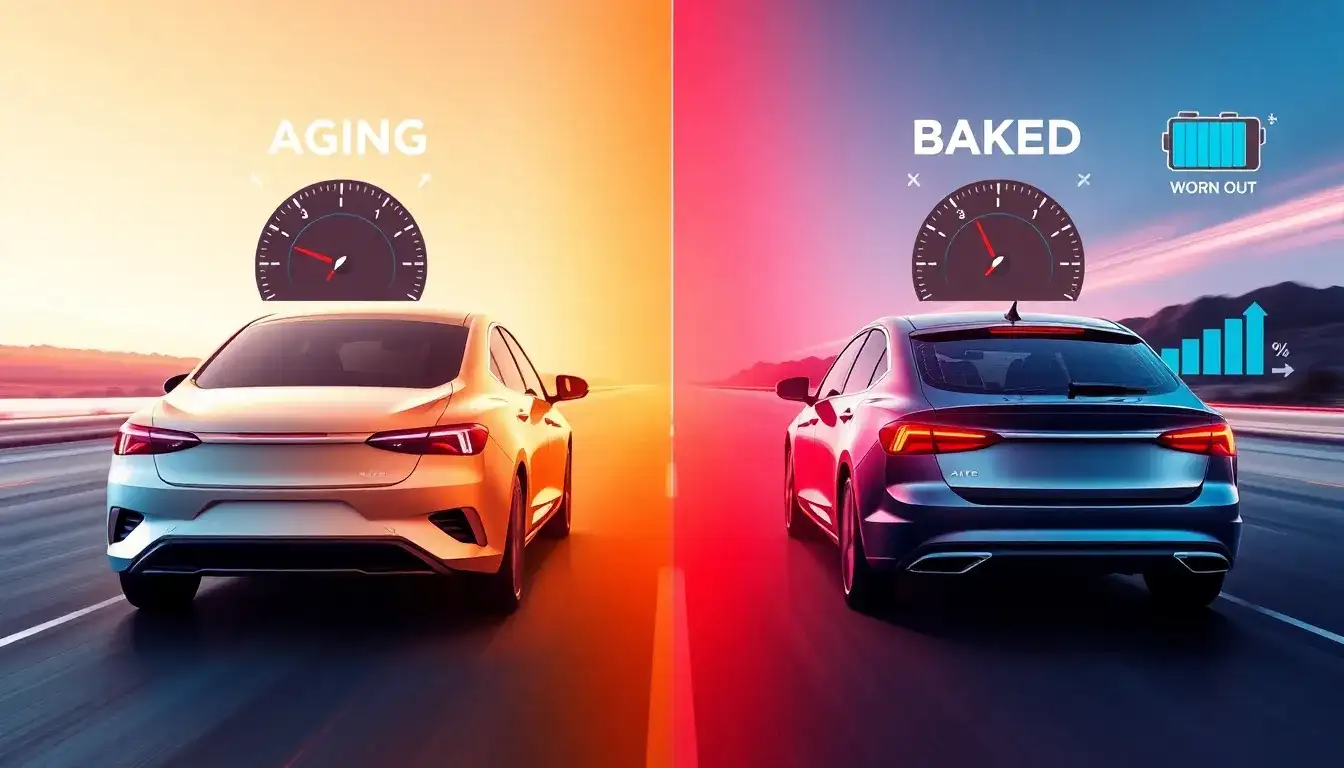
Battery age in plug-in hybrid electric vehicles (PHEVs) significantly influences overall braking performance primarily through its impact on the battery’s ability to support regenerative braking. Here’s how battery aging affects braking performance:
Effect of Battery Age on Regenerative Braking and Braking Performance
- Battery Capacity Degradation: Over time, the lithium-ion batteries used in PHEVs degrade naturally, losing capacity at an average rate of about 1.8% per year under moderate conditions. As battery capacity decreases, the battery’s ability to absorb energy during regenerative braking diminishes.
- Reduced Regenerative Braking Efficiency: Regenerative braking relies on the battery to capture and store energy generated when the vehicle slows down. A degraded battery with lower capacity and higher internal resistance cannot efficiently accept high charging currents from regenerative braking. This reduction means less energy is recovered and stored.
- Impact on Brake Wear and Performance: Because less kinetic energy is recuperated via regenerative braking in aged batteries, PHEVs rely more on traditional friction brakes, leading to increased brake wear. Newer batteries enable more effective regenerative braking, which significantly reduces wear on brake pads—often more than doubling their life compared to conventional vehicles.
- Thermal and Electrical Constraints: Aging batteries often experience higher internal resistance and degradation accelerated by temperature extremes, further limiting regenerative braking energy capture. This can force powertrain systems to blend engine use and friction braking more, affecting braking smoothness and overall performance.
- System Control Adjustments: To protect aged batteries, vehicle control systems may reduce regenerative braking strength to avoid battery damage from high charging currents. This protective strategy reduces braking regeneration and increases reliance on mechanical brakes.
Summary
As a PHEV battery ages and its capacity and power acceptance deteriorate, the regenerative braking system becomes less effective. This results in:
- Reduced energy recovery during braking
- Increased use and wear of traditional friction brakes
- Potentially altered braking feel due to control system adjustments
Therefore, battery age negatively affects overall braking performance in PHEVs by diminishing regenerative braking capabilities, leading to higher mechanical brake use and decreased efficiency.
Maintaining battery health, including thermal management and cycling within optimal charge ranges, helps prolong regenerative braking effectiveness and overall braking performance.
Original article by NenPower, If reposted, please credit the source: https://nenpower.com/blog/how-does-battery-age-affect-the-overall-braking-performance-of-phevs/

