

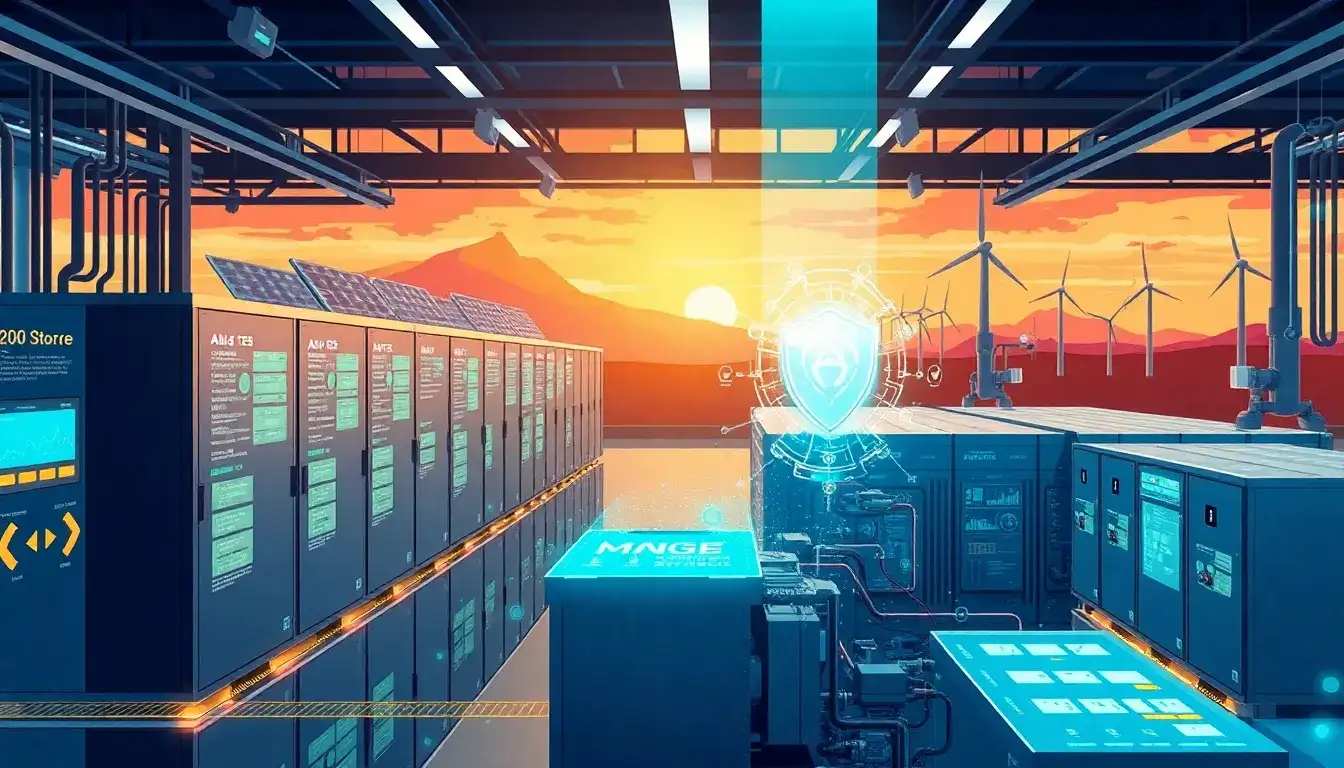
AI reduces unplanned downtime in energy storage systems primarily through predictive maintenance, real-time monitoring, and early fault detection, which collectively enhance reliability, safety, and operational efficiency.
How AI Reduces Unplanned Downtime in Energy Storage Systems
1. Predictive Maintenance and Fault Prediction
AI models analyze vast amounts of operational data from energy storage systems, such as battery wear patterns and component behavior, to predict potential failures before they occur. This allows maintenance teams to address issues proactively rather than reactively, significantly preventing unexpected system breakdowns. For example, AI-driven degradation analytics track real-time battery health and usage, enabling optimization of charge-discharge cycles to slow battery aging and reduce the likelihood of sudden faults.
2. Early Detection of Anomalies and Risks
AI-powered algorithms detect anomalies and potential failure signatures weeks or even months ahead. This early warning capability allows operators to intervene in time, preventing conditions that would cause unplanned outages. AI systems also monitor for safety hazards, such as overheating, short circuits, and thermal runaway, which can lead to catastrophic failures if unaddressed.
3. Data Integration and Advanced Analytics
AI integrates data from multiple sources—such as sensors, SCADA systems, weather data, and operational logs—to create a comprehensive view of the energy storage environment. The synthesis of this information enables AI to identify patterns and correlations that hint at impending failures or disruptions, even in complex and evolving energy grids.
4. Enhanced Safety and Regulatory Compliance
By continuously monitoring system parameters and generating automated reports, AI helps ensure that energy storage systems comply with safety and regulatory standards. This risk management reduces liabilities and can lower insurance costs, contributing indirectly to avoiding downtime caused by compliance issues or safety incidents.
5. Operational Efficiency and Cost Reduction
Reducing unplanned downtime by predicting failures and optimizing maintenance schedules leads to substantial cost savings. Reports indicate that AI can reduce downtime by up to 40%, thus preserving system uptime, improving asset longevity, and lowering maintenance expenditures. In industrial contexts, where downtime costs escalate rapidly, AI’s role in maintaining continuous operation is crucial to financial performance.
In summary, AI mitigates unplanned downtime in energy storage systems by shifting maintenance strategies from reactive to proactive, enabling early fault detection, integrating diverse data sources for precise risk assessment, ensuring operational safety, and improving overall system reliability and cost efficiency.
Original article by NenPower, If reposted, please credit the source: https://nenpower.com/blog/how-does-ai-reduce-unplanned-downtime-in-energy-storage-systems/

