

How AI Predicts Maintenance Needs in Solar Energy Systems
Data Collection and Monitoring
AI systems use a network of IoT-connected sensors installed on solar panels and associated equipment. These sensors collect real-time data on parameters such as temperature, voltage, power output, irradiance, humidity, tilt angle, inverter efficiency, dirt accumulation, and operational loads.
Pattern Recognition and Anomaly Detection
Machine learning algorithms analyze the collected sensor data alongside historical maintenance records and environmental factors to identify patterns or anomalies that indicate degrading performance or potential failures. By detecting subtle changes that humans might miss, AI can spot early warning signs of equipment malfunction or degradation before a failure occurs.
Predictive Modeling
AI builds predictive models using supervised and unsupervised learning techniques. These models forecast when a component (such as a solar panel, inverter, or tracker) is likely to fail or require maintenance based on observed trends in the data. Deep learning models process complex, high-dimensional data to improve the accuracy of these predictions.
Proactive Maintenance Scheduling
With predictive insights, maintenance can be scheduled proactively rather than reactively, minimizing unplanned downtime and extending equipment lifespan. AI-driven systems can also automate maintenance scheduling, reducing operational costs and optimizing maintenance resources.
Use of Image Recognition and Drone Inspections
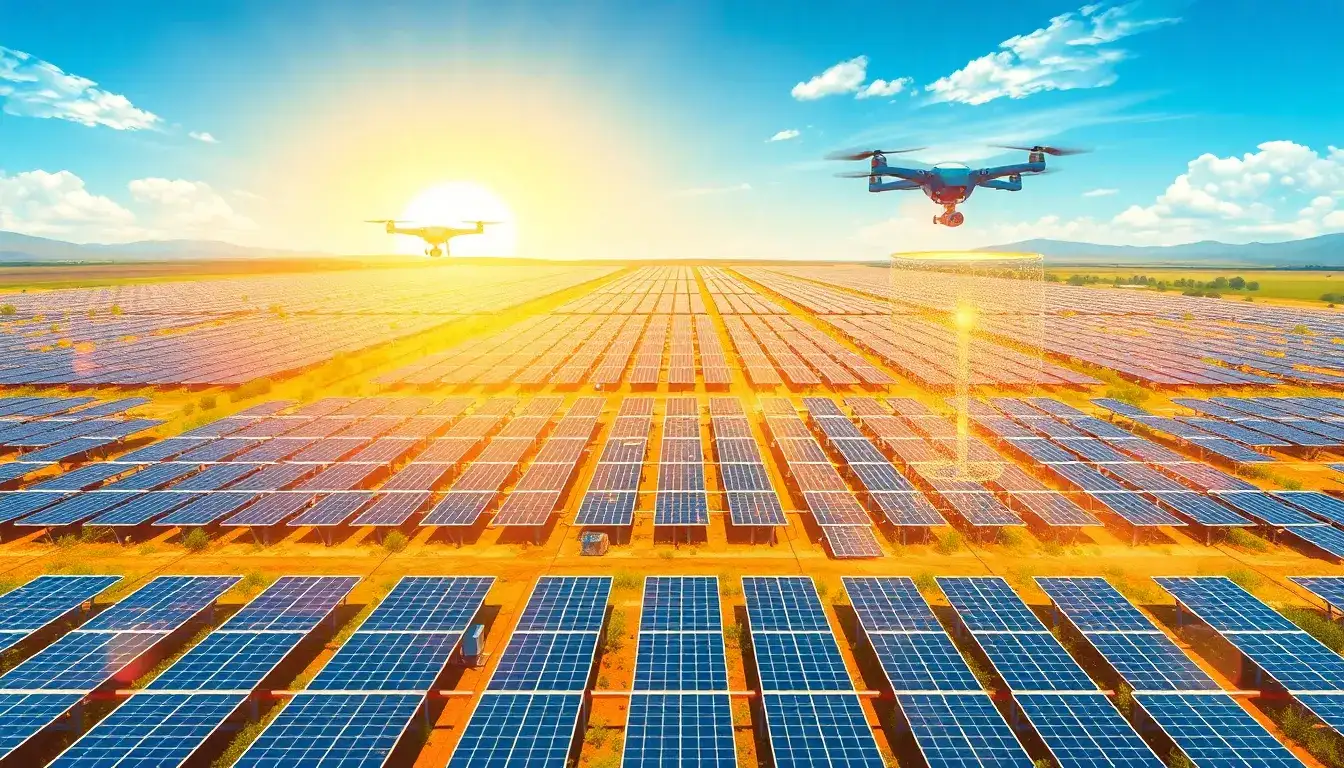
Some implementations include AI-powered drones or imaging analysis to inspect panels for damage, dirt accumulation, or shading issues, further enhancing prediction accuracy and maintenance effectiveness.
Benefits of AI-Driven Predictive Maintenance in Solar Energy
- Reduced downtime: By predicting failures before they happen, AI reduces costly unplanned outages.
- Lower maintenance costs: Maintenance is performed only when needed, avoiding unnecessary interventions and extending equipment life.
- Improved energy efficiency: Well-maintained systems operate closer to optimal performance, maximizing energy production.
- Enhanced reliability and sustainability: AI helps integrate solar power more effectively into grids by ensuring stable generation and reducing waste.
Challenges
- Data quality and integration: Accurate predictions require high-quality, comprehensive data, which can be difficult to acquire and maintain.
- System upgrades: Older solar infrastructure may need sensor installations or upgrades to support AI-based monitoring.
- Costs and complexity: Initial implementation involves investment in hardware, software, and skilled personnel.
In summary, AI predicts solar energy system maintenance needs by continuously monitoring sensor data and applying machine learning algorithms to identify early signs of equipment degradation or failure. This predictive approach enables timely, cost-effective maintenance interventions, boosting system uptime, efficiency, and sustainability.
Original article by NenPower, If reposted, please credit the source: https://nenpower.com/blog/how-does-ai-predict-maintenance-needs-in-solar-energy-systems/

