

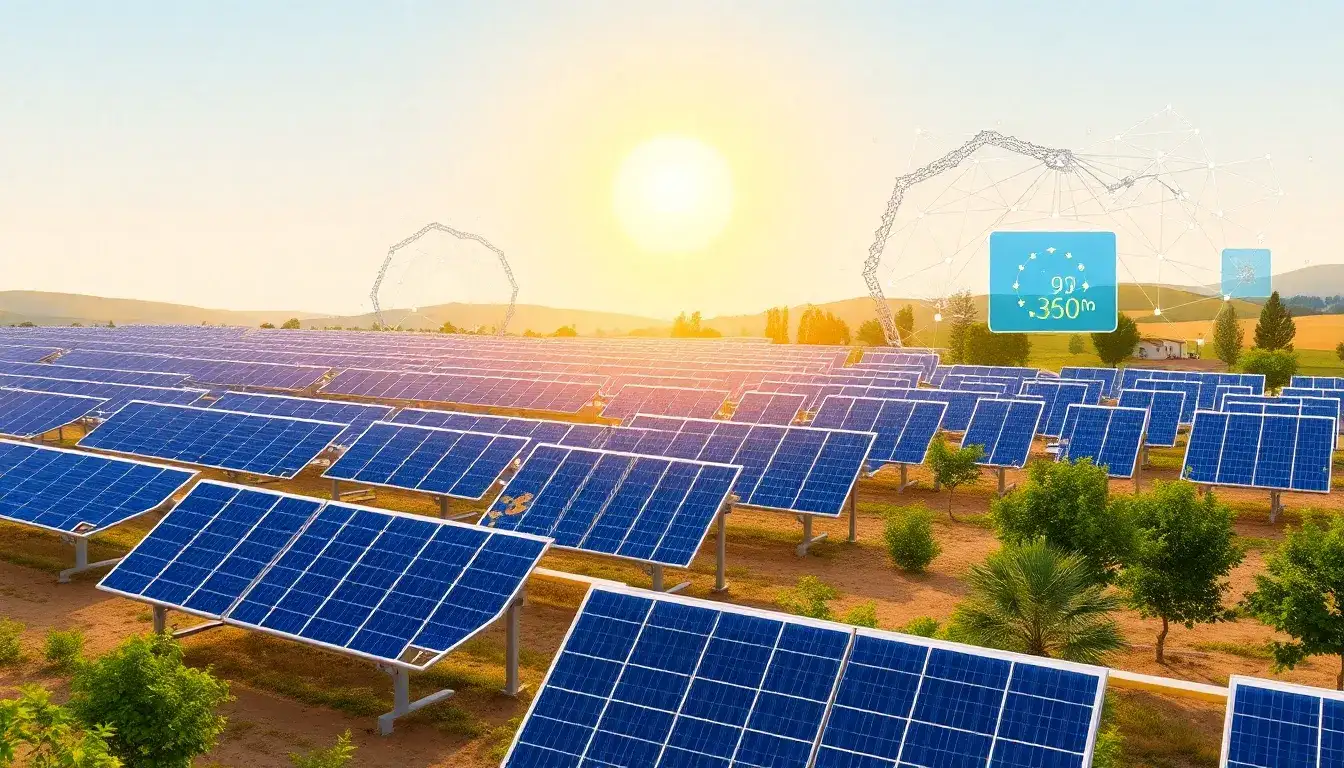
AI optimizes the tilt and orientation of solar panels using machine learning algorithms and real-time data analysis. Here’s how it works:
Process Overview
- Real-Time Data Collection: AI systems collect real-time data from environmental sensors and solar panels. This includes information about sunlight intensity, weather conditions, and panel performance.
- Machine Learning Analysis: AI algorithms analyze this data to identify optimal tilt angles and orientations that maximize sunlight exposure at any given time.
- Predictive Models: AI uses predictive models to forecast weather conditions and adjust the orientation of solar panels accordingly. For example, if a cloudy period is expected, the panels might be adjusted to capture sunlight during clearer intervals.
- Dynamic Adjustments: The AI continuously monitors the solar panels’ performance and makes dynamic adjustments to their tilt and orientation to ensure they operate at peak efficiency throughout the day.
- Fault Detection and Maintenance: AI also monitors the system for potential faults and inefficiencies, allowing for early intervention and maintenance to minimize downtime.
Benefits
- Increased Energy Efficiency: AI optimization can increase energy yields by up to 25% by capturing sunlight more effectively throughout the day.
- Reduced Maintenance Costs: Predictive maintenance reduces the need for costly repairs and extends the lifespan of solar panels.
- Improved ROI: AI-driven systems maximize the return on investment by optimizing energy production and reducing operational costs.
By leveraging AI, solar energy installations can achieve higher efficiency, lower costs, and improved reliability compared to traditional methods.
Original article by NenPower, If reposted, please credit the source: https://nenpower.com/blog/how-does-ai-optimize-the-tilt-and-orientation-of-solar-panels/

