

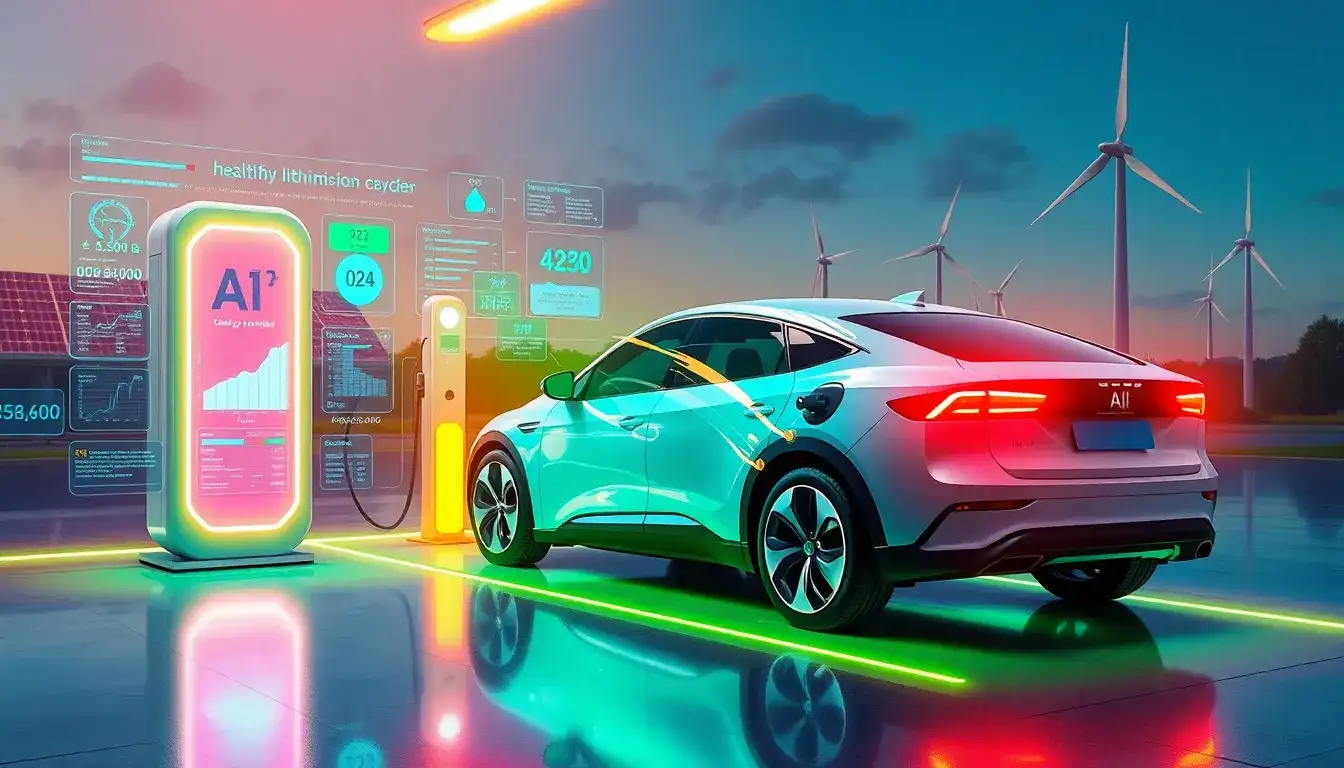
AI optimizes charging cycles for lithium-ion batteries primarily through predictive modeling, adaptive control, and dynamic charging management, which together enhance battery health, longevity, and efficiency.
Key Ways AI Optimizes Charging Cycles
1. Predicting Battery Health and Aging
AI uses machine learning and deep learning algorithms to accurately predict battery state of health and lifespan by analyzing data from previous charging cycles, temperature variations, and electrochemical behavior. For example, Stanford researchers achieved 95% accuracy in predicting lithium-ion battery lifespan with AI-powered models. This knowledge allows proactive management of charging to avoid conditions that accelerate aging.
2. Real-time Adaptive Charging Controls
AI dynamically adjusts charging parameters—such as charging speed and current—based on real-time usage patterns and battery conditions. For instance, AI can slow down charging when it detects potential risks like lithium plating (uneven lithium ion deposition that damages the battery) by analyzing sensor data. It also regulates temperature to maintain optimal thermal conditions, which is critical for battery health.
3. Mitigating Lithium Plating and Other Degradation Modes
AI-driven predictive models identify when high current densities could cause lithium plating or other harmful effects. By proactively modifying charging protocols—reducing currents or switching to pulse charging modes (controlled bursts rather than continuous current)—AI prevents excessive stress on the battery while maintaining fast charging performance. This reduces risks of capacity loss, internal resistance increase, and safety hazards.
4. Customizing Charging Profiles to Usage Behavior
AI personalizes charging cycles based on individual user behavior. For example, frequent fast chargers receive optimized charge curves designed to balance speed and battery longevity, while users with slower, less frequent charging are given different profiles. This adaptation ensures efficient energy use and extends battery life over real-world usage patterns.
5. Enhancing Fast Charging through Advanced Algorithms
AI leverages advanced methods such as deep reinforcement learning and Bayesian optimization to enhance fast charging strategies. These techniques enable precise state estimation of key battery parameters during charging, allowing for optimal control that maximizes charging speed without compromising battery integrity.
Summary Table of AI’s Role in Lithium-ion Battery Charging Optimization
| AI Capability | Function | Benefits |
|---|---|---|
| Battery Health Prediction | Estimates lifespan, state of health | Enables proactive charge management |
| Real-time Adaptive Control | Adjusts charging speed, current, and temperature | Extends battery life, prevents damage |
| Lithium Plating Mitigation | Predicts and prevents uneven lithium deposition | Improves safety and capacity retention |
| Customized Charging Profiles | Tailors charge cycles to user behavior | Balances speed, efficiency, longevity |
| Advanced Fast Charging Algorithms | Uses deep learning, Bayesian optimization, reinforcement learning | Enables faster, safer charging |
In conclusion, AI optimizes lithium-ion battery charging cycles by continuously learning from large datasets, adapting charging protocols in real time, and preventing degradation mechanisms, thus significantly improving battery performance, safety, and longevity in applications like electric vehicles and energy storage systems.
Original article by NenPower, If reposted, please credit the source: https://nenpower.com/blog/how-does-ai-optimize-charging-cycles-for-lithium-ion-batteries/

