

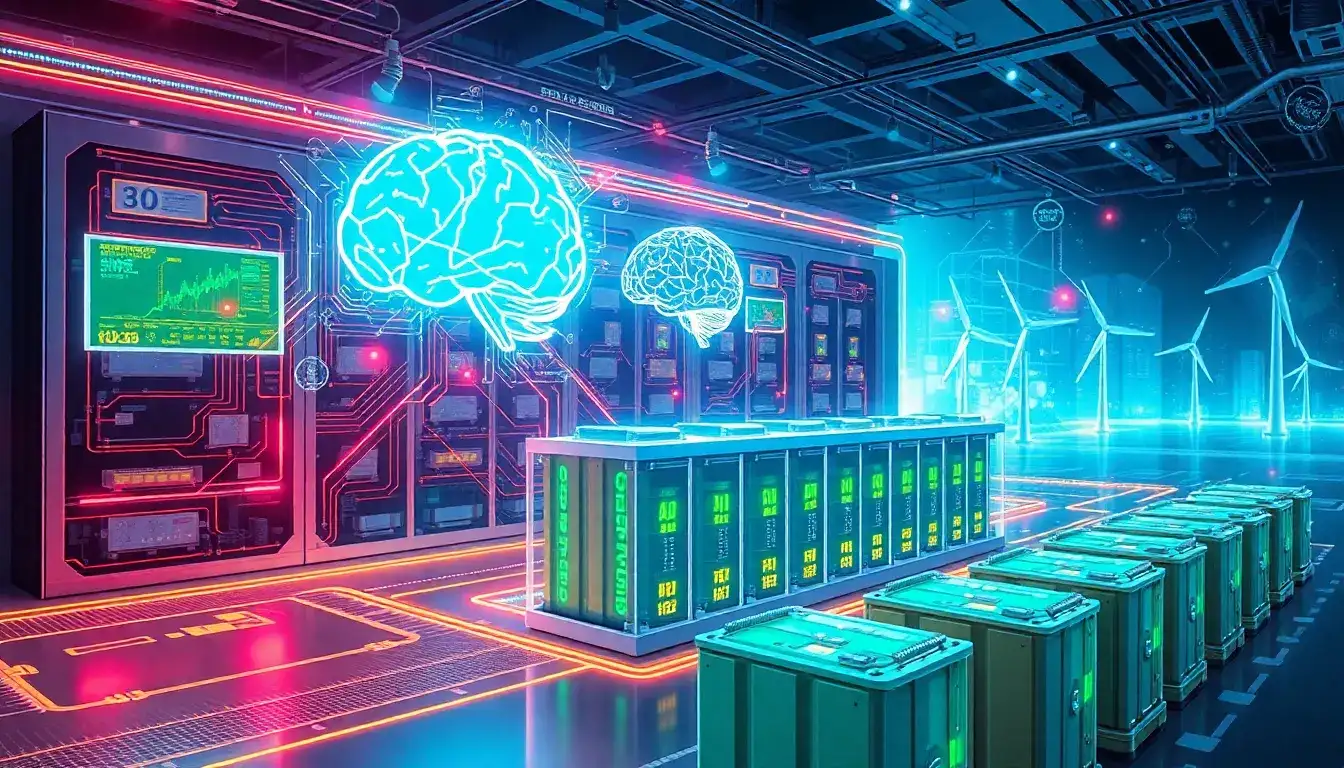
AI optimizes battery wear in energy storage systems primarily through intelligent battery management systems and predictive maintenance by analyzing diverse data to extend battery lifespan and improve reliability.
Key Ways AI Optimizes Battery Wear
1. Adaptive Charging and Discharging Management
AI systems continuously monitor real-time battery conditions—such as state of charge (SOC), temperature, and health metrics—and optimize charging and discharging cycles accordingly to reduce wear. Unlike traditional fixed algorithms, AI dynamically adjusts energy flow to avoid overcharging, deep discharging, or rapid charge rates, which accelerate degradation. For example, AI can slow the charging current as the battery nears full capacity or when temperature rises, preventing damage caused by excess heat and stress. This tailored charging strategy can improve battery lifespan by up to 40%.
2. Predictive Maintenance and Failure Prevention
AI leverages data like voltage fluctuations, temperature changes, and usage patterns to identify early signs of battery cell degradation or potential failures before they escalate. By predicting when and how batteries might fail, AI enables proactive maintenance, reducing unexpected downtime and extending battery operational life by 30-50%. This is especially important in critical applications such as electric vehicles and grid storage where safety and reliability are paramount.
3. Battery Health and Lifespan Prediction
Machine learning models can accurately predict the remaining useful life of lithium-ion batteries with high precision (up to 95% accuracy in some studies). These predictions help optimize use patterns and schedule maintenance intelligently, further reducing unnecessary wear and extending battery longevity.
4. Frequency and Profile Modulation of Charging Cycles
AI techniques adjust the frequency and profiles of charging cycles based on the battery’s current state. This prevents harmful effects from frequent fast charging or full-capacity charging, which traditionally accelerate battery wear. By dynamically tuning charging speeds and durations to optimal levels, AI reduces stress on battery cells and preserves capacity over time.
Summary Table of AI Optimization Techniques
| AI Optimization Method | How It Reduces Battery Wear | Impact on Battery Performance |
|---|---|---|
| Adaptive charging/discharging management | Prevents overcharge, deep discharge, and thermal stress | Extends battery life by up to 40% |
| Predictive maintenance | Detects early failure signs, schedules repairs | Reduces failure rates by 30-50%, improves safety |
| Battery health and lifespan prediction | Enables informed usage and maintenance decisions | Enhances reliability and lifespan prediction accuracy |
| Frequency/profile modulation of cycles | Avoids damaging fast/full charge cycles | Maintains battery health, prolongs battery life |
In essence, AI transforms battery management in energy storage systems by making them smarter, more responsive, and more predictive, leading to significantly optimized battery wear, cost savings, and environmental benefits.
Original article by NenPower, If reposted, please credit the source: https://nenpower.com/blog/how-does-ai-optimize-battery-wear-in-energy-storage-systems/

