

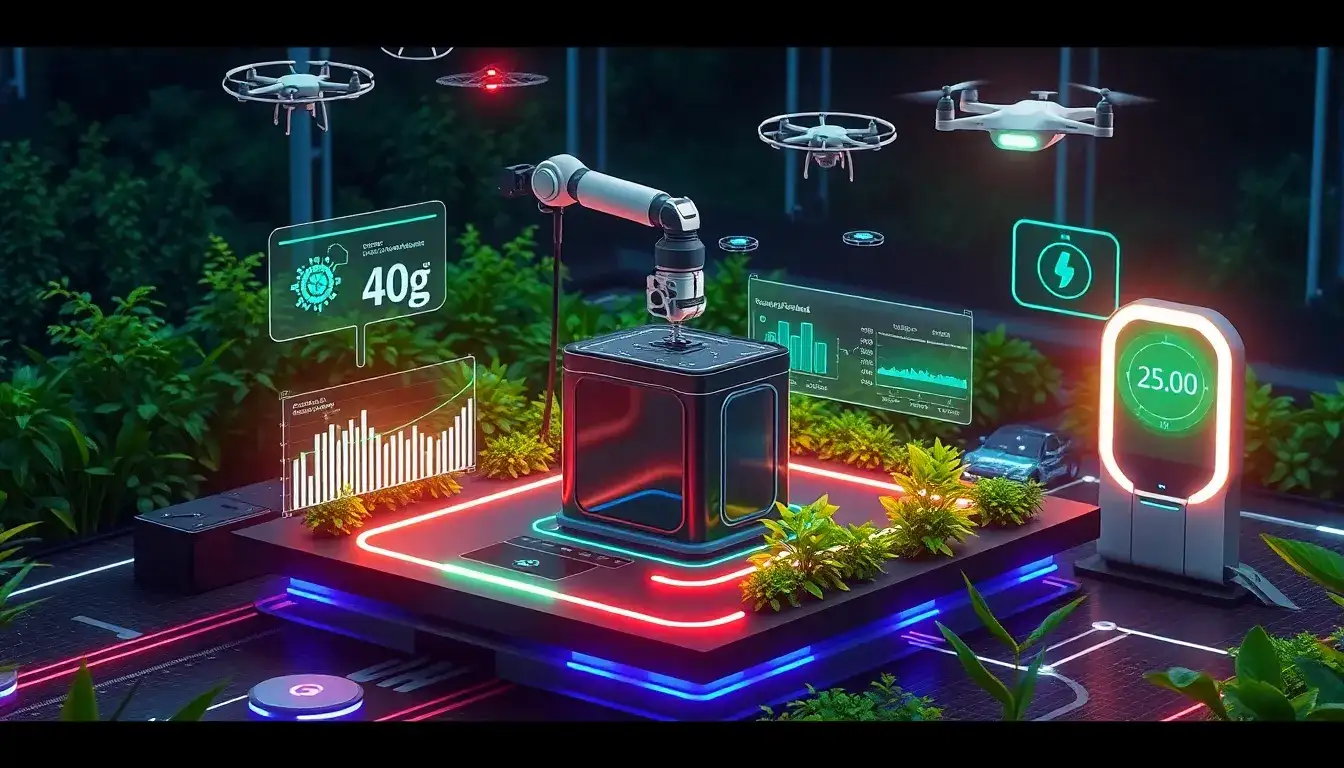
AI optimizes battery charging methods through dynamic, data-driven, and predictive approaches that adapt charging processes to real-time conditions to enhance efficiency, extend battery life, and reduce costs. Key ways AI achieves this include:
Dynamic Charging Adjustment Based on Battery Health and Conditions
AI-powered systems continuously monitor the battery’s state-of-charge (SOC), temperature, cell health, and usage patterns using sensors and real-time data. These systems then adjust charging rates and profiles dynamically rather than using fixed charging rates, which often lead to battery stress and inefficiencies. By tailoring the charge speed and timing to the battery’s current health and chemistry, AI reduces wear and tear, thus extending battery lifespan.
Predictive Charging Algorithms
Using machine learning models trained on historical and real-time data, AI forecasts optimal charging times and durations. This includes analyzing user behavior, grid conditions, energy prices, and availability of renewable energy. For example, AI can schedule charging during off-peak hours to minimize energy costs and reduce grid strain. This predictive capability also helps balance energy demand and supply dynamically.
Thermal and Battery Chemistry Management
AI actively manages battery temperature by predicting thermal trends and controlling cooling systems (like liquid cooling or phase-change materials) proactively. This prevents overheating, which can damage batteries and reduce their performance. Moreover, AI identifies the specific battery chemistry (e.g., lithium nickel manganese cobalt oxide vs. lithium iron phosphate) and customizes charging profiles accordingly to minimize stress on cells, optimizing safety and efficiency.
Integration with Grid and Vehicle-to-Grid (V2G) Systems
AI supports smart energy distribution by coordinating the charging process with grid demands. It can dynamically allocate power among multiple charging stations to optimize energy use and avoid overloads. Through V2G technology, AI enables bidirectional energy flow, allowing electric vehicles (EVs) to discharge power back to the grid during peak demand periods, thus enhancing overall grid stability and energy efficiency.
Accelerated Battery Material Discovery and Improvement
Beyond charging optimization, AI accelerates the discovery and optimization of battery materials, such as electrolytes, using advanced simulations and large datasets. This improves battery safety, stability, and energy density, enabling faster charging and more sustainable batteries over the long term.
Predictive Maintenance of Charging Infrastructure
AI analyzes real-time charger performance data to predict and prevent equipment failures. This proactive maintenance reduces downtime and ensures reliable operation of fast-charging stations, improving user experience and reducing operational costs.
Summary Table of AI Optimization Methods for Battery Charging
| Aspect | AI Optimization Technique | Benefit |
|---|---|---|
| Charging Speed & Profile | Real-time adjustment based on battery health and SOC | Faster, safer charging; extended battery life |
| Charging Time Prediction | Predictive algorithms analyzing user behavior and grid data | Cost and energy efficiency; grid load balancing |
| Thermal Management | Predictive cooling activation | Prevents overheating; protects battery health |
| Battery Chemistry Adaptation | Custom charging based on chemistry type | Minimizes cell stress; optimizes performance |
| Grid Integration & V2G | Dynamic energy distribution; bidirectional energy flow | Reduces grid strain; improves energy efficiency |
| Battery Material Discovery | AI-driven simulations for new electrolyte formulations | Higher energy density; improved safety and charging speeds |
| Charging Station Maintenance | Predictive maintenance models | Increased reliability; reduced downtime |
AI’s holistic approach to charging—from real-time monitoring and adaptive control to predicting optimal usage patterns and material innovations—provides a comprehensive optimization that enhances battery performance, lifetime, and sustainability while also supporting grid stability and cost efficiency.
Original article by NenPower, If reposted, please credit the source: https://nenpower.com/blog/how-does-ai-optimize-battery-charging-methods/

