

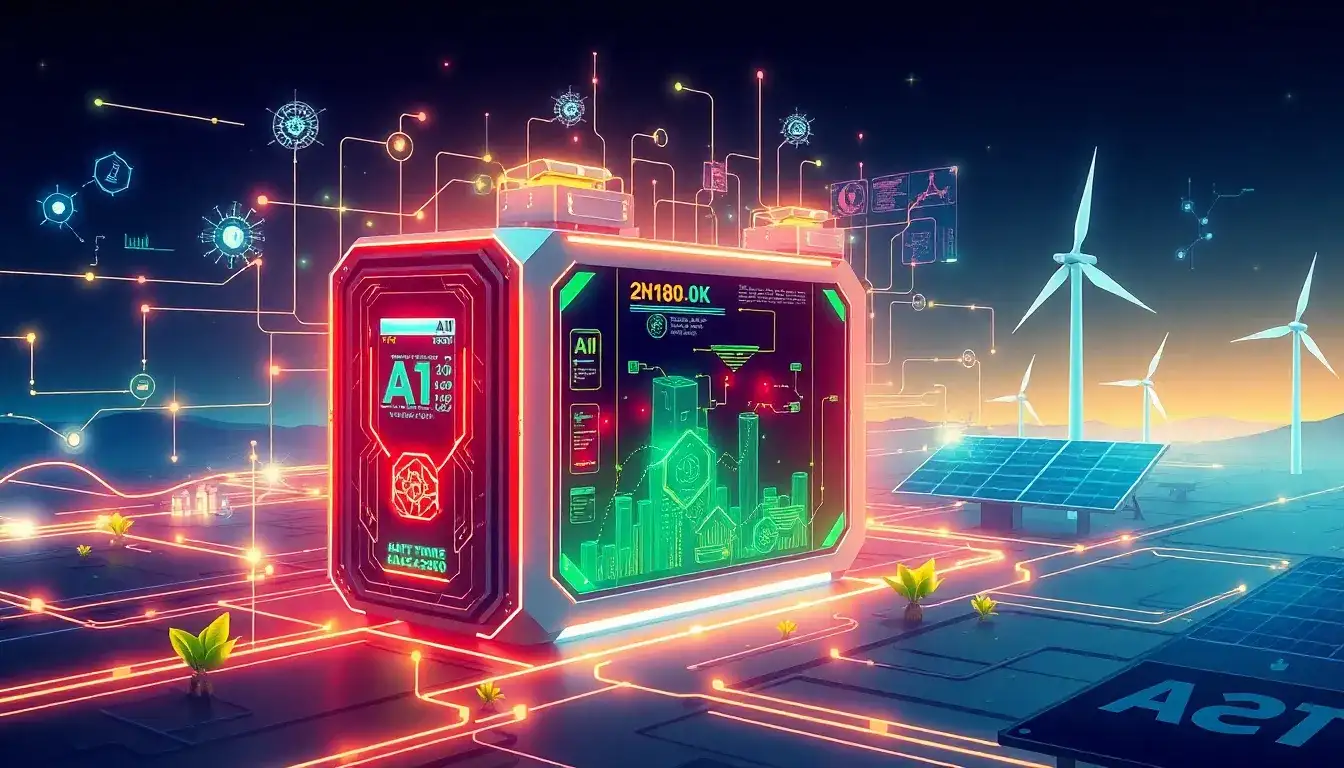
AI minimizes battery wear in energy storage systems through several advanced techniques:
Optimized charging/discharging cycles
AI-driven battery management systems analyze real-time data (usage patterns, temperature, current health) to adjust charging rates and discharge limits dynamically. This prevents overcharging, deep discharges, and rapid power draws—key factors in battery degradation—extending lifespan by up to 40%.
Predictive maintenance
Machine learning models detect early signs of wear (voltage fluctuations, thermal anomalies) with high accuracy, reducing failure rates by 30-50%. For example, Stanford researchers demonstrated AI can predict lithium-ion battery lifespan with 95% accuracy, enabling preemptive repairs.
Precision state-of-charge (SoC) management
AI algorithms like EVE-Ai achieve less than 1% error in SoC estimation, ensuring batteries operate within optimal charge ranges. This avoids stress from under/over-charging while restoring “lost” capacity through corrective adjustments.
Degradation-aware operation
AI models analyze historical performance data to identify degradation patterns, enabling adaptive charge-discharge protocols that slow aging. Deep learning optimizes energy release based on demand forecasts, reducing unnecessary cycles.
Thermal risk mitigation
Real-time AI monitoring predicts overheating risks by correlating temperature data with load patterns. It dynamically throttles power flow or activates cooling systems to prevent thermal runaway, a major cause of premature failure.
Original article by NenPower, If reposted, please credit the source: https://nenpower.com/blog/how-does-ai-minimize-battery-wear-in-energy-storage-systems/

