

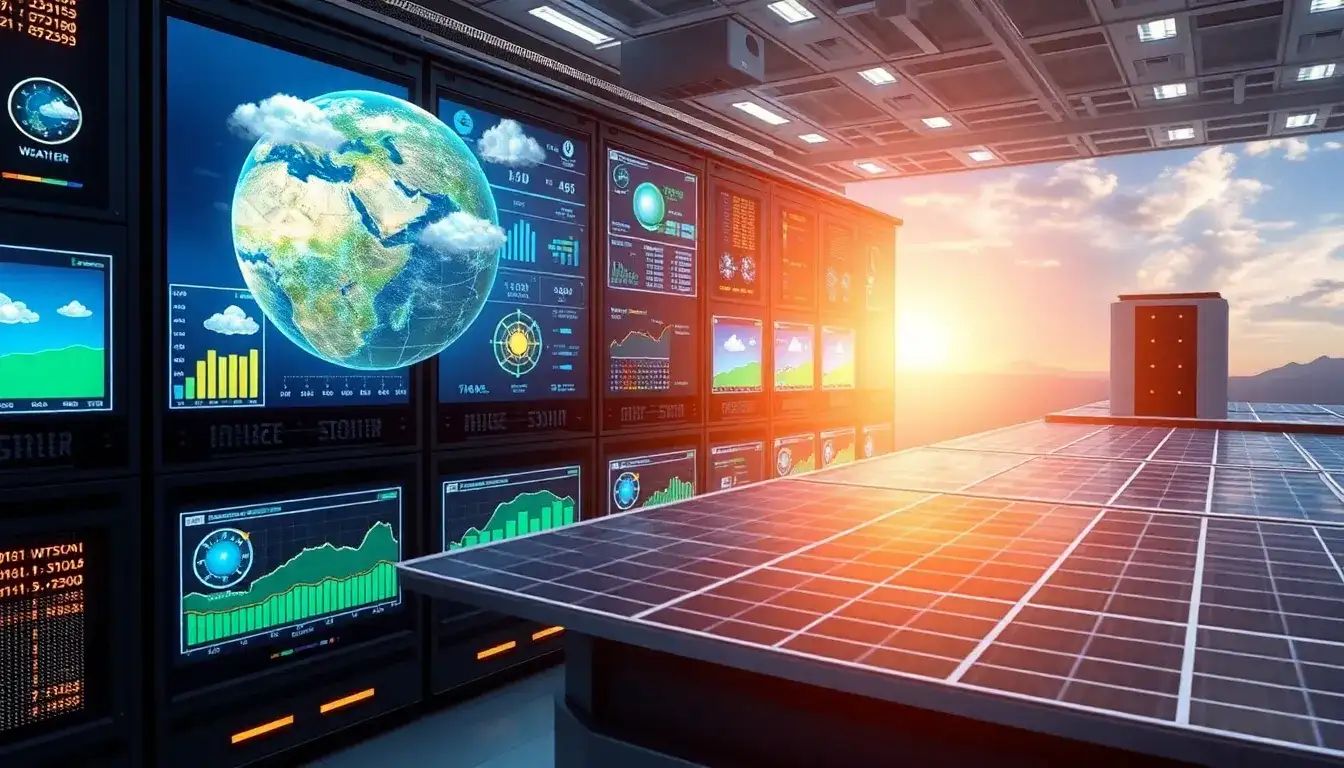
AI integrates real-time weather data to predict solar energy output by combining advanced machine learning and deep learning techniques with continuously updated environmental inputs to enhance forecasting accuracy and operational efficiency.
How AI Uses Real-Time Weather Data for Solar Energy Prediction
- Data Integration: AI systems ingest a variety of real-time weather data such as satellite imagery (cloud cover, cloud movement, thickness), ground-based sensor data (temperature, humidity, solar irradiance), and historical solar production records from the specific solar installation or region.
- Machine Learning Models: Algorithms like neural networks, random forests, and deep learning models (e.g., LSTMs and RNNs) analyze temporal sequences and spatial weather patterns, learning complex nonlinear relationships between weather variables and solar power output. These models can predict short-term fluctuations that are critical for grid stability.
- Hybrid and Ensemble Approaches: By combining multiple AI models—such as neural networks handling imagery, LSTMs processing time-series weather and production data, and random forests selecting important features—AI systems reduce forecast uncertainty and provide probabilistic outputs to better manage operational risks.
- Pattern Recognition and Adaptation: AI learns from vast datasets and continuously adapts to new data inputs, improving prediction accuracy over time. It can identify subtle weather phenomena impacting solar radiation that traditional statistical or persistence models may miss.
Benefits of AI-Driven Solar Forecasting
- Enhanced Accuracy: AI can reduce forecast errors by up to 30% compared to traditional methods that often have 20-50% error margins, especially for short-term solar output variations caused by weather changes.
- Grid Stability and Energy Trading: More precise forecasts allow grid operators and solar farm managers to optimize energy distribution, storage decisions, and trading strategies in volatile energy markets.
- Extreme Weather Handling: Some AI models incorporate advanced weather prediction capabilities that can anticipate extreme weather events affecting solar systems, enabling proactive management to protect infrastructure and maintain output.
- Cost Savings and Efficiency: By better matching solar production with demand, AI forecasts reduce reliance on costly backup power and minimize energy wastage, benefiting both large utility-scale farms and smaller residential systems.
Example Applications and Providers
- Google DeepMind: Uses AI to forecast solar output for its solar farms, optimizing consumption and reducing costs.
- Climavision and SunPower: Offer hyper-local AI-driven solar forecasts to enhance energy management for utilities and installations.
- EasySolar: Provides AI-powered platforms that integrate real-time weather data and AI models to automate system design and forecasting, improving solar system performance and customer engagement.
In summary, AI integrates real-time weather data by employing sophisticated machine learning and deep learning models that analyze multiple data streams—including satellite and sensor data—to produce highly accurate, adaptive, and actionable solar energy forecasts. This technological integration significantly enhances the reliability and economic viability of solar power generation in modern energy grids.
Original article by NenPower, If reposted, please credit the source: https://nenpower.com/blog/how-does-ai-integrate-real-time-weather-data-to-predict-solar-energy-output/

