

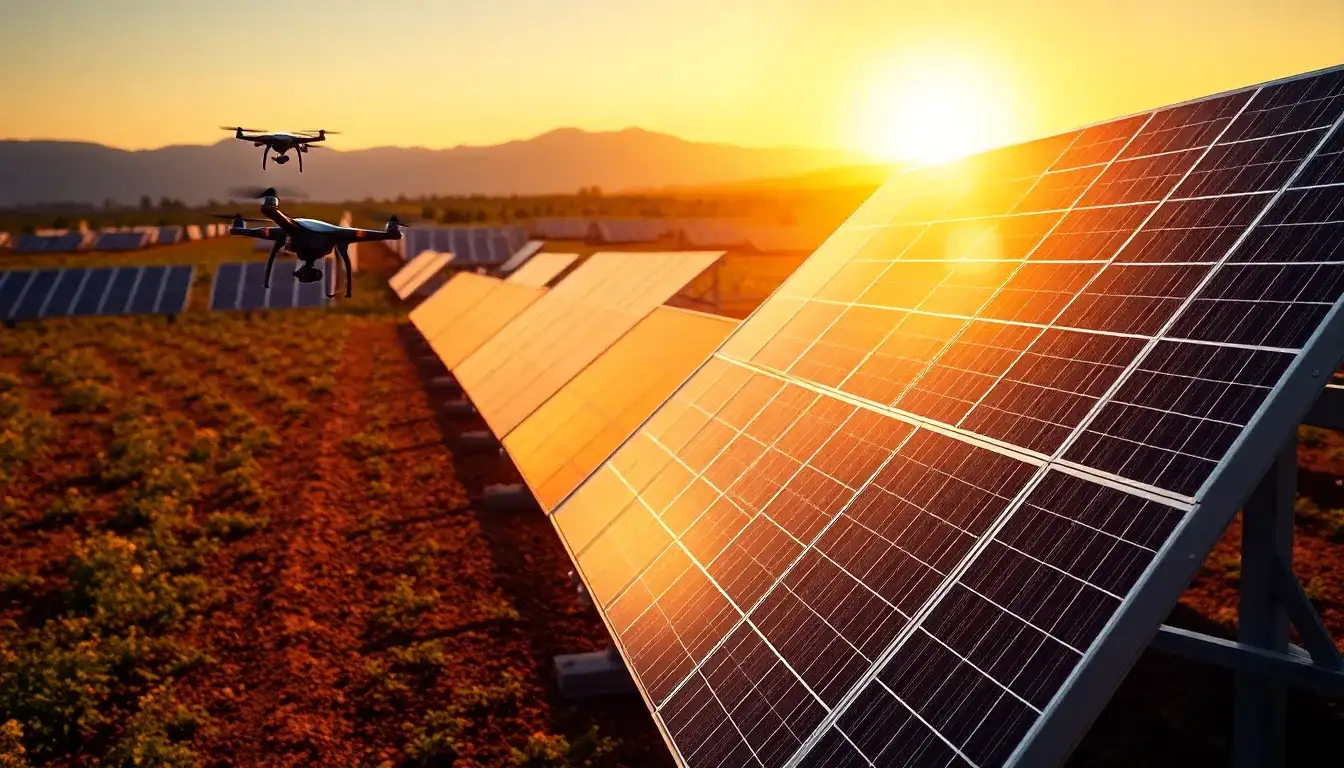
AI improves the efficiency of solar trackers through several key mechanisms that optimize energy capture, reduce operational costs, enhance reliability, and extend the lifecycle of solar installations.
How AI Enhances Solar Tracker Efficiency
1. Real-Time Dynamic Adjustments
AI enables solar tracking systems to continuously adjust the angle and position of solar panels in real time based on current environmental conditions such as sunlight intensity, cloud cover, temperature, and wind. This allows the panels to capture maximum sunlight throughout the day rather than following pre-set or static movement patterns, boosting overall energy production significantly.
2. Maximizing Energy Yields
By precisely aligning panels to the optimal position relative to the sun, AI-enhanced solar trackers consistently outperform traditional systems, increasing energy yields by up to 25%. This maximization of solar energy harvesting directly contributes to the efficiency and profitability of solar power plants.
3. Adaptability to Geographic and Weather Variations
AI systems can adapt tracking algorithms to specific geographic locations, accounting for latitude-based solar paths and unique weather patterns such as prolonged daylight in polar regions or consistent sunlight near the equator. They also use weather forecasting data and real-time cloud imaging to anticipate and respond to atmospheric changes, ensuring continued optimal performance even during inclement weather.
4. Automation and Operational Cost Reduction
Automation driven by AI reduces human intervention by managing the solar trackers autonomously, including self-correcting their orientation and initiating maintenance procedures when necessary. This lowers manual maintenance costs and reduces downtime, leading to more cost-effective operation and better return on investment.
5. Predictive Maintenance and Reliability Improvements
AI continuously monitors multiple parameters—such as panel temperatures, tilt angles, irradiance, humidity, and dirt accumulation—to predict potential faults and initiate maintenance before failures occur. This predictive maintenance approach increases reliability, decreases breakdowns by around 70%, reduces downtime, and extends the life of solar equipment.
6. Remote Monitoring and Data Analytics
AI-powered systems provide remote monitoring capabilities with intelligent data analytics that detect anomalies early and optimize performance. This reduces the need for physical inspections and enables operators to make informed decisions about corrective actions for solar tracking systems.
In summary, AI improves solar tracker efficiency by enabling precise, adaptive, and automated control of panel orientation, maximizing sun exposure, reducing maintenance needs, and enhancing system resilience. These capabilities together lead to higher energy output, lower operational costs, and improved sustainability of solar power installations.
Original article by NenPower, If reposted, please credit the source: https://nenpower.com/blog/how-does-ai-improve-the-efficiency-of-solar-trackers/

