

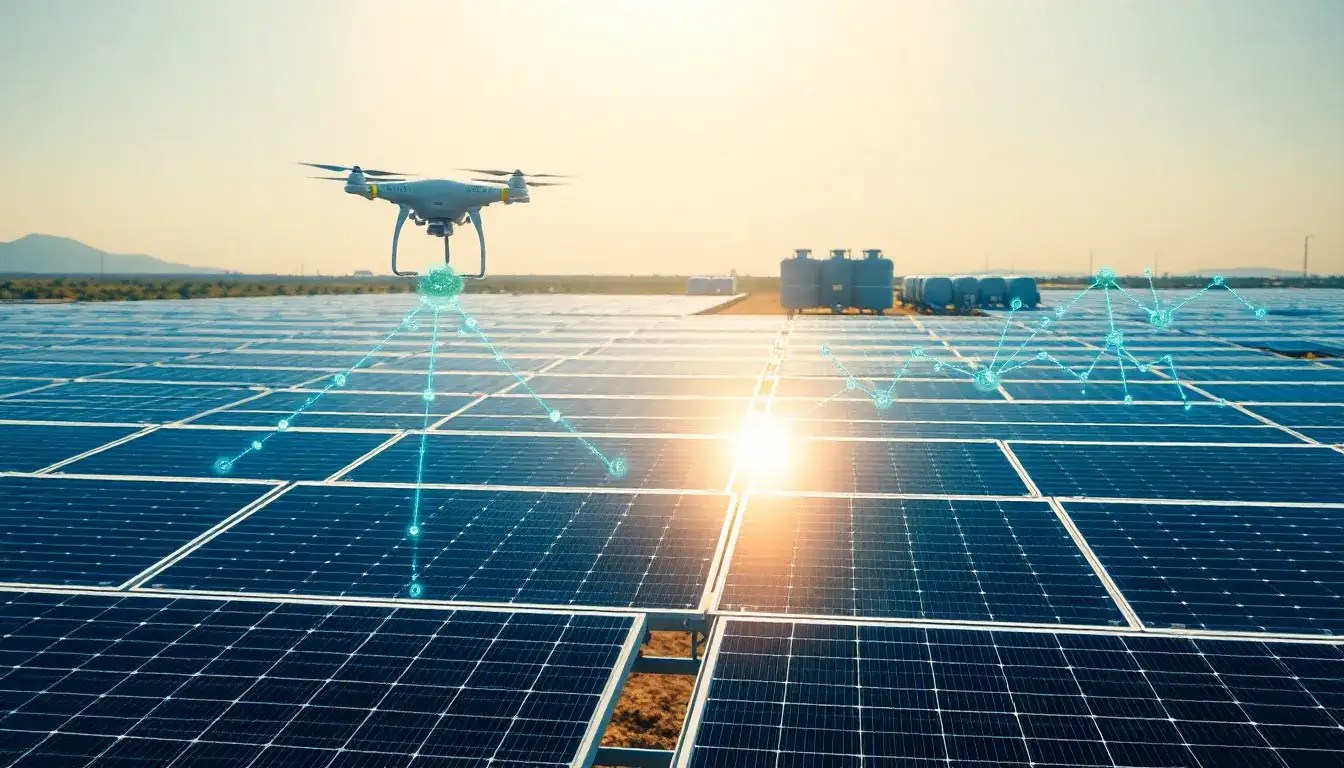
AI significantly improves the efficiency of solar energy systems through several key applications:
1. Weather and Solar Generation Forecasting
- Precise Forecasts: AI algorithms analyze vast amounts of meteorological data to generate accurate forecasts of solar energy production. This helps solar operators anticipate and prepare for fluctuations in energy output, ensuring better grid management and maximizing solar output when conditions are favorable.
- Real-Time Data Analysis: Cloud imaging and sky cameras provide real-time data on cloud movement and atmospheric conditions, further enhancing solar power predictions.
2. Predictive Maintenance
- Early Fault Detection: AI systems continuously monitor solar installations, analyzing temperature, irradiance, and other factors to identify potential issues before they occur. This proactive approach reduces maintenance costs and downtime by up to 70% and lowers costs by about 25%.
- Data-Driven Recommendations: Platforms like Univers Solar Advanced Analytics offer data-driven insights for corrective actions, improving maintenance efficiency.
3. System Design and Optimization
- Optimized Panel Placement: AI algorithms help design solar systems by optimizing panel positioning to minimize shading and maximize sunlight exposure. This increases energy yields and reduces operational costs.
- Dynamic Adjustments: AI adjusts panel tilt angles in real-time to capture the maximum sunlight throughout the day, even in changing environmental conditions.
4. Energy Storage and Grid Integration
- Enhanced Storage Efficiency: AI optimizes energy storage systems by predicting when to charge and discharge energy, transforming solar power into a more reliable resource.
- Smart Grid Management: AI analyzes electricity demand patterns, weather forecasts, and production data to manage complex supply-demand balances across distributed generation sources, preventing grid instability.
5. Real-Time Monitoring and Fault Detection
- Continuous Monitoring: AI-based systems monitor solar panels and components in real-time, quickly detecting malfunctions and initiating repairs to minimize downtime and energy loss.
- Proactive Maintenance: AI identifies patterns of potential issues, enabling proactive maintenance that reduces reactive repair expenses and boosts system reliability.
Through these applications, AI can increase solar energy output by up to 25% and reduce operational costs by around 30%. This not only improves the sustainability and reliability of solar systems but also supports broader grid stability and efficiency.
Original article by NenPower, If reposted, please credit the source: https://nenpower.com/blog/how-does-ai-improve-the-efficiency-of-solar-energy-systems/

