

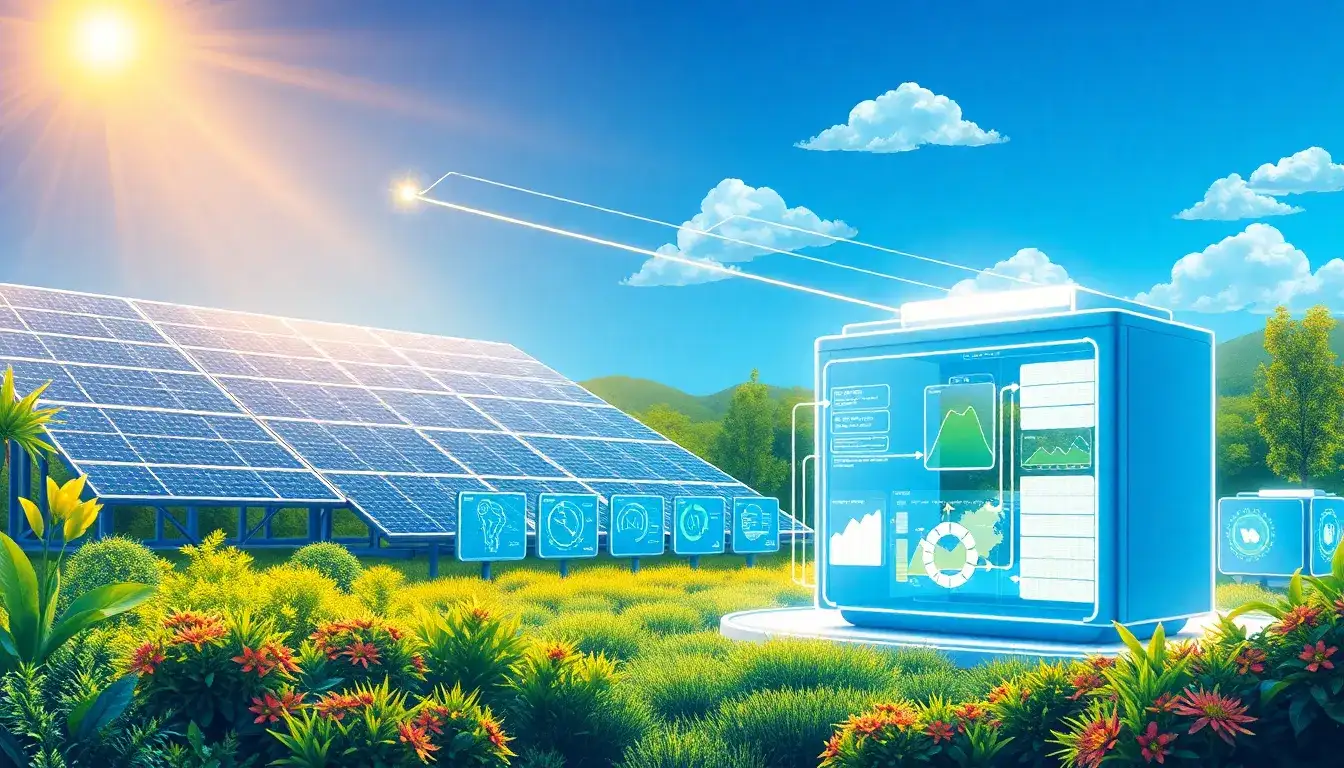
AI significantly improves the efficiency of solar energy storage systems through several key mechanisms involving real-time data analysis, predictive modeling, and smart management:
Optimized Energy Storage and Usage
AI-driven energy storage management systems analyze weather patterns, energy demand, grid conditions, and consumer usage habits to make intelligent decisions about when to store solar energy, when to use it, and when to feed excess power back into the grid. This dynamic management maximizes the use of generated solar power, reduces wasted energy, and lowers operational costs by charging batteries during peak solar generation and discharging during high demand periods or low production times.
Improved Forecasting of Solar Production and Demand
AI enhances solar energy storage efficiency by providing highly accurate solar generation forecasts based on complex meteorological data, including cloud cover, temperature fluctuations, and atmospheric conditions. These predictions enable better planning for energy storage and release schedules, ensuring that energy storage systems are optimally charged or discharged relative to expected solar supply and demand fluctuations.
Predictive Maintenance
AI-powered predictive maintenance uses continuous monitoring and analysis of solar panels and battery storage health metrics (e.g., temperature, voltage, irradiance, dirt accumulation). By detecting anomalies or signs of degradation early, AI reduces system downtime and maintenance costs, ensuring that solar energy storage and generation hardware operate at peak efficiency for longer periods.
Smart Grid Integration and Demand Response
AI facilitates smoother integration of solar storage systems with the power grid by managing supply-demand balances across distributed energy resources. It can optimize power flow, prevent grid instability, and enable intelligent demand response by adjusting energy consumption patterns (e.g., shifting appliance usage to solar peak times). This enhances resilience and stability while maximizing the value of stored solar energy.
Enhanced Residential Energy Management
AI systems in homes optimize the use of stored solar energy by learning household consumption patterns, weather influences, and solar generation trends. This allows automated adjustment of energy storage usage and appliance schedules, promoting energy independence, reducing reliance on grid electricity during peak pricing, and improving overall system efficiency.
Summary Table of AI Contributions to Solar Energy Storage Efficiency
| AI Function | Impact on Solar Energy Storage Efficiency |
|---|---|
| Energy Storage Management | Optimizes charging/discharging timing to maximize solar utilization |
| Solar Production Forecasting | Enables precise planning for storage and usage based on accurate weather data |
| Predictive Maintenance | Minimizes downtime, extends equipment life, and maintains peak performance |
| Smart Grid Integration | Balances supply-demand, improves grid stability, and optimizes power flow |
| Demand Response & Usage Optimization | Shifts energy consumption to times of solar abundance, reducing costs |
| Residential System Learning | Adapts to household behavior for efficient energy storage and use |
In essence, AI transforms solar energy storage systems from static, inefficient setups into intelligent, adaptive networks that maximize renewable energy utilization, reduce waste, cut costs, and support grid reliability and resilience.
Original article by NenPower, If reposted, please credit the source: https://nenpower.com/blog/how-does-ai-improve-the-efficiency-of-solar-energy-storage-systems/

