

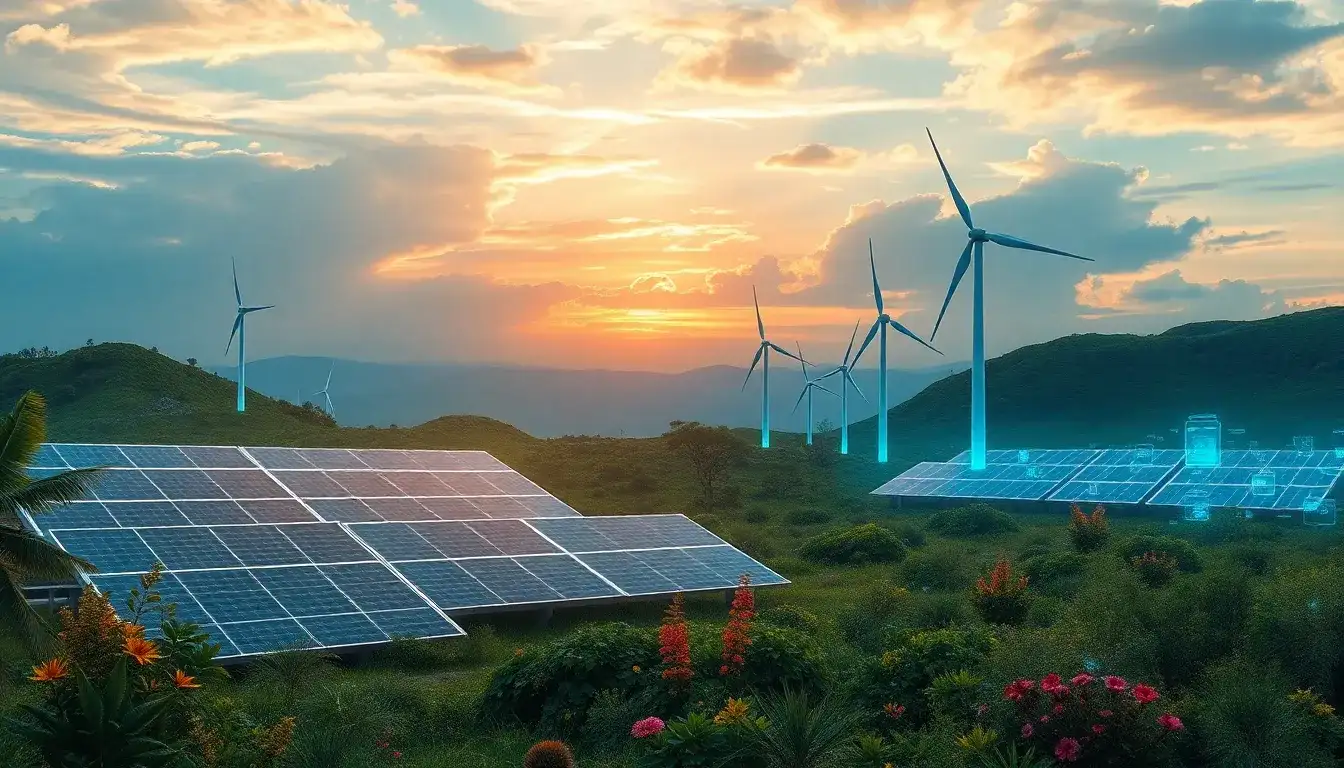
AI helps manage the intermittency of renewable energy sources like wind and solar through several advanced capabilities that improve forecasting, grid management, and energy storage optimization.
Key Ways AI Addresses Intermittency in Renewable Energy
1. Accurate Forecasting of Renewable Energy Generation
AI processes vast amounts of real-time and historical data—including weather patterns, cloud cover, atmospheric conditions, and energy consumption trends—to predict renewable power output with high accuracy. Machine learning models like neural networks analyze these multivariate datasets to provide short-term intraday to long-term seasonal forecasts. This enables grid operators to anticipate fluctuations in solar and wind energy generation effectively.
2. Balancing Energy Supply with Demand
By accurately forecasting variable renewable output, AI allows operators to dynamically match energy supply with consumer demand. This helps prevent grid overloads and power shortages, ensuring a more stable and resilient energy supply despite the inherent variability of wind and solar resources.
3. Optimizing Energy Storage and Dispatch
AI algorithms enhance the efficiency of battery and other storage systems by managing charging and discharging schedules intelligently. They consider factors such as battery degradation, market prices, grid needs, and predicted energy generation to optimize storage use, maximizing economic benefits and grid stability. This sophisticated control goes beyond simple charge-discharge rules to smooth out energy availability during periods of low renewable generation.
4. Enhancing Grid Integration and Flexibility
Renewable energy sources are often decentralized and intermittent, posing challenges for traditional grid infrastructure. AI enables real-time adjustment of power distribution and grid operations, improving grid flexibility and reliability. This integration support helps accommodate high shares of renewables without compromising grid performance.
5. Predictive Maintenance and Cost Reduction
While not directly related to intermittency, AI-driven predictive maintenance reduces downtime and unexpected failures in renewable assets, indirectly supporting smoother and more reliable energy generation.
In summary, AI transforms renewable energy management by providing precise forecasts, optimizing storage and dispatch strategies, and dynamically managing grid operations. These capabilities significantly mitigate the challenges posed by the intermittency of wind and solar energy, supporting a more efficient and reliable transition to renewable power systems.
Original article by NenPower, If reposted, please credit the source: https://nenpower.com/blog/how-does-ai-help-manage-the-intermittency-of-renewable-energy-sources-like-wind-and-solar/

