

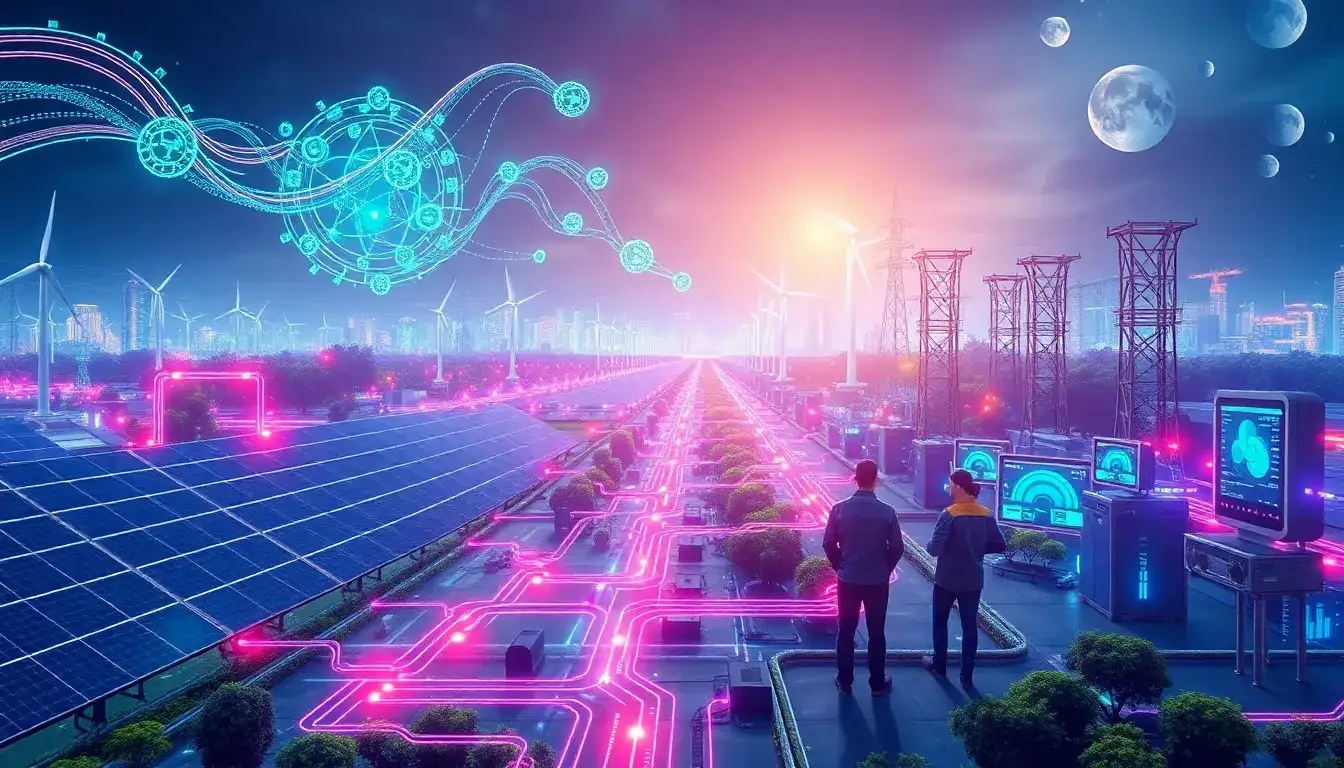
AI handles real-time data in smart grid settings through several advanced capabilities that enhance efficiency, reliability, and sustainability. Here are some key ways AI processes and utilizes real-time data in smart grids:
Key Capabilities of AI in Smart Grids
- Real-Time Monitoring and Automation:
- AI systems continuously analyze data from sensors and smart meters to monitor grid health and detect potential issues like voltage fluctuations or equipment malfunctions.
- This real-time monitoring allows grids to respond quickly to problems, minimizing downtime by rerouting electricity and maintaining a stable power supply.
- Stream Processing:
- Stream processing involves analyzing data streams in real-time, enabling immediate insights and actions.
- This technology is crucial for identifying anomalies, managing outages, and ensuring prompt responses to changes in energy demand.
- Predictive Analytics and Demand Response:
- AI algorithms analyze historical and real-time data on energy consumption and weather to predict energy demand and manage consumer usage efficiently.
- By incentivizing consumers to adjust their energy use during peak times, AI helps balance the grid and prevent overloads.
- Renewable Energy Integration:
- AI predicts renewable energy output based on weather forecasts and real-time conditions, optimizing energy storage and distribution.
- This ensures that renewable sources are utilized effectively, reducing reliance on fossil fuels and improving grid stability.
- Energy Storage Optimization:
- AI manages energy storage systems by analyzing real-time data to optimize energy storage and release, supporting a stable energy supply even during low renewable energy production.
Benefits of AI in Smart Grids
- Efficiency and Sustainability: AI enhances grid efficiency by up to 20%, reduces carbon emissions by integrating renewable sources more effectively.
- Reliability: AI reduces blackout risks by detecting vulnerabilities and automatically rerouting electricity, ensuring grid stability.
- Customer Experience: AI optimizes energy distribution to meet demand precisely, improving customer satisfaction and energy cost management.
Challenges and Future Developments
- Data Quality and Infrastructure: High-quality data and robust infrastructure are essential for AI implementation. Challenges include ensuring data readiness and interoperability with existing systems.
- Emerging Technologies: Integrating AI with emerging technologies like blockchain and 5G networks offers further potential for enhanced smart grid management and energy trading.
Original article by NenPower, If reposted, please credit the source: https://nenpower.com/blog/how-does-ai-handle-real-time-data-in-smart-grid-settings/

