

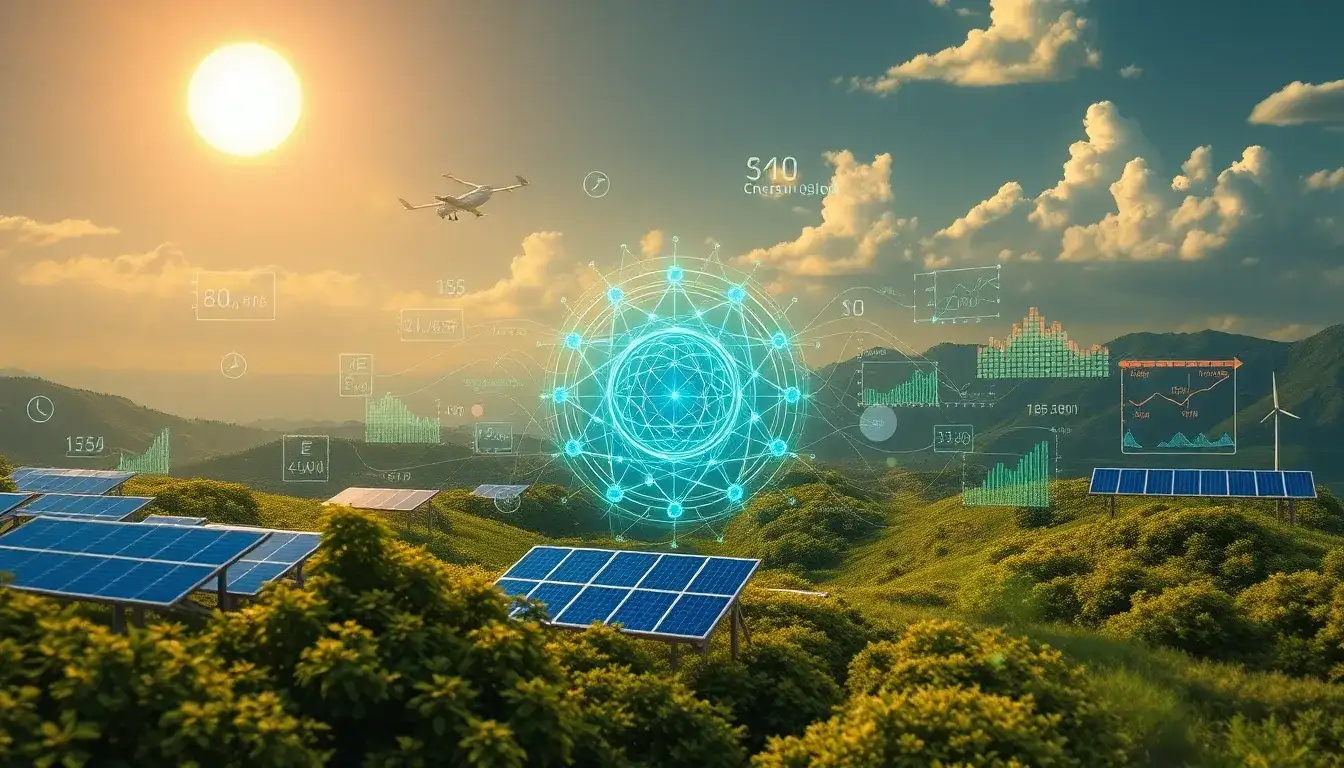
AI improves solar forecasting accuracy by intelligently integrating and analyzing data from diverse sources using advanced machine learning and deep learning techniques. Here is how AI handles this multi-source data integration to enhance solar power predictions:
Data Sources Integrated by AI
- Historical Solar Output Data: Records of past solar panel performance under various environmental conditions provide baseline patterns and trends that AI models learn from to predict future output.
- Weather Data: Real-time and historical weather information such as temperature, humidity, cloud cover, and solar irradiance obtained from satellite imagery, ground-based weather stations, and numerical weather prediction models critically inform the AI about atmospheric conditions affecting solar radiation.
- Satellite and Sky Imagery: High-resolution images track cloud movements, thickness, and shading effects. AI processes this visual data using computer vision techniques to predict short-term fluctuations in sunlight reaching solar panels.
AI Techniques for Data Fusion and Forecasting
- Machine Learning Algorithms: Algorithms like random forests and neural networks analyze the relationships between weather variables and solar power output, learning complex nonlinear interactions and dependencies that traditional statistical methods cannot capture.
- Deep Learning Time Series Models: Models such as Recurrent Neural Networks (RNNs) and Long Short-Term Memory (LSTM) networks excel in processing sequential data to accurately predict solar power output on hourly to daily timescales by capturing temporal dependencies in weather and production data.
- Hybrid and Ensemble Models: Combining diverse AI models—where, for example, neural networks analyze satellite imagery, LSTMs focus on time series data, and random forests select key features—yields more reliable forecasts by reducing errors and quantifying prediction uncertainty through probability ranges.
Benefits of Multi-Source Data Integration by AI
- Improved Accuracy and Reduced Prediction Errors: AI models trained on rich, heterogeneous datasets can reduce forecasting errors by up to 30%, outperforming traditional persistence or purely statistical weather models.
- Granular Short-Term and Long-Term Forecasts: Integration allows predictions from minutes ahead (tracking cloud motion) to days ahead (weather pattern forecasting), supporting grid operators in balancing supply and demand effectively.
- Adaptability and Continuous Learning: AI models improve over time as more data streams in, adjusting to seasonal variations, weather changes, and specific solar site characteristics.
- Enhanced Grid Stability and Operational Efficiency: More precise forecasts enable optimized scheduling of maintenance, energy storage usage, and trading decisions, reducing reliance on backup fossil fuel sources and minimizing curtailment.
- Probabilistic Forecasting: By leveraging multiple data inputs and model outputs, AI systems provide confidence intervals that inform operators about forecast uncertainties, allowing better risk management and operational planning.
Practical Implementations and Innovations
- Operational AI models such as ECMWF’s AIFS integrate cloud and solar radiation outputs derived from both physical weather modeling and AI, enhancing accuracy and computational speed to complement traditional numerical weather forecasts.
- Companies like Solcast utilize satellite data and proprietary AI/ML algorithms to deliver high-resolution irradiance and cloud-tracking solar forecasts with low bias and error, powering grid-scale and distributed solar asset management globally.
In summary, AI handles data from various sources by combining historical solar performance, rich meteorological data, and satellite imagery through sophisticated machine learning and deep learning frameworks. This multi-source data fusion enables AI to capture complex environmental dynamics affecting solar power output, drastically improving forecasting accuracy, reliability, and practical utility for grid management and solar energy optimization.
Original article by NenPower, If reposted, please credit the source: https://nenpower.com/blog/how-does-ai-handle-data-from-different-sources-to-improve-solar-forecasting-accuracy/

