

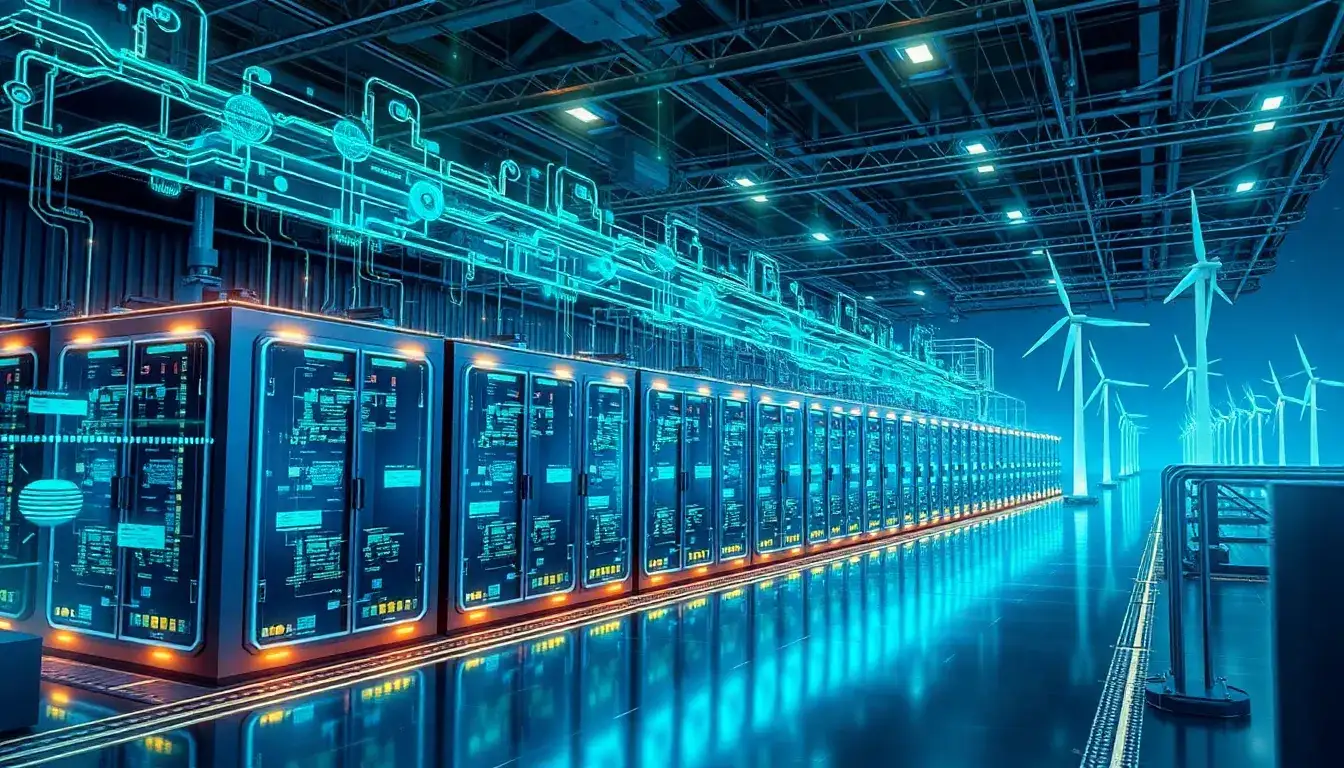
AI significantly enhances the efficiency of energy storage systems in several key ways, transforming how energy is managed, stored, and utilized:
Intelligent Energy Storage Management
AI enables battery energy storage systems (BESS) to operate smarter by processing vast amounts of real-time and historical data that humans cannot handle effectively. This intelligence allows energy storage to be optimized for cost reduction, resilience, and sustainability.
- Energy Demand Management: AI balances electrical loads by predicting demand fluctuations based on time, season, weather conditions, and historical patterns. For example, AI-powered systems can store excess solar energy during sunny periods and discharge it during cloudy, rainy days when solar generation is low, ensuring a reliable energy supply.
- Arbitrage: AI facilitates energy arbitrage by buying electricity during low-demand, low-cost periods and selling or using stored energy when prices peak. This time-shifting capability smooths out electricity costs and maximizes economic efficiency regardless of seasonal or daily demand variations.
Predictive Analytics and Smart Charging
- AI predicts energy demand spikes by analyzing large datasets, enabling energy storage systems to prepare accordingly by optimizing charging and discharging cycles. This ensures energy availability during peak times and reduces waste.
- AI optimizes the charging cycles of lithium-ion batteries to reduce battery degradation, thereby prolonging battery life and lowering lifecycle costs.
Enhanced Grid Integration and Stability
- AI-driven smart grids adjust energy flows dynamically based on real-time supply and demand data, improving overall grid efficiency, reducing power outages, and minimizing energy wastage.
- Integration of AI with large-scale BESS management (e.g., ERCOT in Texas) improves grid stability and performance by learning from past usage patterns and forecasting future energy needs in utility-scale systems.
Improved Forecasting for Renewable Integration
- AI advances the accuracy of renewable energy production forecasts by analyzing complex weather data (cloud cover, temperature changes, etc.) beyond traditional numerical models. This improved forecasting allows for better planning and optimization of energy storage and distribution systems, reducing blackouts and enhancing grid reliability.
Summary Table of AI Enhancements to Energy Storage Systems
| Enhancement Area | AI Contribution | Benefits |
|---|---|---|
| Energy Demand Management | Predicts demand, balances load, adjusts based on weather | Optimized energy use, reliable supply |
| Energy Arbitrage | Time-shifts energy use based on price fluctuations | Cost savings, price equalization |
| Predictive Analytics | Forecasts energy demand and supply | Preparedness, reduced waste |
| Smart Charging | Optimizes battery charge cycles | Longer battery life, cost efficiency |
| Smart Grid Integration | Dynamically manages real-time energy flows | Grid stability, fewer outages |
| Renewable Forecasting | Enhances solar/wind output prediction | Better energy planning and reliability |
AI-driven energy storage solutions are essential for unlocking the full potential of renewable energy by ensuring clean power is available and efficiently used when needed. This contributes to a more sustainable, cost-effective, and resilient energy future.
Original article by NenPower, If reposted, please credit the source: https://nenpower.com/blog/how-does-ai-enhance-the-efficiency-of-energy-storage-systems/

