

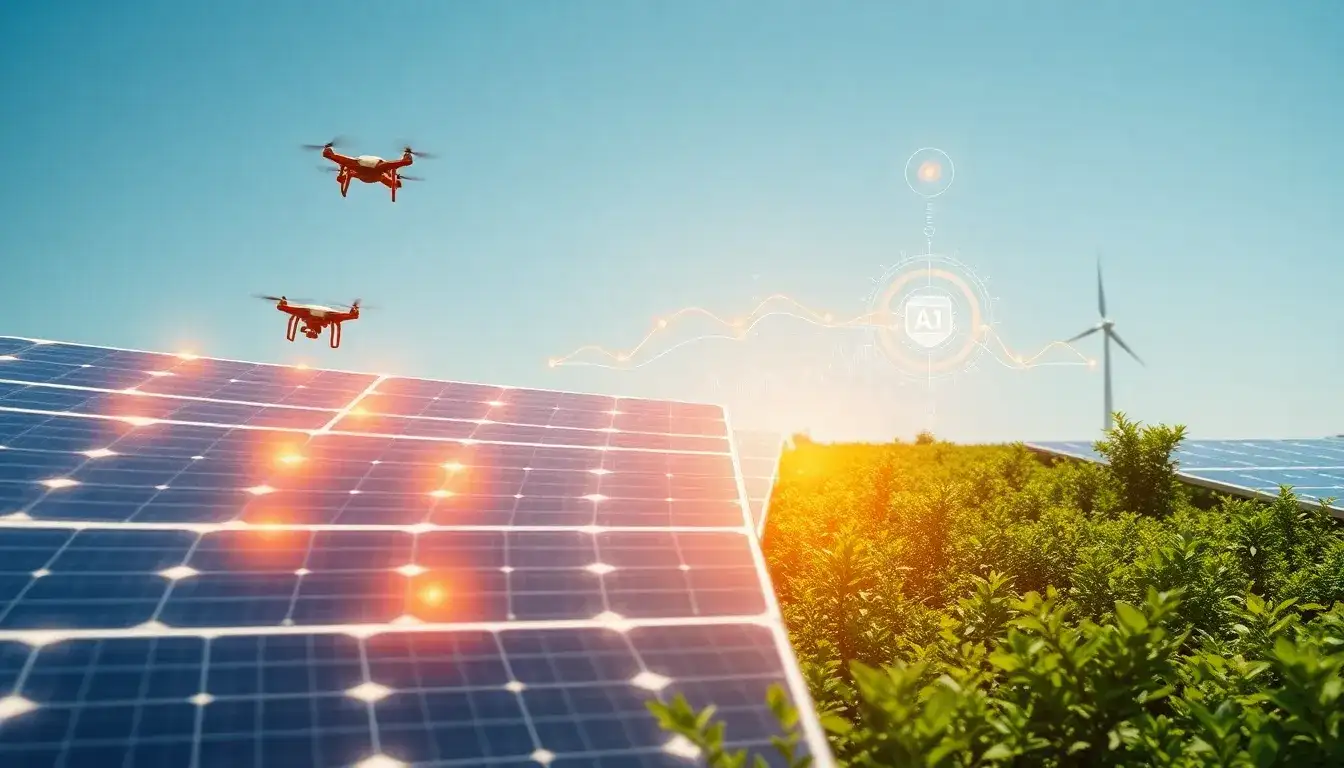
AI enhances real-time data collection in solar panels by integrating advanced sensing technologies, continuous data analysis, and automated system optimization, resulting in improved efficiency and predictive capabilities.
Key Ways AI Enhances Real-Time Data Collection in Solar Panels
-
Integration of Diverse Sensors and Data Sources
AI systems collect real-time data from multiple sources such as ground sensors monitoring panel temperature, humidity, and dust buildup, weather satellites tracking cloud cover and movement, and local weather stations providing immediate environmental updates. This multifaceted data collection enables a comprehensive understanding of current conditions affecting solar panel performance. -
Advanced Data Analysis with Machine Learning
Using algorithms like deep neural networks, time series analysis, and computer vision, AI rapidly processes and analyzes vast amounts of live and historical data. This allows the detection of patterns that relate weather conditions to solar energy production, enabling precise forecasting and identification of performance anomalies such as issues with the solar panel’s crystal structure or dust accumulation. -
Real-Time Anomaly Detection and Predictive Maintenance
AI continuously monitors operational data to detect performance deviations or faults in solar panels as they occur. Early identification of such anomalies facilitates timely maintenance interventions, preventing efficiency losses and system failures before they escalate. -
Automated System Adjustments Based on Real-Time Data
Beyond monitoring, AI actively optimizes solar panel systems by adjusting panel positioning to maximize sunlight capture, fine-tuning inverter settings for better power conversion, and managing battery storage charging cycles according to predicted energy output. These real-time automated actions help maintain optimal energy production despite fluctuating weather or environmental conditions. -
Enhanced Forecasting for Grid and Energy Management
AI also leverages the collected data to generate highly accurate short-term and seasonal solar energy production forecasts. These forecasts assist in grid integration and management, ensuring a stable supply of solar power and better planning for energy storage or redistribution.
In summary, AI improves real-time data collection in solar panels by employing sophisticated sensors and data integration, leveraging machine learning for insightful analysis, detecting issues proactively, and enabling real-time operational adjustments. This synergy leads to enhanced solar panel performance, higher energy yields, and more reliable renewable energy systems.
Original article by NenPower, If reposted, please credit the source: https://nenpower.com/blog/how-does-ai-enhance-real-time-data-collection-in-solar-panels/

