

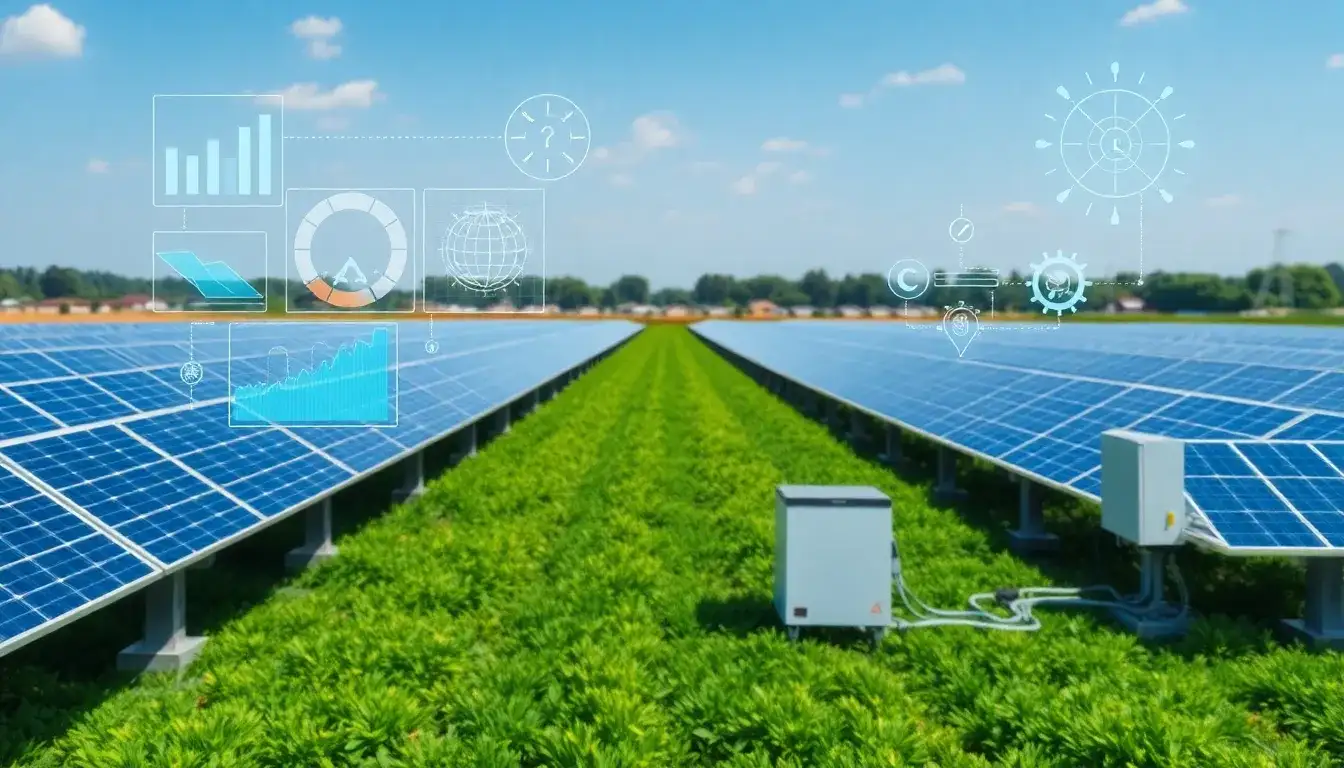
AI-driven predictive maintenance in solar energy works by continuously monitoring solar power systems using sensors and machine learning algorithms to predict and prevent equipment failures before they occur, thereby enhancing efficiency, reducing downtime, and lowering maintenance costs.
How AI-Driven Predictive Maintenance Works in Solar Energy
1. Data Collection via Sensors and IoT Devices
Solar panels and associated equipment are equipped with numerous sensors that gather real-time data on various parameters such as temperature, irradiance (solar radiation), voltage, current, humidity, dust accumulation, inverter efficiency, tilt angle, and power output. This comprehensive dataset is crucial for monitoring system health and performance.
2. Machine Learning and Data Analytics
AI systems use machine learning models to analyze the collected data, comparing current performance against historical trends to detect anomalies indicative of potential failures. For example, deviations in temperature or power output can signal issues like faulty connections, panel damage, or inverter degradation. These models continuously learn from new data to improve fault detection accuracy.
3. Early Fault Detection and Prediction
By identifying early warning signs, AI predicts when specific components might fail or underperform. This foresight enables maintenance teams to schedule repairs proactively rather than reactively, preventing unexpected breakdowns and costly downtime.
4. Prioritized and Automated Maintenance Scheduling
AI can prioritize maintenance tasks based on the urgency and impact of detected issues, optimizing resource allocation and reducing downtime. Additionally, some systems integrate automated scheduling, ensuring maintenance occurs exactly when needed, thereby minimizing unnecessary interventions and costs.
5. Integration with Advanced Technologies
Some systems incorporate AI-powered drones or robotic cleaners that inspect and clean solar panels autonomously, further reducing manual labor and enhancing system efficiency. AI also aids in smart inverter management to adjust power output dynamically for grid stability.
Benefits of AI-Driven Predictive Maintenance in Solar Energy
- Increased Productivity: AI-driven maintenance can increase solar farm productivity by about 25% through minimizing downtime and optimizing performance.
- Reduced Breakdowns: AI predictive models can reduce equipment failures by up to 70%, significantly lowering the risk of unexpected outages.
- Cost Savings: Maintenance costs can drop by around 25% due to fewer emergency repairs and more efficient maintenance scheduling.
- Extended Equipment Lifespan: Proactive maintenance helps in extending the operational life of solar panels and related equipment.
- Improved Grid Integration: By ensuring more reliable solar energy output, AI facilitates better integration with the power grid.
Challenges to Implementation
Despite its advantages, AI-driven predictive maintenance faces challenges such as high initial costs for AI technology and sensor installation, data accuracy and reliability concerns, integration issues with older infrastructure, cybersecurity risks, and the need for skilled personnel to manage AI systems.
In summary, AI-driven predictive maintenance in solar energy leverages sensor data and machine learning to anticipate equipment failures, enabling proactive repairs that enhance energy yield, reduce costs, and improve the resilience and sustainability of solar power systems.
Original article by NenPower, If reposted, please credit the source: https://nenpower.com/blog/how-does-ai-driven-predictive-maintenance-work-in-solar-energy/

