

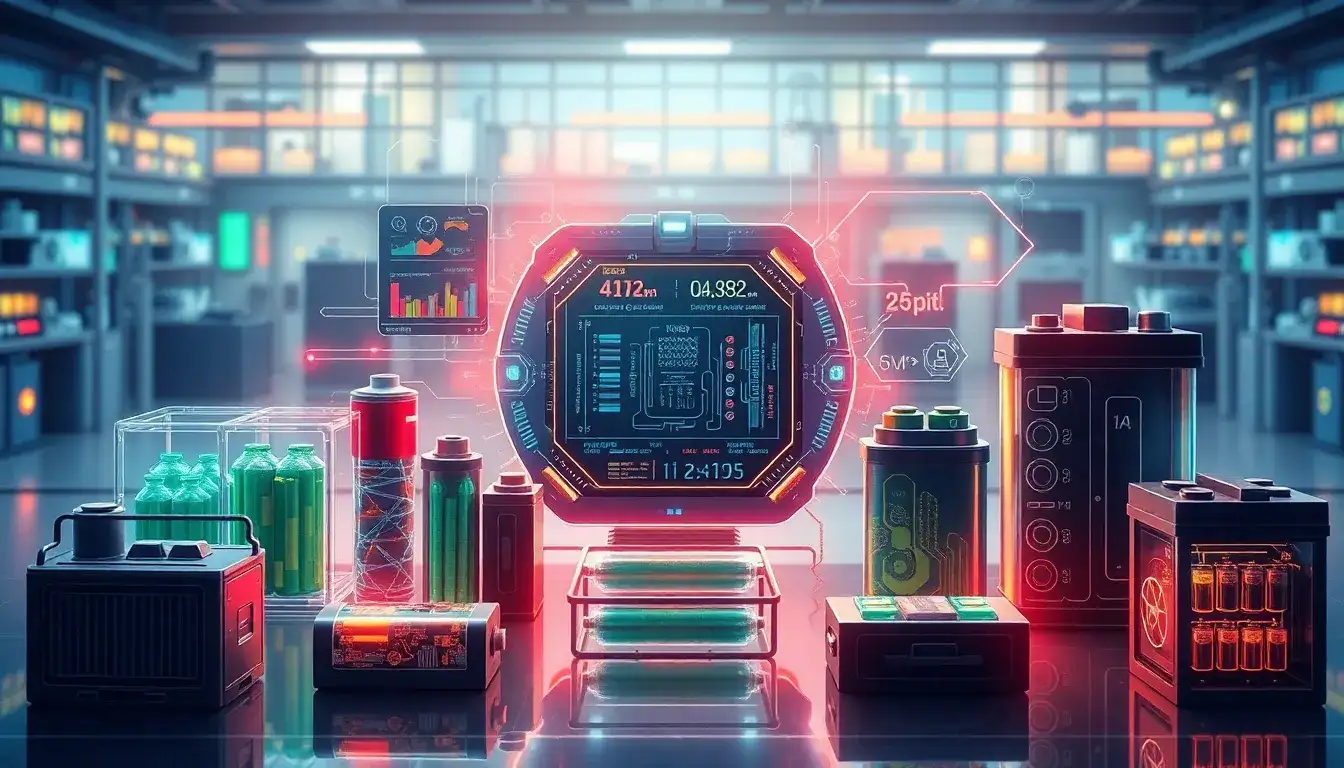
AI-driven Battery Management Systems (BMS)
AI-driven Battery Management Systems (BMS) adapt to different battery chemistries by leveraging advanced intelligence and real-time data analysis. Here’s how they achieve this adaptability:
Key Features of AI-Driven BMS
- Real-Time Data Analysis: AI-driven BMS continuously collect data from the battery, including voltage, current, temperature, and state of charge (SoC). This data is used to identify patterns specific to the battery chemistry being used, allowing for more precise management.
- Adaptive Algorithms: By utilizing machine learning and artificial intelligence, these systems can adjust their management strategies based on the unique characteristics of the battery chemistry. For instance, different chemistries may have varying charging rates, thermal behaviors, or aging factors that AI can learn to manage effectively.
- Predictive Maintenance: AI can predict potential issues before they occur by analyzing usage patterns, environmental conditions, and battery aging. This predictive capability helps in optimizing charging cycles for various battery chemistries, reducing degradation and enhancing lifespan.
- State Estimation: AI-driven BMS improve the accuracy of battery state estimation by continuously learning from real-world data. This includes precise calculations of State of Charge (SoC), State of Health (SoH), and State of Power (SoP), which are crucial for managing batteries efficiently across different chemistries.
- Fault Detection and Safety: Advanced AI algorithms enable early fault detection and adaptive thermal management, which are vital for ensuring operational safety across various battery chemistries. This adaptability helps mitigate risks associated with different chemical compositions.
- Learning from Data: AI-driven BMS can learn from historical data to refine its strategies for different battery chemistries, leading to better performance, safety, and efficiency over time.
Benefits of Adaptability
- Extended Battery Life: By optimizing charging and discharging cycles tailored to specific battery chemistries, AI-driven BMS can extend battery life by up to 40%.
- Improved Efficiency: The system’s ability to adapt ensures that batteries run at optimal efficiency, reducing waste and improving overall performance.
- Enhanced Safety: Early fault detection and adaptive thermal management reduce risks associated with battery operation, making them safer for use.
Overall, AI-driven BMS provide a flexible and intelligent approach to managing batteries with different chemistries, offering superior performance, safety, and lifespan compared to traditional static systems.
Original article by NenPower, If reposted, please credit the source: https://nenpower.com/blog/how-does-ai-driven-bms-adapt-to-different-battery-chemistries/

