

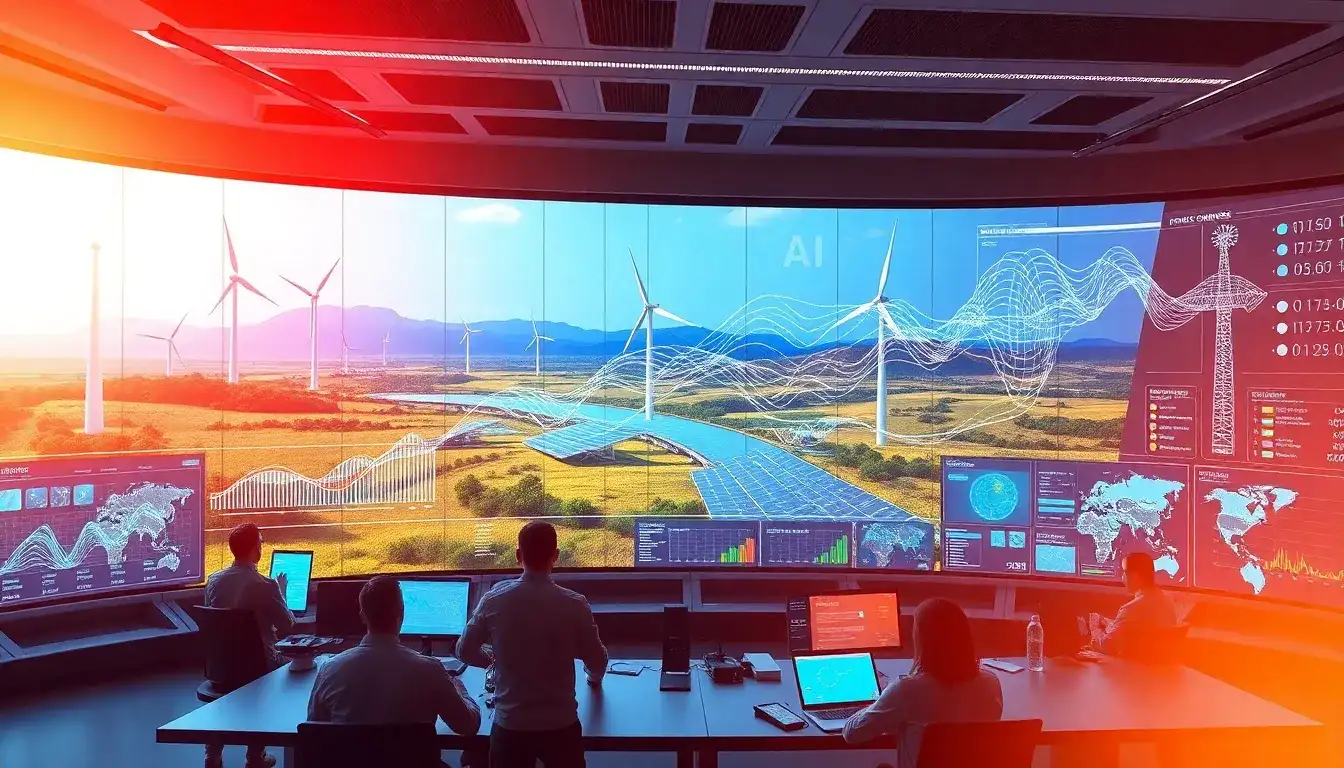
AI significantly contributes to grid stability in renewable energy systems by addressing the key challenges posed by the intermittent and variable nature of renewable sources such as solar and wind power. Here’s how AI enhances grid stability:
Real-Time Grid Management and Smarter Grids
AI-powered smart grids use machine learning to continuously monitor energy production and consumption patterns in real time. This enables the grid to dynamically adjust energy distribution to match fluctuating demand and supply, preventing overloads and reducing wastage. By rapidly responding to outages or system failures through automation, AI minimizes downtime and improves overall grid reliability, making the integration of renewable energy smoother and more stable.
Advanced Forecasting of Renewable Energy Production
One of the challenges with renewables is unpredictable generation due to weather variability. AI improves forecasting accuracy by analyzing complex data such as weather patterns and historical production trends. Better predictions of energy availability allow grid operators to plan and balance supply and demand more effectively, which is crucial for maintaining stability in grids with high shares of renewables.
Optimizing Energy Storage Systems
AI enhances the performance of energy storage technologies such as batteries by predicting optimal times for charging and discharging. It uses real-time and historical data on weather and energy consumption to ensure excess renewable energy is stored during high production periods and released during peak demand or low generation times. This balancing act reduces reliance on fossil fuel backup and maintains consistent power quality.
Demand Response and Load Balancing
AI helps implement demand response strategies by analyzing real-time consumption data and adjusting energy distribution to align supply with demand. This prevents grid overload and enhances stability. Furthermore, AI can shift power delivery to regions experiencing shortages and manage overages, ensuring that energy flows efficiently where needed most.
Proactive Grid Health Monitoring and Resilience
By continuously monitoring grid parameters such as voltage, frequency, and temperature, AI can detect early warning signs of potential issues. Early detection allows preventative maintenance or corrective actions before faults escalate into outages, which improves grid resilience and reduces repair costs.
Summary Table
| AI Contribution | How it Supports Grid Stability with Renewables |
|---|---|
| Real-Time Grid Management | Matches supply and demand dynamically, preventing overloads |
| Advanced Forecasting | Improves prediction of renewable output for better planning |
| Energy Storage Optimization | Optimizes storage use to balance intermittent generation |
| Demand Response Optimization | Balances load and adjusts distribution to avoid blackouts |
| Grid Health Monitoring | Detects faults early to prevent outages and maintain reliability |
In conclusion, AI acts as a critical enabler for integrating renewable energy into power grids by making grids smarter, more flexible, and more resilient. It optimizes generation, storage, and distribution in real time while preventing outages, thereby ensuring stable and reliable electricity supply despite the variability of renewable sources.
Original article by NenPower, If reposted, please credit the source: https://nenpower.com/blog/how-does-ai-contribute-to-grid-stability-with-renewable-energy/

