

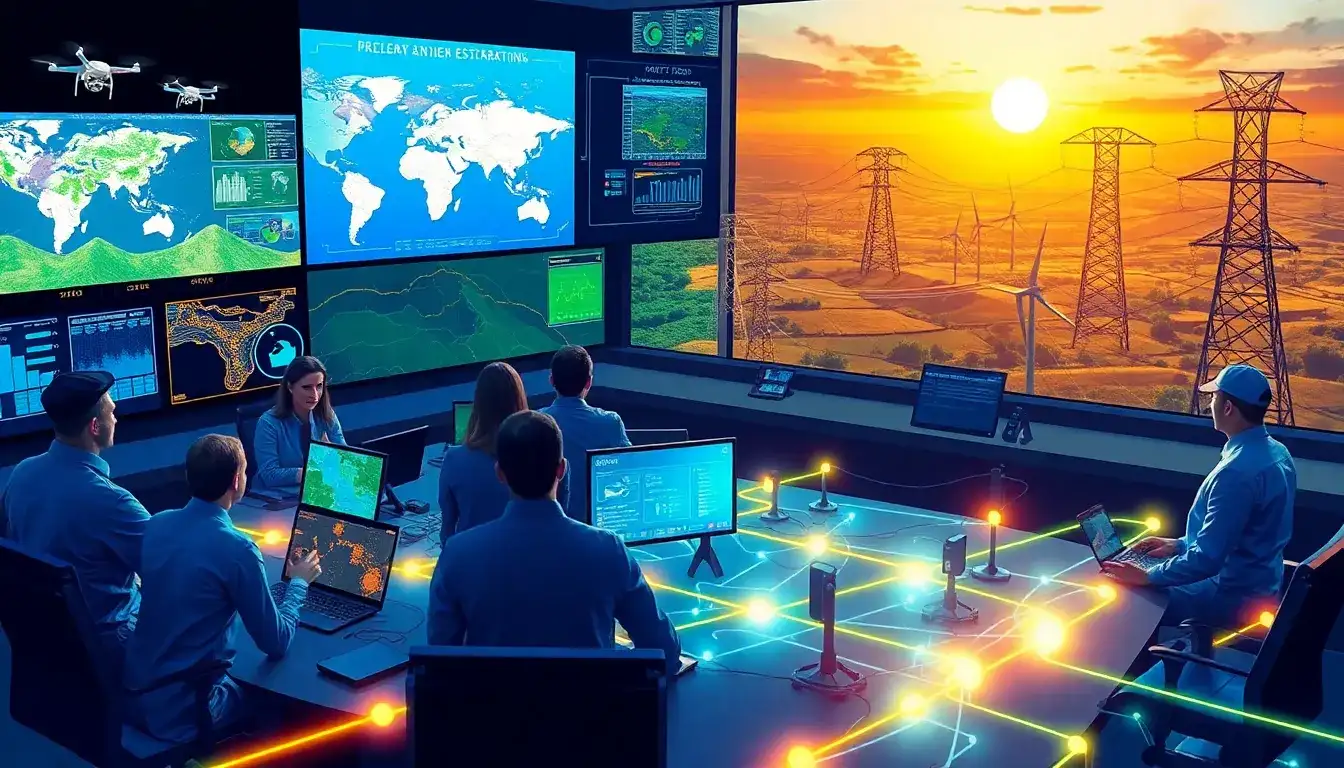
AI significantly enhances emergency response and restoration in energy systems by improving prediction, detection, and automated recovery processes. Key AI contributions include:
Prediction and Preparedness
- AI-enhanced disaster response models analyze weather patterns and real-time data to predict potential power outages caused by extreme weather events. This foresight enables utilities to optimize energy storage and prepare the grid in advance to minimize disruptions.
- AI supports accurate energy forecasting by integrating weather data, historical usage, and grid performance to balance supply and demand effectively, ensuring grid stability during emergencies.
Fault Detection and Automated Response
- Self-healing grids leverage AI and real-time monitoring to automatically detect faults and reroute power, enabling quick containment of outages without manual intervention.
- AI-powered systems provide highly localized fault location data, guiding utilities to deploy repair crews to the most critical sites, accelerating restoration efforts.
Restoration Optimization
- AI algorithms simulate various restoration scenarios to determine optimal strategies for restoring power quickly to the greatest number of customers. They prioritize critical infrastructure such as hospitals and emergency shelters to reduce societal impact.
- Automating restoration actions through AI reduces outage frequency and duration. For example, utilities like Entergy Louisiana have successfully used AI integrated with Advanced Metering Infrastructure (AMI) to prevent unplanned outages and cut outage minutes significantly.
Support for Emergency Operations and Coordination
- AI assists emergency responders and utility planners by providing advanced forecasting, mapping, and analytics, which streamline evacuation planning and energy investment decisions.
- AI also facilitates coordination of distributed energy resources (DERs) in real time, helping balance supply during and after disaster events.
Enhancing Grid Resilience and Sustainability
- AI advances predictive maintenance by continuously monitoring equipment health across renewable sources like wind, solar, and hydropower, preventing failures before they occur and maintaining grid stability.
- By optimizing renewable energy integration and storage, AI reduces reliance on fossil fuels, contributing to a cleaner and more resilient energy system that can better withstand disruptions.
In summary, AI transforms emergency response and restoration in energy systems through advanced prediction, real-time fault detection, optimized restoration planning, automated recovery actions, and enhanced coordination of resources. These capabilities enable faster, more effective responses to emergencies, minimizing outages and societal impacts while supporting grid modernization and resilience.
Original article by NenPower, If reposted, please credit the source: https://nenpower.com/blog/how-does-ai-contribute-to-emergency-response-and-restoration-in-energy-systems/

