

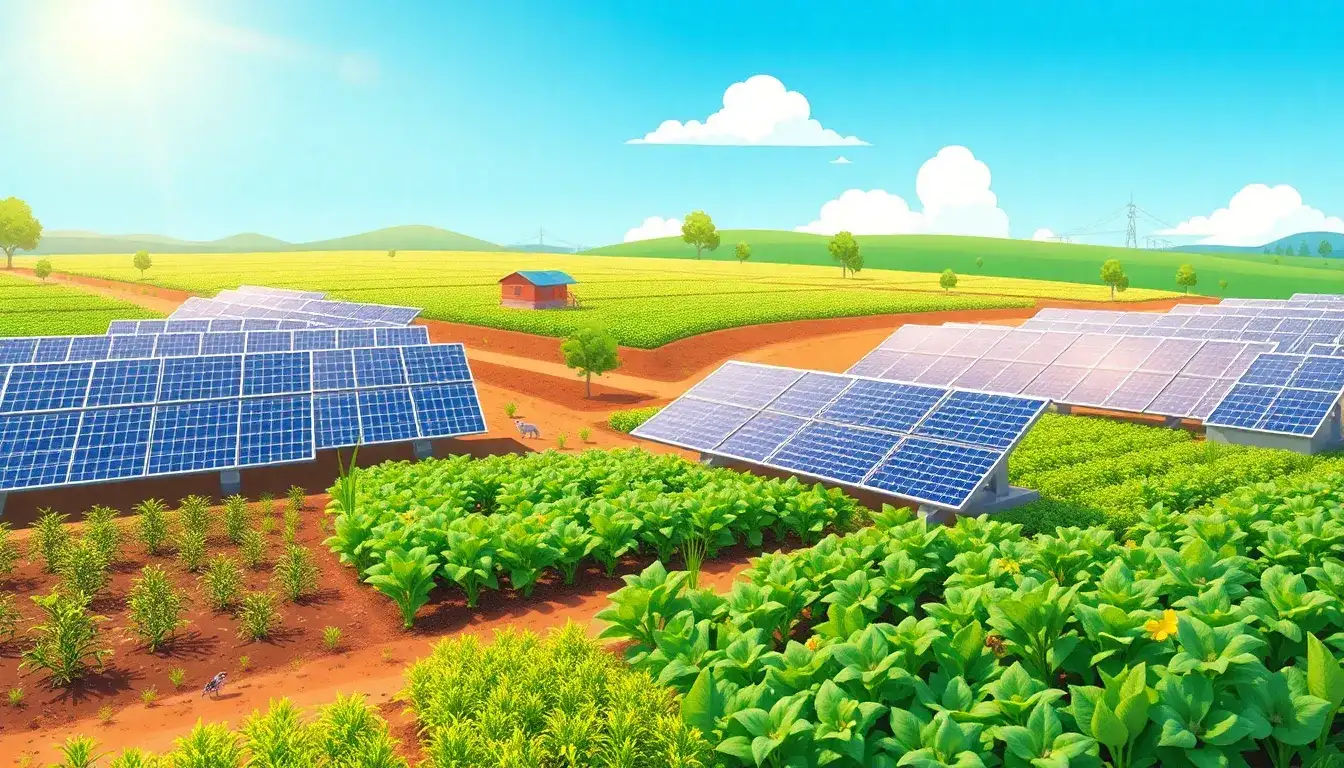
Agrivoltaics, the practice of combining solar photovoltaic (PV) panels with agricultural activities on the same land, impacts solar panel efficiency primarily through a beneficial cooling effect. This cooling effect arises because the plants beneath the panels transpire water, reducing the temperature of the solar modules. Since solar panel efficiency decreases with increasing temperature (typically by about 0.1% to 0.5% per degree Celsius above 25 °C), this cooling can improve the panels’ performance compared to traditional ground-mounted systems without vegetation.
Key Impacts on Solar Panel Efficiency
- Improved Energy Output via Cooling:
Studies have shown that solar panels in agrivoltaic systems generate slightly more electricity than traditional solar arrays. For instance, an agrivoltaic PV system in Arizona produced about 1% more electricity annually and up to 3% more during summer months, attributed to the cooling effect of plant transpiration and shading. Similarly, panels mounted over vegetation can have significantly lower surface temperatures than those over bare ground, directly improving their efficiency. - Reduced Heat Stress on Panels:
The vegetation provides shade and maintains lower panel temperatures, which mitigates efficiency losses caused by high ambient temperatures, especially in hot, dry climates. This effect is particularly beneficial in regions prone to extreme heat, where traditional solar panels suffer from performance degradation as temperatures rise. - Cooling Synergy:
The evapotranspiration from crops or pasture beneath panels lowers both soil and panel temperatures, forming a symbiotic relationship where agriculture cools panels and panels provide partial shade that can reduce crop water stress, further enhancing the stability and performance of the system.
Additional Operational Benefits Related to Efficiency
- Lower Maintenance Costs:
Agrivoltaics can reduce the need for mowing and ground maintenance because grazing animals such as sheep can manage vegetation under panels, which indirectly supports consistent panel operation and avoids shading caused by overgrown plants. - Design Complexity and Costs:
While agrivoltaic systems may have higher initial capital costs due to modified mounting structures and more complex designs, the long-term efficiency gains and operational savings may offset these costs.
Summary
Agrivoltaics can increase the efficiency of solar panels by several percent through natural cooling provided by vegetation beneath and around the panels. This cooling mitigates temperature-related efficiency losses common in PV systems, especially during hot weather. Additionally, the dual use of land enhances overall land productivity without significantly sacrificing energy output, making agrivoltaics a promising approach to sustainable energy production and agriculture integration.
For reference, agrivoltaic systems have demonstrated:
| Impact Aspect | Effect on Solar Panels |
|---|---|
| Panel Temperature | Reduced by plant transpiration cooling |
| Annual Electricity Generation | Increased by ~1% (up to 3% during summer) |
| Efficiency Loss from Heat | Mitigated (0.1%-0.5% loss per degree °C reduced) |
| Maintenance | Reduced mowing due to grazing |
| Initial Costs | Higher due to complex design |
These efficiency improvements have been observed in various climates and agricultural settings, indicating agrivoltaics’ potential to enhance solar energy generation while supporting agriculture.
Original article by NenPower, If reposted, please credit the source: https://nenpower.com/blog/how-does-agrivoltaics-impact-the-efficiency-of-solar-panels/

