

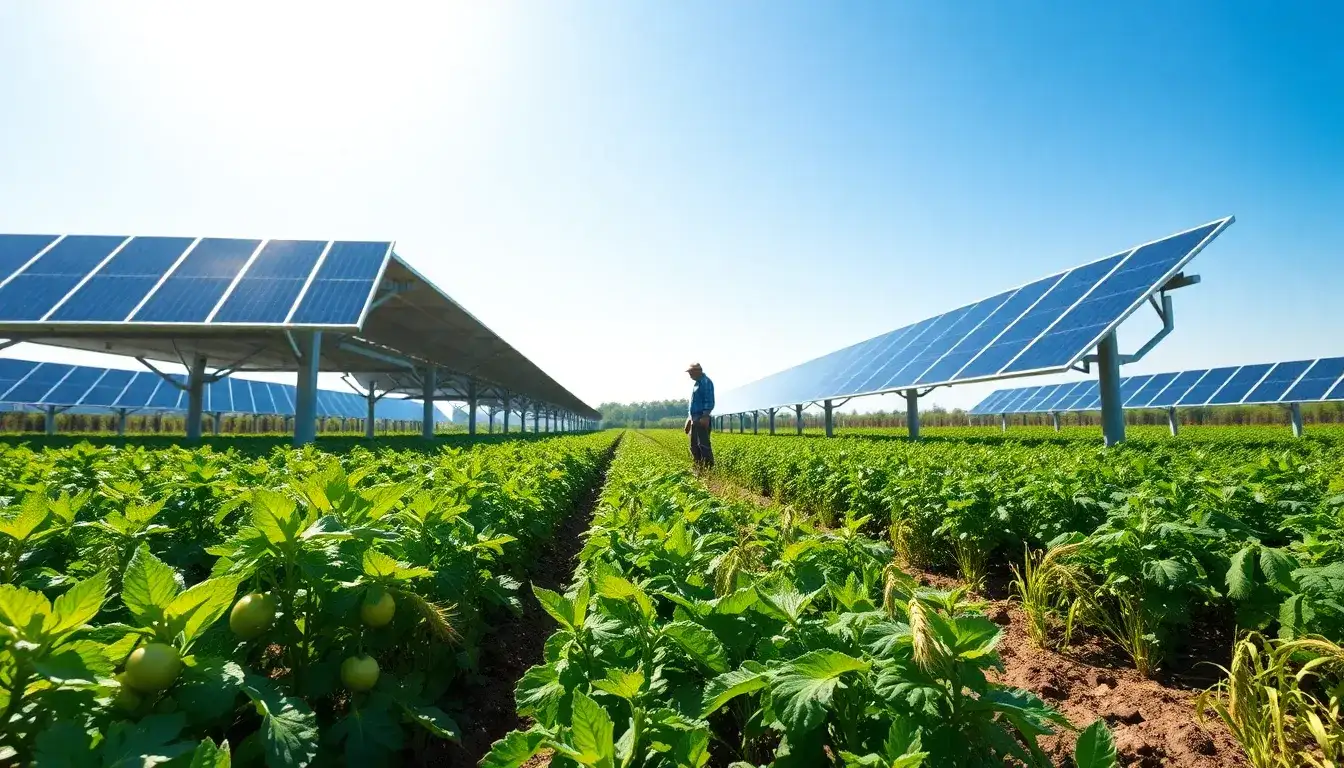
Agrivoltaics, which integrates solar panels with crop farming, impacts crop yields in varied and crop-specific ways, depending on factors like crop type, climate, solar panel design, and shading.
Positive Impacts on Crop Yields
- Some crops, such as potatoes, have shown improved or above-average yields when grown under agrivoltaic systems. For example, a two-year study in Germany near Lake Constance found that potato yields under solar panels exceeded the national average.
- Agrivoltaics can reduce soil water evaporation by about 30%, which helps conserve moisture and can improve growing conditions, potentially boosting yields in water-sensitive crops and arid regions.
- Combining photovoltaic technology with agriculture can increase overall yield per unit of cultivated area by 20% to 60% due to shared land use for both energy and food production.
Neutral or Mixed Effects
- For many vegetable crops, such as lettuce, results have been mixed. Studies show that the chemical composition and yield changes due to shading by solar panels are not always clearly positive or negative, indicating the need for crop-specific agrivoltaic designs.
- Different crops respond differently to partial shading, so some areas under panels may see yield reductions while others benefit from moderated light and microclimate effects.
Negative Impacts on Crop Yields
- Some crops are sensitive to shading; for example, rice has seen significant yield declines under solar panel shading in Japan.
- Research analyzing 54 agrivoltaic operations globally, including in Europe and the US, shows that overall crop yields tend to decrease as the land area covered by solar panels increases. Even covering one-fifth of the land with panels can cause substantial yield losses.
- Physical infrastructure associated with solar panels (posts, cables) further reduces plantable land, which can negatively impact total production.
Key Considerations
- The ratio of solar panel coverage to available land is a critical predictor of crop yield outcomes. Balancing energy generation with minimal crop shading is essential.
- Agricultural infrastructure improvements and system design tailored to specific crops and climates are necessary to maximize both energy and food production.
- Agrivoltaics holds potential for dual land use but requires careful management and crop selection to avoid significant yield reductions.
In summary, agrivoltaics can both positively and negatively impact crop yields. While some crops benefit from microclimate improvements and reduced water stress leading to higher or stable yields, others suffer from shading and reduced planting area. Optimizing solar panel placement and managing the balance between energy production and crop growth is key to realizing the benefits of agrivoltaics without harming crop productivity.
Original article by NenPower, If reposted, please credit the source: https://nenpower.com/blog/how-does-agrivoltaics-impact-crop-yields/

